Can ventilation bricks prevent wind-driven rain?
One afternoon, a heavy rain begins to fall. Strong winds blow across the façade of a house, splashing rainwater against the wall. The homeowner stands in the living room, looking through the layer of ventilation bricks and suddenly worries:
“Will the rain be blown inside?”
This is a question many people ask when considering ventilation bricks for façades, balconies, or skylight areas.
So in reality, can ventilation bricks prevent wind-driven rain?
The answer is not simply “yes” or “no.” It depends on understanding the nature of the material and the design solutions used.
First, Understanding Ventilation Bricks
Ventilation bricks are designed with intentional openings. Their main purposes are:
• Allowing natural airflow
• Bringing natural light into the building
• Reducing heat accumulation
• Enhancing the aesthetics of the façade
Because they contain openings, ventilation bricks are not meant to function as a completely sealed wall.
However, that does not mean they simply allow rain and wind to pass through freely.
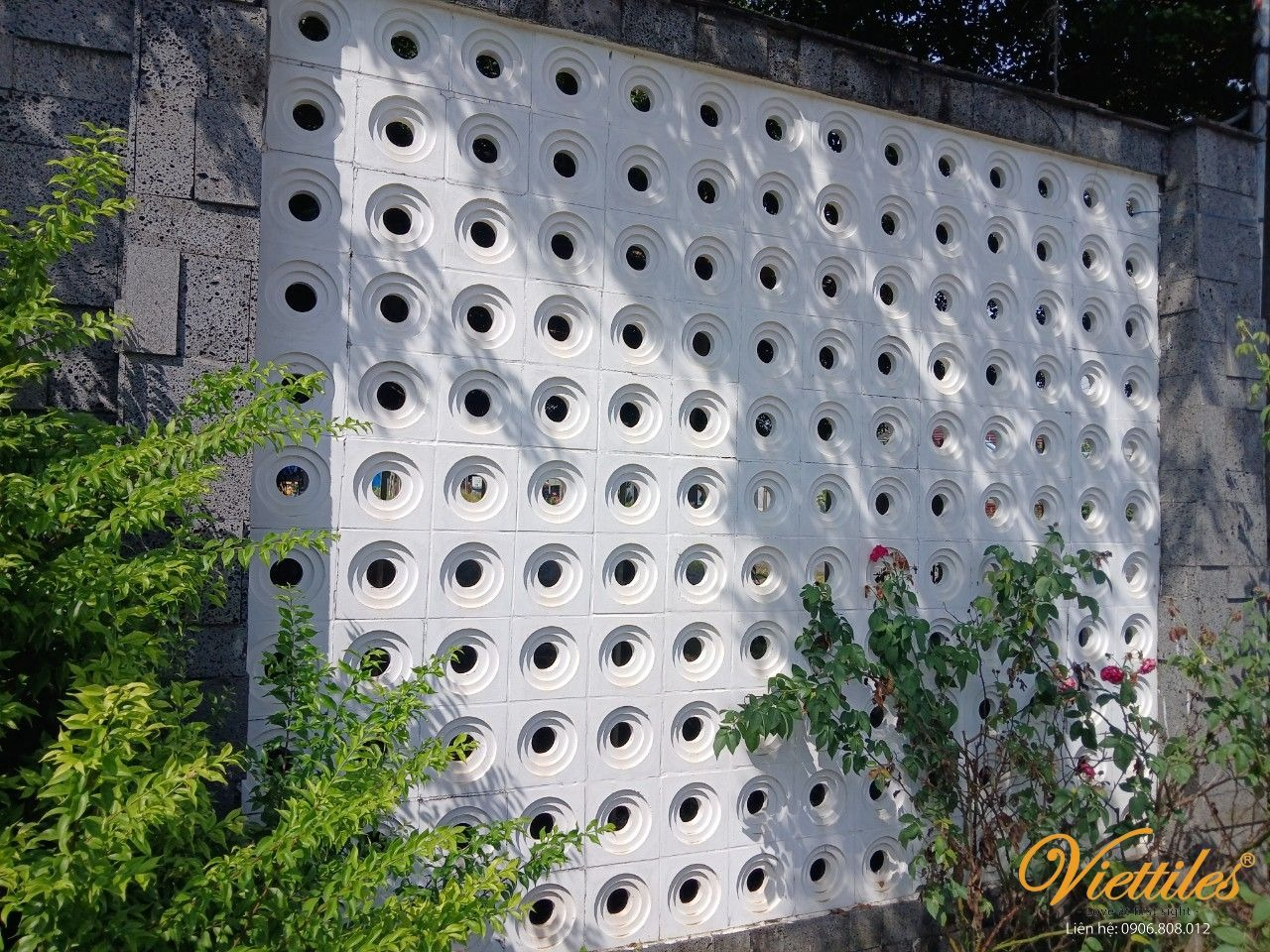
Why Many Houses with Ventilation Bricks Do Not Suffer from Wind-Driven Rain
There are three main factors that determine how well ventilation bricks can limit wind-driven rain.
Brick Pattern Design and Depth
Modern ventilation bricks often feature:
• Greater thickness compared to decorative bricks
• Deep patterns
• Carefully calculated opening directions
When wind blows rain at an angle, water does not travel straight through the brick. Instead, the brick structure interrupts the flow, causing most of the water to fall outside.
Bricks with angled or curved openings often perform better against wind-driven rain than those with straight square holes.
House Orientation and Position
If a house faces the southwest, where monsoon winds and rain hit directly, the chance of wind-driven rain entering is higher than in sheltered orientations.
For this reason, architects often:
• Set the ventilation brick layer slightly inward
• Combine it with overhangs or balconies
• Create a buffer layer behind the brick wall
With such a buffer zone, even if rain passes through the brick layer, it rarely reaches the interior living space.

Double-Skin Façade Solution
This is a common solution in modern townhouses.
• Outer layer: ventilation bricks
• Inner layer: glass doors or sliding windows
During the day, the glass layer can be opened to allow airflow. When heavy rain arrives, simply close the inner layer.
This solution maintains ventilation while effectively preventing rain from entering.
In Reality: Can Ventilation Bricks Completely Stop Rain?
If the question is whether they block rain 100%, the answer is no—because the material is intentionally open.
But if the question is whether they effectively reduce wind-driven rain, the answer is yes—when designed and installed correctly.
What matters most is not just the brick itself, but the overall architectural solution.
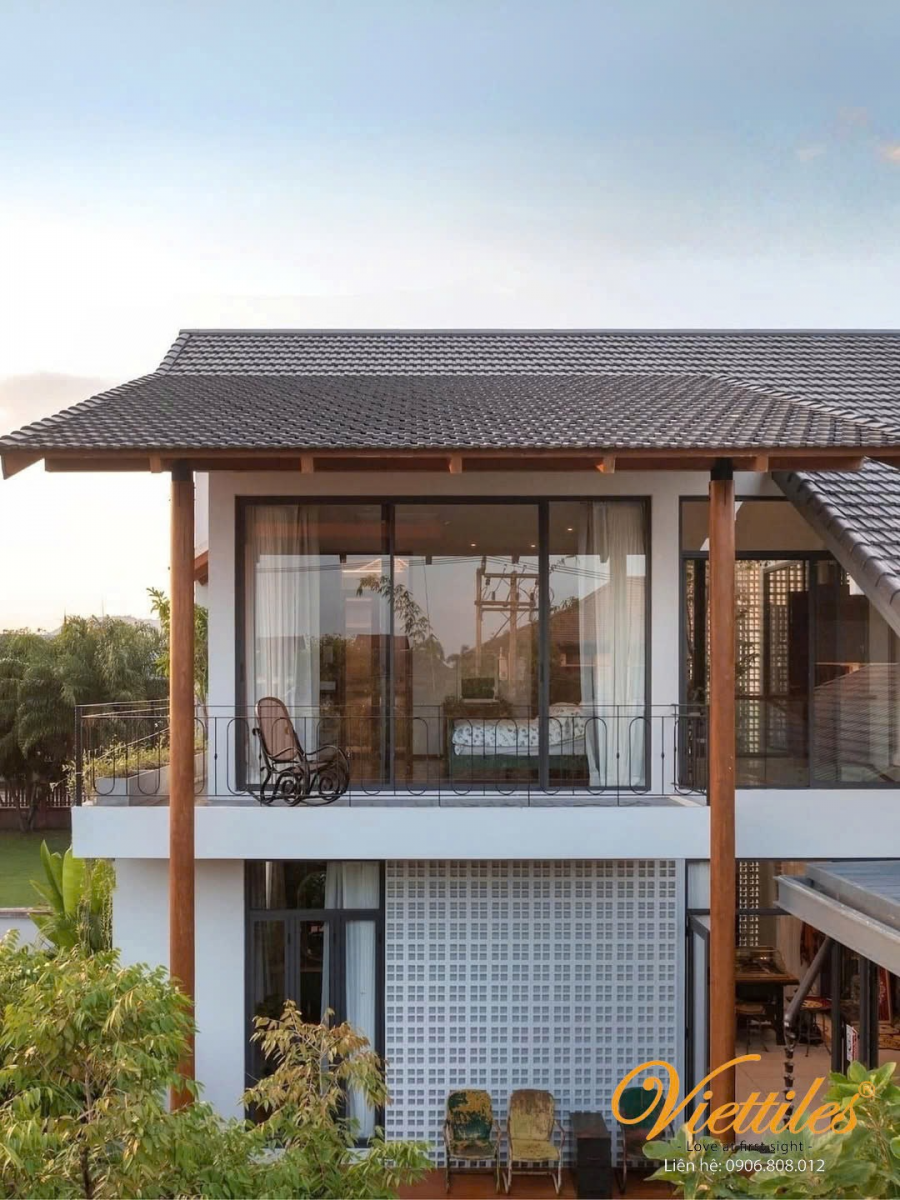
Key Advantages of Ventilation Bricks Beyond Rain Protection
Many people focus too much on rain and forget the core benefits of this material.
Natural heat reduction
The openings allow air to circulate and reduce heat buildup on the façade.
Enhanced privacy
From outside, it is difficult to clearly see the interior space.
Artistic light effects
Sunlight passing through the openings creates moving shadow patterns throughout the day.
High durability
Cement ventilation bricks can withstand pressure and harsh weather when produced according to proper standards.
Viettiles and Ventilation Brick Solutions for Vietnam’s Climate

Vietnam’s climate is characterized by seasonal heavy rain and strong winds. Therefore, brick quality and manufacturing precision are extremely important.
At Viettiles, ventilation bricks focus on:
• Standard thickness for structural strength
• Deep patterns that limit direct rain penetration
• Smooth and consistent surface finishing
• Stable load-bearing capacity
This ensures that projects are not only aesthetically pleasing but also durable over time.
However, Viettiles always recommends combining ventilation bricks with appropriate architectural solutions rather than using them alone in areas directly exposed to heavy rain.
A Small Story About Rain
There is a coastal house that uses ventilation bricks for its entire façade. The homeowner once worried about storms and heavy rain.
After one rainy season, what they noticed was not rain entering the house.
Instead, it was the comfort of a space that always felt airy and breathable, unlike the sealed houses around it.
Rain may touch the brick surface. But the interior remains dry thanks to thoughtful design.
So, Can Ventilation Bricks Prevent Wind-Driven Rain?
The final answer is:
• They are not a completely waterproof material.
• But they can effectively limit wind-driven rain when properly designed.
• And they provide far more value than a completely sealed wall.
The goal is not to avoid rain entirely.
It is to create a living space that harmonizes with the climate.
And sometimes, the gentle sound of rain touching the ventilation brick façade is exactly what makes a home feel more alive.