Kitchen Decorative Cement Tiles and the Secrets to Creating a Stylish Kitchen
The kitchen is not merely a place for everyday cooking; it is often regarded as the heart of the home, where warmth is cherished and the homeowner's aesthetic style is reflected. Using decorative cement tiles for kitchen backsplashes has become a popular trend among architects and homeowners, offering an elegant way to transform plain walls into works of art with depth and distinctive character.

1. Why Are Cement Tiles the Perfect Choice for Kitchen Spaces?
The kitchen wall between the upper cabinets and the countertop is constantly exposed to grease, heat, and moisture. Handmade cement tiles not only meet functional requirements but also offer exceptional visual appeal:
-
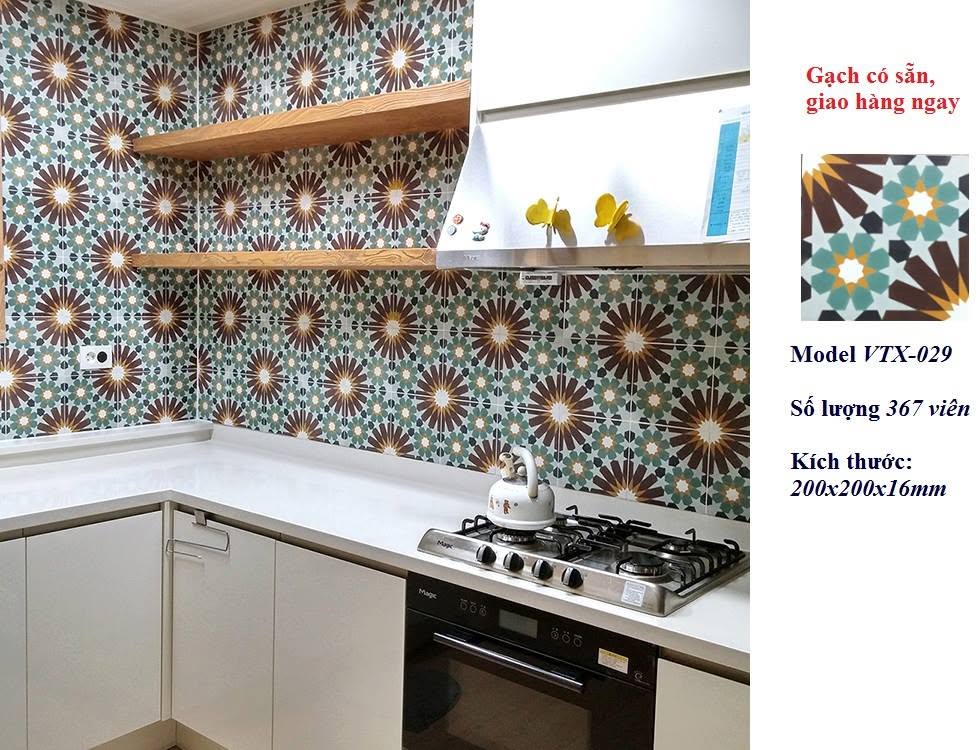
Creating a visual focal point: With their diverse colors and graceful patterns, decorative cement tile backsplashes immediately draw attention, softening the rigid appearance of metallic kitchen appliances.
-
Safe and environmentally friendly materials: High-quality cement tiles are manufactured using hydraulic pressing without kiln firing. They are safe for living environments and do not release harmful gases when exposed to normal kitchen temperatures.
-
Long-lasting durability: Unlike industrial glazed tiles with surface-printed patterns, handmade cement tiles feature a 2–3 mm thick colored decorative layer. Over time, their surfaces develop a naturally soft, matte patina that adds an elegant and sophisticated touch.

2. Tips for Choosing Cement Tiles to Create a Stylish Kitchen
To create a kitchen that is both visually appealing and harmonious with the overall architectural design, careful consideration of patterns and color combinations is essential.
2.1. Choose a Style That Complements the Overall Architecture
-
Indochine Style: Choose cement tiles featuring stylized lotus and chrysanthemum motifs, traditional geometric patterns, or antique coin designs in classic mustard yellow, moss green, and black-and-white tones.
-
Mediterranean & Tropical Styles: Prioritize turquoise, warm yellow, or free-flowing geometric patterns to create a fresh, airy, and inviting atmosphere.
-
Modern Rustic / Scandinavian Style: Cement tiles featuring monochromatic color combinations such as white, gray, and beige, paired with oak kitchen cabinets, create a minimalist yet cozy space.
2.2. Combine Contrasting or Tone-on-Tone Colors
-
Bold contrast: If your kitchen cabinets and countertops feature soft neutral shades such as white, matte black, or gray, a vibrant patterned cement tile backsplash can become the focal point of the entire kitchen.
-
Subtle harmony: For a more relaxing atmosphere, choose tile patterns that incorporate the same accent colors as your kitchen cabinets or cabinet handles.
2.3. Explore Unique Tile Layouts
-
Full backsplash installation: Cover the entire wall between the upper and lower cabinets to create a seamless and visually striking appearance.
-
Decorative feature panel behind the cooktop: Create a framed cement tile feature directly behind the induction or gas cooktop, while keeping the remaining areas painted or finished with plain tiles.
-
Kitchen island base decoration: Coordinate the backsplash tiles with the cement tiles used on the base of a kitchen island or breakfast bar to create a cohesive design throughout the space.

3. Technical Considerations for Installing and Maintaining Kitchen Cement Tiles
Cement tiles are cement-based materials with breathable properties. Therefore, proper installation and maintenance are essential to keeping your kitchen clean and beautiful over time.
-
Apply proper waterproofing before and after grouting: Kitchen cement tile surfaces should be treated with a specialized penetrating protective sealer. This protective layer helps prevent grease, fish sauce, and cooking seasonings from penetrating deep into the tile body.
-
Maintain standard grout joint widths: When installing cement tiles, leave narrow grout joints of approximately 1–1.5 mm using tile spacers to ensure that the patterns align closely and precisely.
-
Clean daily using appropriate methods: After cooking, simply wipe the surface with a soft damp cloth and warm water or diluted mild soap to remove grease. Avoid using highly acidic cleaning products, as they may erode the natural colored decorative layer.

4. Viettiles – Unique Artistic Cement Tile Solutions for Your Kitchen
Proud to be a leading handmade cement tile brand with three manufacturing facilities and a production capacity of 60,000 m² per month, Viettiles offers comprehensive tiling solutions for your kitchen:
-
An extensive collection of designs: More than 4,000 artistic cement tile designs and 160 European-standard colors to bring every architectural vision to life.
-
Exquisite craftsmanship: Each tile is crafted by skilled artisans with over 20 years of experience and manufactured using hydraulic pressing technology, delivering outstanding durability in accordance with ISO 9001 standards.
-
Comprehensive support for designers and homeowners: High-resolution design map files, color simulation tools (Simulator), and customized tile patterns tailored to the distinctive identity of each project.

Contact Viettiles today at 0906 830 362 or visit our showroom for design consultations, sample tile maps, and competitive quotations tailored to your project!
VIETTILES
-
Showroom: No. 17, Street 40, An Khanh Ward, Thu Duc City, Ho Chi Minh City, Vietnam
-
Factories: Le Minh Xuan Industrial Park (Binh Chanh, Ho Chi Minh City) & Chon Thanh (Binh Phuoc)
-
Hotline/Zalo: 0906 830 362 – 0906 808 012
-
Email: info@viettiles.com
-
Website: https://www.viettiles.com/
-
Cement Tile Collection: https://www.viettiles.com/vi/san-pham/gach-bong
-
Installation Guidelines: View Detailed Installation Instructions