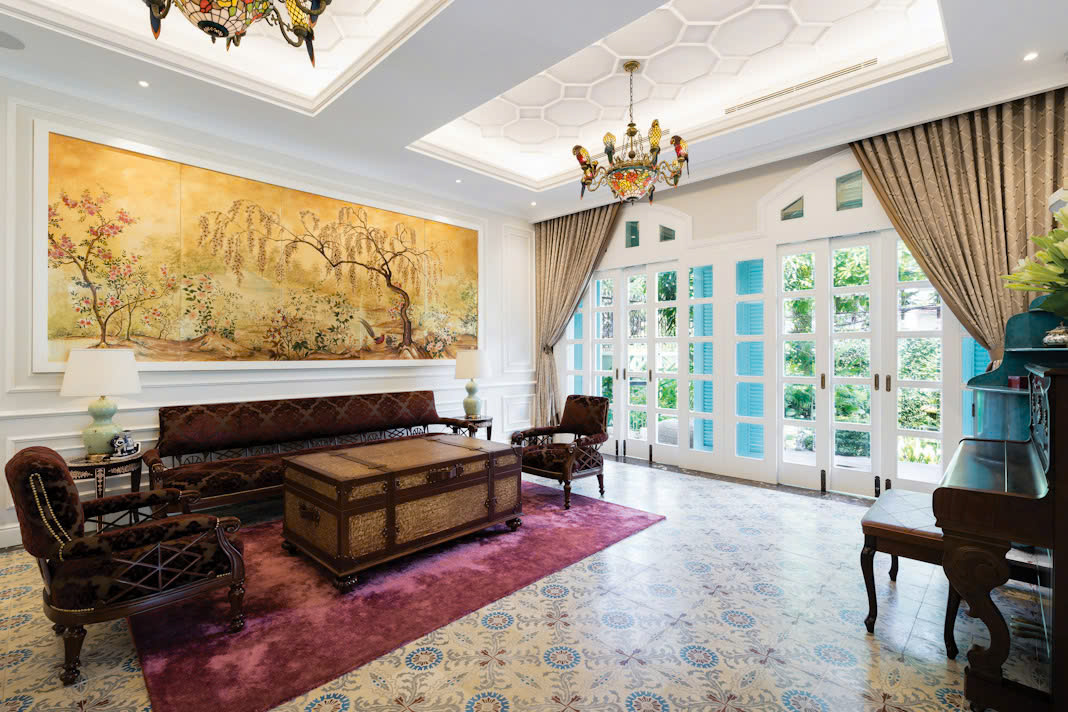
Cement Floor Tiles and Their Timeless Beauty in Interior Architecture
In contemporary interior design, many architects and homeowners are concerned about monotonous flooring or artificial materials that quickly become outdated after a short period of use. Choosing cement floor tiles offers a solution that harmonizes nostalgic memories with modern architectural language, bringing lasting aesthetic value to construction projects. This article provides detailed guidance on selecting tiles, combining artistic patterns, and applying proper installation techniques.

The Timeless Aesthetic Value of Cement Floor Tiles in Contemporary Spaces
Once associated with nostalgic memories as traditional patterned floor tiles in Indochine and French colonial architecture, cement tiles are no longer confined to vintage design styles. This material has demonstrated remarkable adaptability, blending seamlessly into contemporary architectural styles ranging from Modern Rustic, Mediterranean, and Tropical to Minimalism.
The distinctive appeal of cement tile flooring lies in its rich geometric language and diverse colors. Geometric lines, symmetrical patterns, and stylized motifs create balanced visual accents when paired with raw concrete walls, glass partitions, or minimalist wooden furniture. The handcrafted nature of these tiles softens the cold appearance of industrial materials, adding cultural depth to every square meter of flooring.
In particular, subtle shade variation between handmade tiles creates a distinctive charm. Slight differences in color resulting from natural hydration allow the tiles to reflect natural light softly. As a result, cement floor tiles challenge the perception that patterned flooring is overly elaborate or outdated, becoming an emotionally expressive architectural material for high-end projects.

Comparison Criteria: Handmade Cement Tiles or Pattern-Printed Ceramic Tiles?
When searching for decorative flooring materials, many property owners and contractors consider the choice between handmade cement tiles and digitally printed ceramic tiles. The following table provides a clear comparison of their technical and aesthetic characteristics:
|
Comparison Criteria |
Handmade Cement Tiles |
Pattern-Printed Ceramic/Porcelain Tiles |
|---|---|---|
|
Color layer thickness |
2–3 mm of natural mineral pigments |
Very thin (less than 0.5 mm), applied over the tile body |
|
Manufacturing method |
Handmade, hydraulic-pressed, non-fired |
Mass-produced through industrial kiln firing |
|
Visual depth |
Warm tones, semi-matte surface, authentic character |
Flat, glossy, or mechanically matte surface |
|
Customization |
Custom molds and unique color combinations are easily available |
Standardized industrial mass production |
|
Long-term durability |
The surface develops a more attractive sheen over time |
Scratches and impacts may expose the underlying tile body |
Hydraulic-Pressed Cement Tiles: Thick Color Layers and Artistic Depth
Handmade cement tiles are produced using high-pressure hydraulic compression without undergoing kiln firing. Their surface color layer, measuring 2–3 mm in thickness, consists of a mixture of white cement, stone powder, and natural mineral pigments, providing excellent abrasion resistance without concerns about pattern fading. Architects can also commission custom molds based on their drawings to create a distinctive identity for each project.
Pattern-Printed Ceramic Tiles: Convenient but Delicate
Industrial ceramic tiles effectively address short-term budget considerations. However, their glaze layer is very thin, measuring less than 0.5 mm, and digitally printed patterns lack the artistic depth of handcrafted materials. When exposed to mechanical impacts or abrasion from sand and dust, ceramic tile surfaces may become scratched, revealing the fired clay body underneath. Their colors also cannot be customized to meet individual requirements.
A Guide to Combining Cement Floor Tile Patterns for Different Interior Areas
Understanding how to coordinate cement floor tile colors allows architects to create visual boundaries (visual zoning) between open functional areas within interior spaces without relying on rigid partitions.
Designing Cement Tile Rugs (Carpet Tiles) for Living Rooms and Entrance Halls
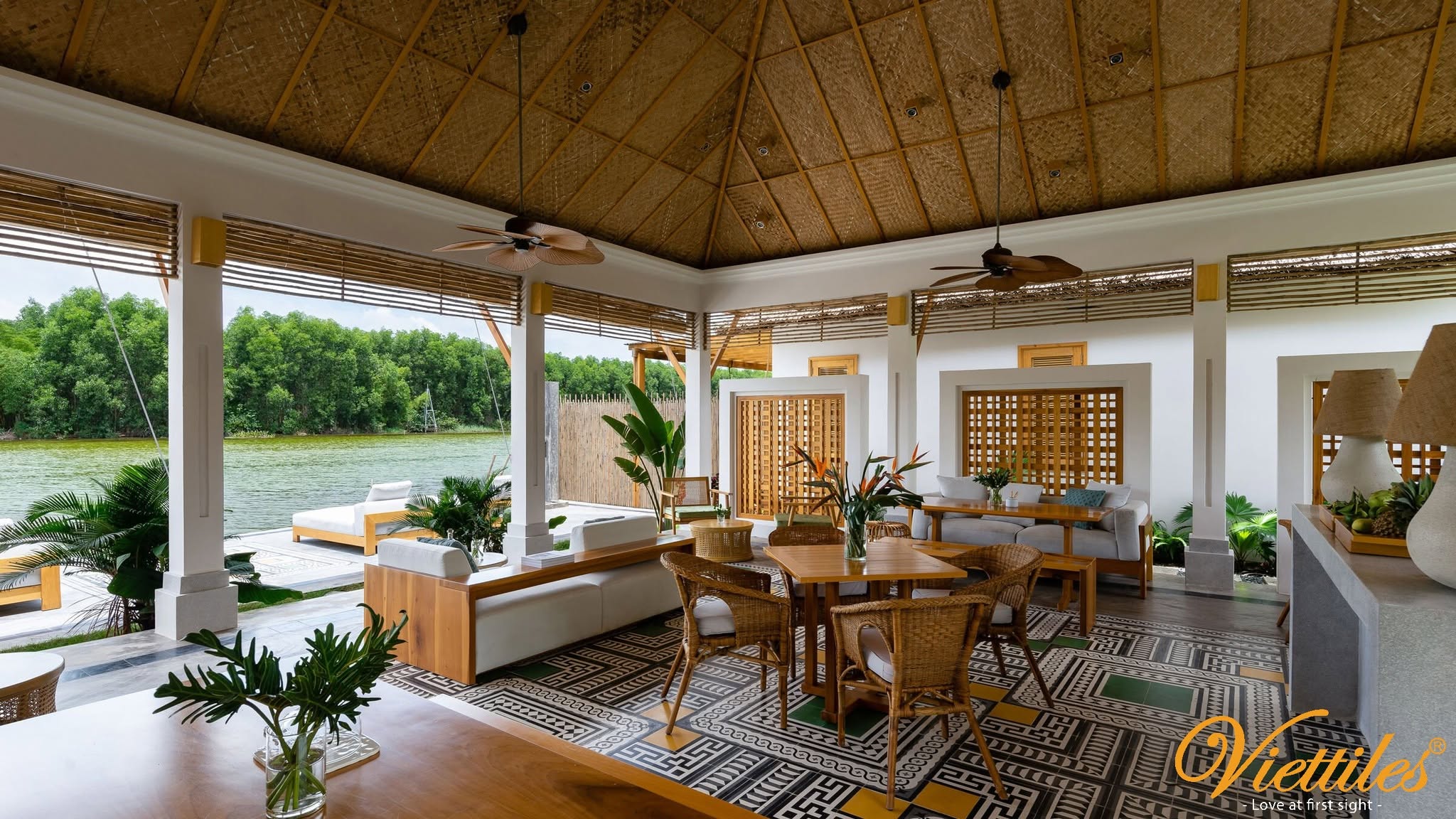
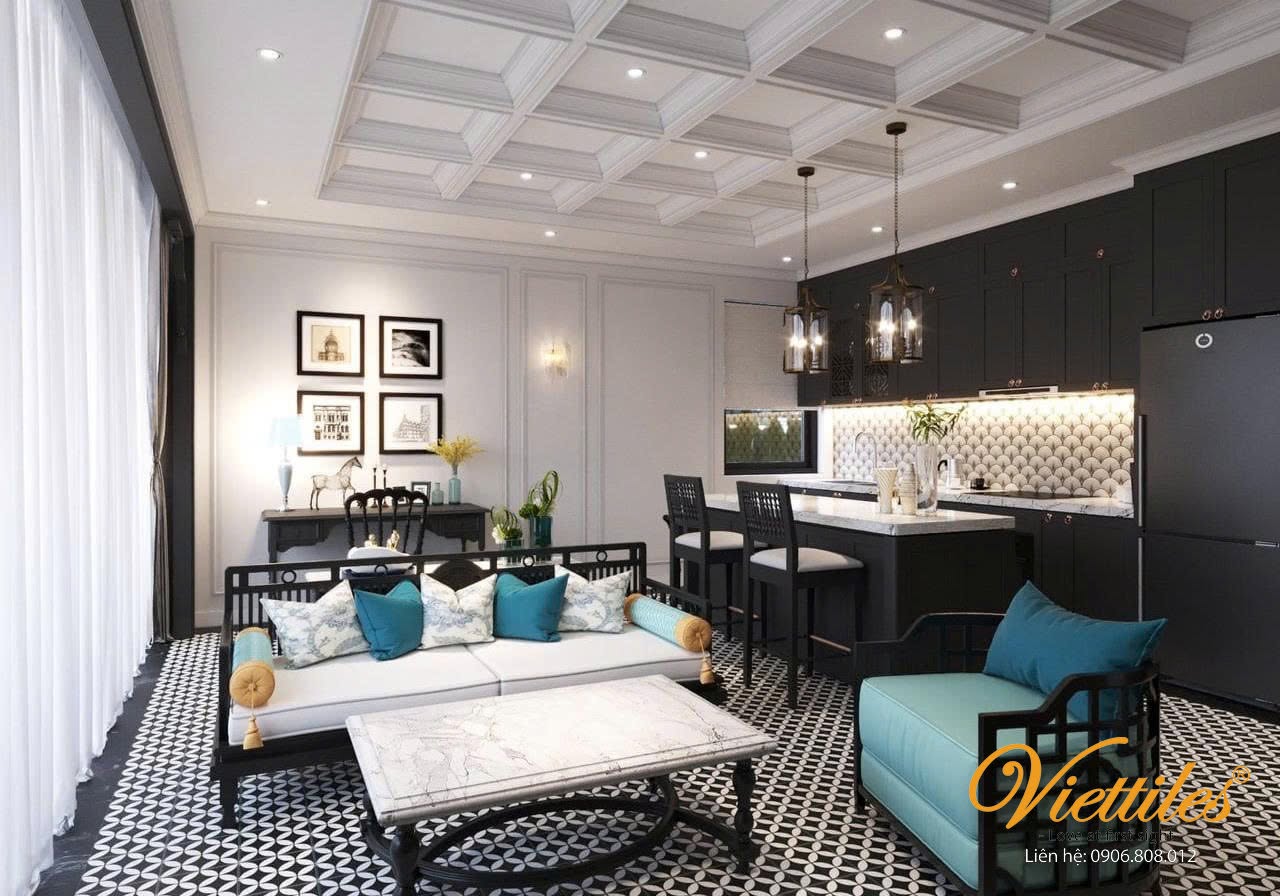
In hotel entrance halls or living rooms, creating decorative cement tile rugs provides an impressive and elegant visual statement. By combining central patterned tiles with matching borders and corner pieces, the floor forms a sophisticated cement-woven carpet surrounding a sofa set or coffee table.
This carpet-style cement tile flooring offers an excellent alternative to traditional fabric rugs, minimizing dust accumulation and mold growth in humid tropical climates. Architects should prioritize neutral, gray, black-and-white, or warm color palettes to create a harmonious connection with surrounding wooden or concrete flooring.

Creative Patchwork Combinations and Innovative Hexagonal Cement Tiles
The patchwork style involves freely combining different patterns within a consistent color palette, such as monochromatic black and white or pastel shades. This arrangement brings a lively aesthetic to cement tile flooring in kitchens and bathrooms.
Beyond traditional square tiles, hexagonal cement floor tiles introduce an unconventional spatial transition. The technique of interlocking hexagonal tiles with natural wooden flooring in a staggered arrangement softens rigid boundaries, naturally and artistically guiding people from shared living areas into the kitchen.
Proper Installation and Waterproofing Procedures for Cement Floor Tiles
To ensure structural durability and preserve their original beauty, cement floor tile installation requires careful workmanship and strict adherence to the maintenance principles of non-fired materials.
Subfloor Preparation and Ultra-Narrow Grout Joints of 1.5–2 mm
The subfloor must be completely dry and level before installing cement floor tiles. Installing tiles over a damp substrate or using excessively wet cement slurry can cause excess moisture to evaporate and carry free mineral salts to the surface, resulting in white deposits known as efflorescence.
Thanks to the precise dimensions achieved through hydraulic pressing in steel molds, installers should maintain ultra-narrow grout joints of approximately 1.5–2 mm. These fine joints minimize interruptions in the decorative patterns, making the entire floor appear seamless and aesthetically refined, like a large woven artwork spread across the room.
Two-Coat Waterproofing and Surface Maintenance with Neutral Cleaning Solutions
Sealing cement floor tiles is an essential step in protecting their capillary pores against the penetration of contaminants. The fundamental principle is to apply the first coat of a specialized penetrating sealer before grouting, preventing grout pigments from adhering to and staining the tile surface.
After thoroughly cleaning the grout joints and allowing the surface to dry completely, apply a second protective finishing coat. During everyday use, clean the flooring only with water or pH-neutral floor cleaning solutions. Avoid strongly acidic cleaning agents, as acids react with the alkaline cement surface and may gradually erode the colored layer.
Viettiles – A Manufacturer of Handmade Cement Floor Tiles Meeting International Standards
With more than 20 years of experience in developing handcrafted cement tiles, Viettiles (VIET TILES JOINT STOCK COMPANY) is a trusted manufacturing partner for architects, resort and hotel developers, and construction contractors.
The brand operates three manufacturing facilities in Ho Chi Minh City and Binh Phuoc, with a combined production capacity of approximately 60,000 m² per month. Its workforce includes more than 400 skilled artisans working alongside modern production management engineers under ISO 9001 standards.
The ISO 9001-compliant quality control process, covering everything from color layer thickness to dimensional squareness, enables Viettiles to effectively address concerns about color inconsistencies in large-scale projects. Products are securely packed on fumigated wooden pallets to protect them against impacts during nationwide delivery and international shipping. The presence of Viettiles products in prestigious projects such as Vinpearl Phu Quoc, The Annam Bai Dai, Four Seasons, and Disneyland Hong Kong clearly demonstrates their quality.
Viettiles offers an extensive collection of more than 4,000 cement tile designs, 160 European-standard colors, and custom mold manufacturing services based on individual designs. To help architects discover beautiful cement floor tile patterns, Viettiles provides comprehensive 2D/3D tile layout files and intuitive color simulation tools. From a commercial perspective, cement floor tile prices in Ho Chi Minh City and other provinces remain competitive thanks to direct factory production.

Contact Viettiles today at 0906 830 362 or visit our showroom at No. 17, Street 40, An Khanh Ward, Thu Duc City, Ho Chi Minh City, for design consultation, sample tile layouts, and the most suitable quotation for your project!
VIETTILES – The Art of Handmade Cement Tiles & Breeze Blocks
-
Showroom: No. 17, Street 40, An Khanh Ward, Thu Duc City, Ho Chi Minh City
-
Factories: Le Minh Xuan Industrial Park (Binh Chanh, Ho Chi Minh City) & Chon Thanh (Binh Phuoc)
-
Hotline/Zalo: 0906 830 362 – 0906 808 012
-
Email: info@viettiles.com
-
Website: www.viettiles.com