Best places to use breeze blocks in residential homes
Some homes do not need overly elaborate details to feel incredibly comfortable.
The light enters gently, the breeze flows through small openings, and the space always feels airy with natural depth. In many modern designs, breeze blocks have become an important element in creating this atmosphere.
More than decorative materials, breeze blocks connect light, airflow, and architecture in a unique way. When placed correctly, they can make a space feel far more soulful and alive.
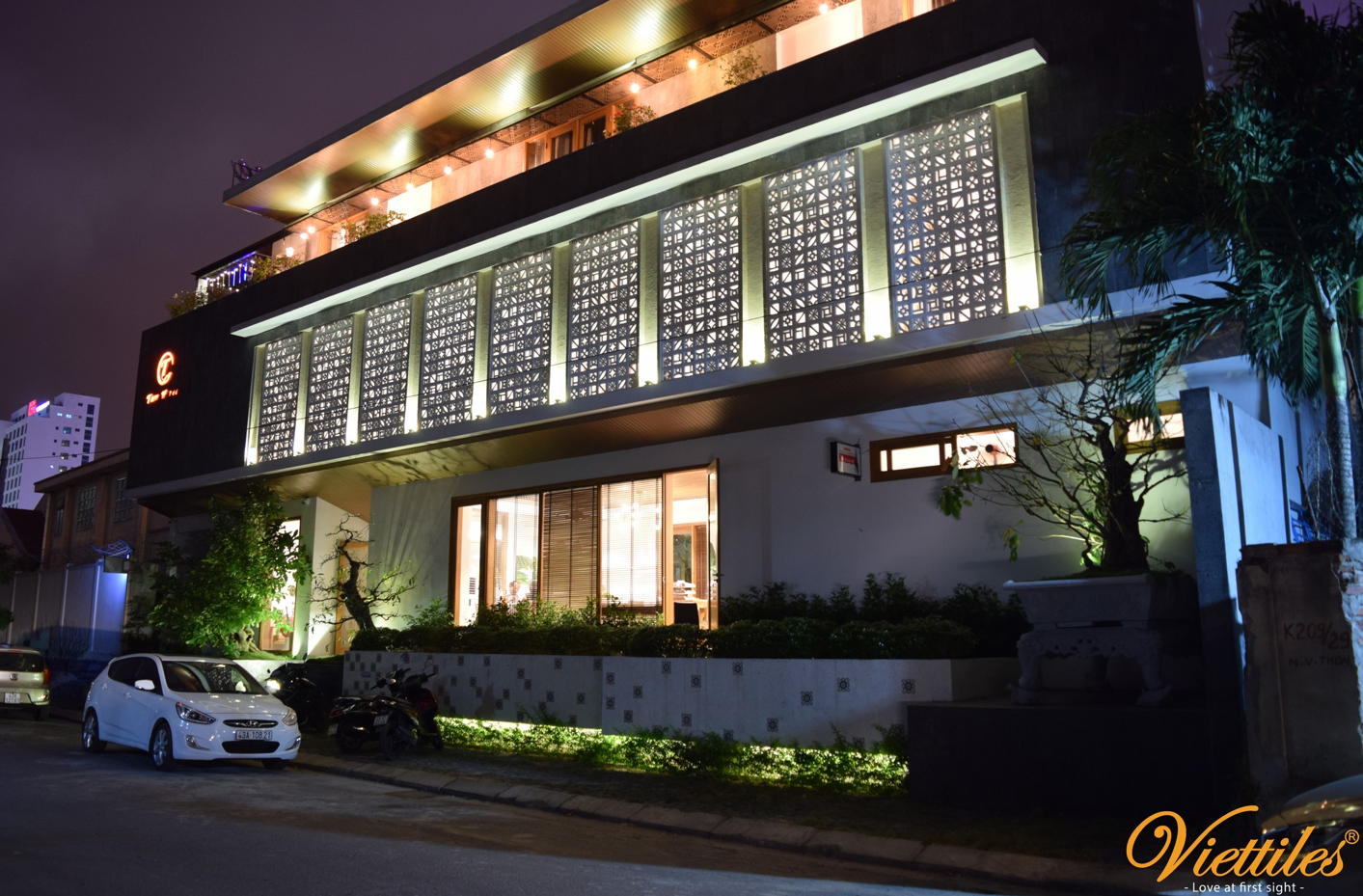
House façades – where breeze blocks show their beauty best
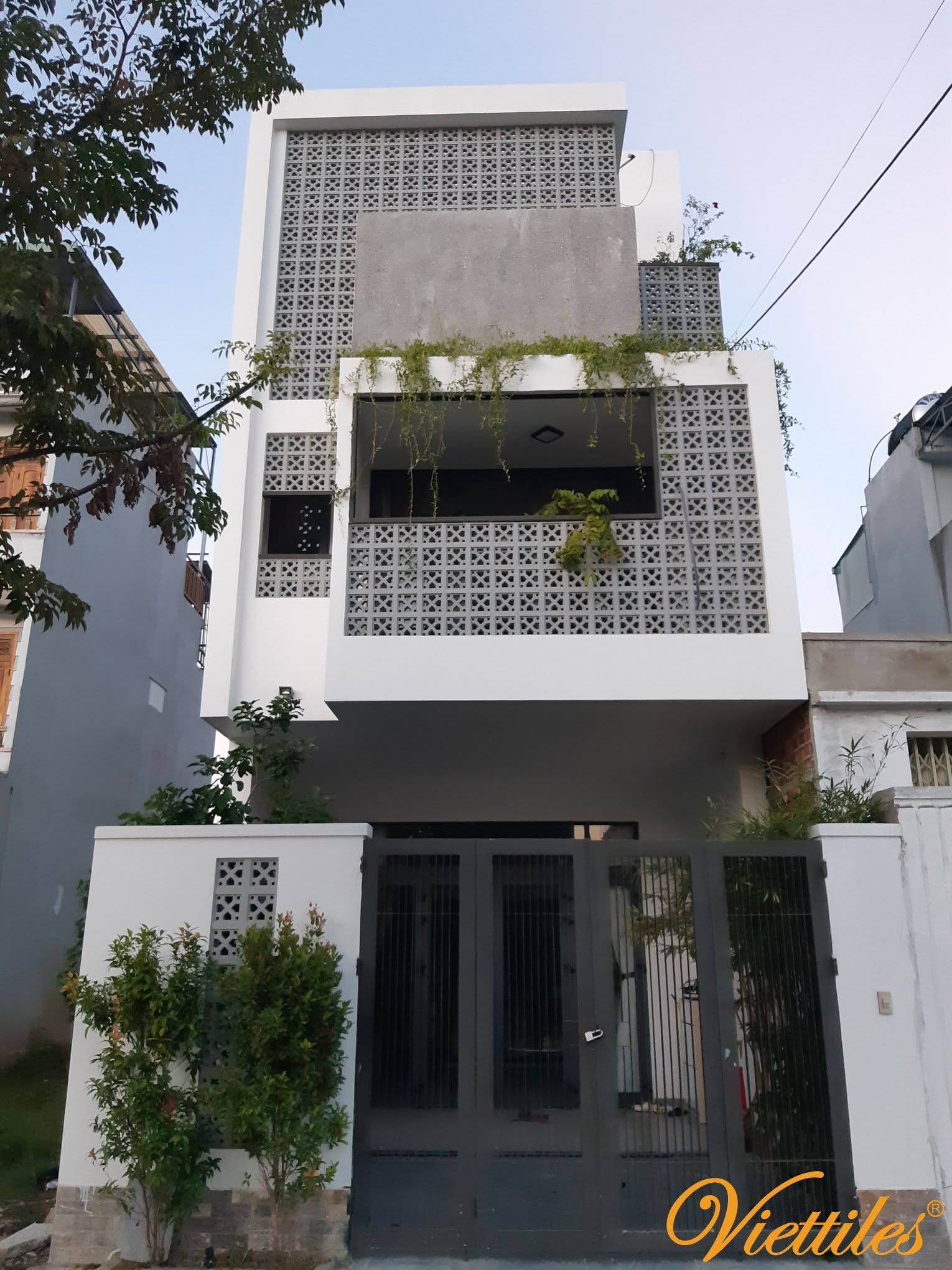
This is the most common place for breeze block applications.
Instead of completely solid walls, many modern townhouses use breeze blocks as an “architectural skin” to:
• Reduce direct sunlight
• Improve airflow
• Create beautiful lighting effects
• Maintain a certain level of privacy
Especially for west-facing houses or dense urban areas, breeze blocks make façades feel much lighter and more open.
As sunlight changes throughout the day, the shadows created through the patterned blocks become highly artistic — one of the reasons architects love this material so much.
Skylights – where light and air can “breathe”
Many townhouses often face issues such as:
• Lack of natural light
• Poor air circulation
• Hot and stuffy interiors
In these situations, breeze blocks around skylight areas become a highly effective solution.
Instead of sealing the space completely, ventilated blocks help:
• Guide airflow deeper into the house
• Reduce feelings of suffocation
• Soften natural lighting
• Minimize direct heat absorption
Beyond functionality, this is also one of the most visually beautiful areas when sunlight changes throughout the day.
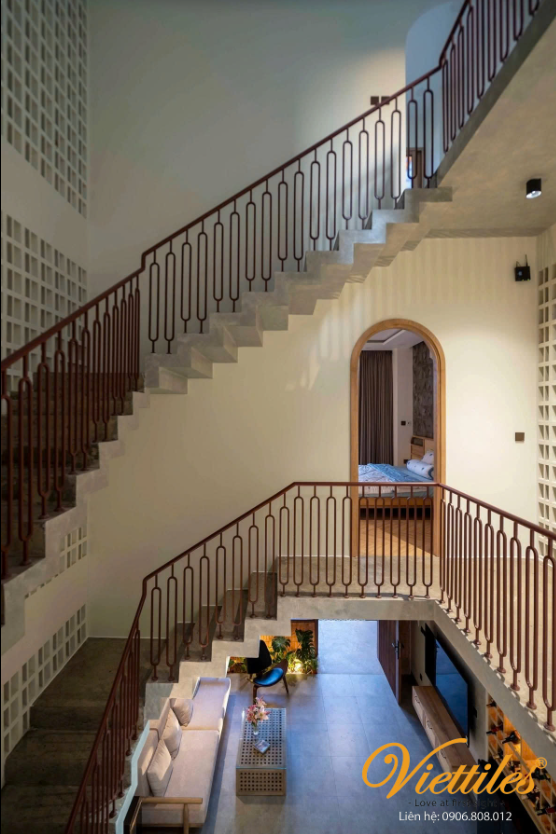
Staircase areas – creating soft transitions within the space
In modern architecture, staircases are no longer just for movement.
They often become transitional spaces connecting light, airflow, and the overall aesthetic of the house.
Using breeze blocks in these areas helps spaces feel:
• Deeper and more layered
• More open and airy
• Less enclosed between floors
Especially in narrow townhouses, bringing natural light into staircases significantly improves overall comfort.
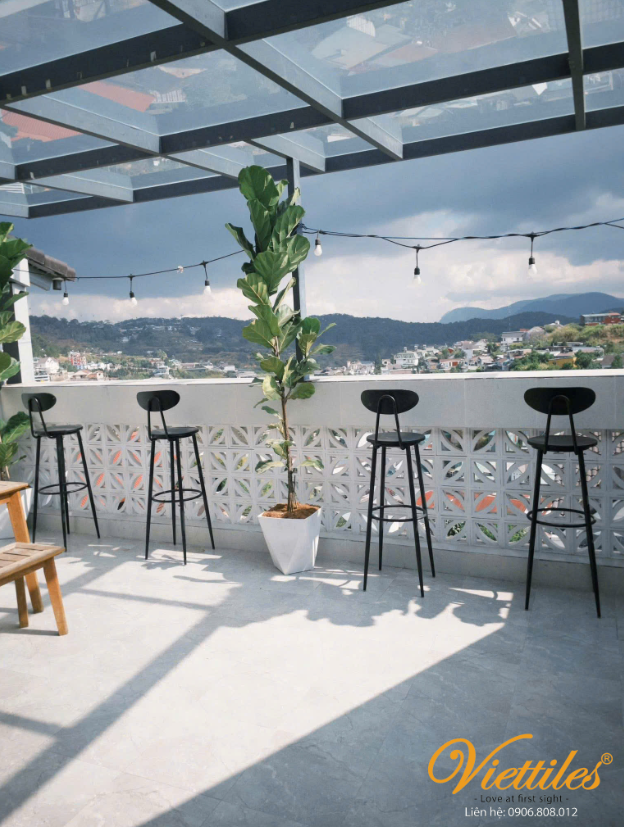
Balconies and rooftops – balancing privacy and airflow
Many people want open balconies but still value privacy.
Breeze blocks provide a balanced solution for this need.
Block walls on balconies can:
• Filter harsh sunlight
• Maintain ventilation
• Create architectural highlights
• Support healthier plant growth through natural airflow
These areas are also commonly seen in designs such as:
• Tropical
• Indochine
• Resort style
• Green townhouses
Combined with greenery and natural light, these spaces feel highly relaxing.
Space dividers – an “open” alternative to solid walls
Another interesting application of breeze blocks is as partition walls.
Instead of solid walls or full glass partitions, many projects use:
• Brick partitions between living rooms and gardens
• Kitchen divider walls
• Semi-open space separations
This approach helps:
• Maintain visual connection between spaces
• Improve light circulation
• Create a softer and lighter atmosphere overall
Especially in cafés and homestays, these partitions often create beautiful visual effects for photography.
Bathrooms and back-of-house areas
Many people overlook these areas, but they are actually where breeze blocks perform extremely well.
In spaces that require:
• Ventilation
• Moisture reduction
• Natural lighting
breeze blocks make interiors more comfortable while still maintaining relative privacy.
Many modern homes also use breeze blocks for:
• Laundry rooms
• Drying yards
• Rear corridors
to reduce stuffiness and save electricity during daytime.
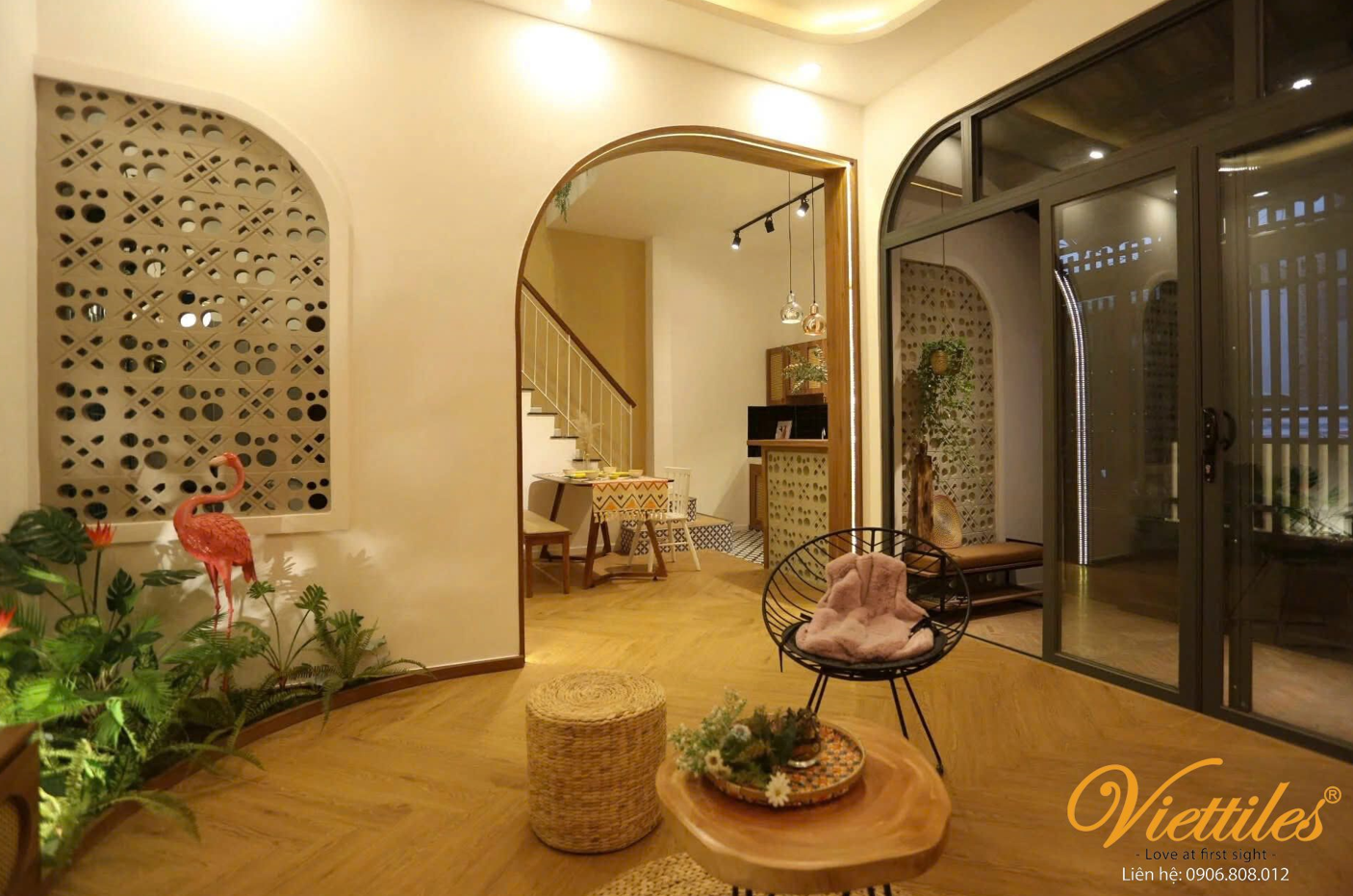
Viettiles and highly functional breeze block designs
Within the modern tropical architecture trend, Viettiles has gained attention for its breeze block collections that combine aesthetics with practical applications.
Viettiles offers diverse designs:
• From classic patterns
• To modern minimalist styles
• Suitable for townhouses, cafés, resorts, and villas
Beyond decoration, many designs are optimized for:
• Natural ventilation
• Better lighting
• Reducing stuffiness in urban spaces
What makes them special is their handcrafted spirit combined with modern production techniques to ensure durability and sharp detailing.
Even a small breeze can change the feeling of a home
Sometimes, what makes a home comfortable has nothing to do with large spaces or expensive interiors.
It may simply be:
• A perfectly balanced light source
• A breeze flowing through the house
• A wall casting beautiful afternoon shadows
Perhaps breeze blocks are loved because they create exactly that feeling — light, airy, and artistically unique.
In a world where spaces are becoming increasingly enclosed and dependent on air conditioning, these “breathing spaces” are becoming more valuable than ever.