

Hành trình gìn giữ di sản kiến trúc qua từng viên gạch bông thủ công
A tile laid on a construction floor may take only a few dozen seconds to align. But creating that finished tile is an entirely different journey—one that demands immense patience, a keen eye, and the skilled hands of craftsmen who have devoted years to their trade.
Unlike automated industrial production lines, Viettiles handcrafted encaustic tiles carry a unique value through the quiet rhythm of human craftsmanship. Every pattern and every shade of natural mineral pigment serves as a bridge, bringing cultural memories into contemporary living spaces in a lasting and deeply emotional way.
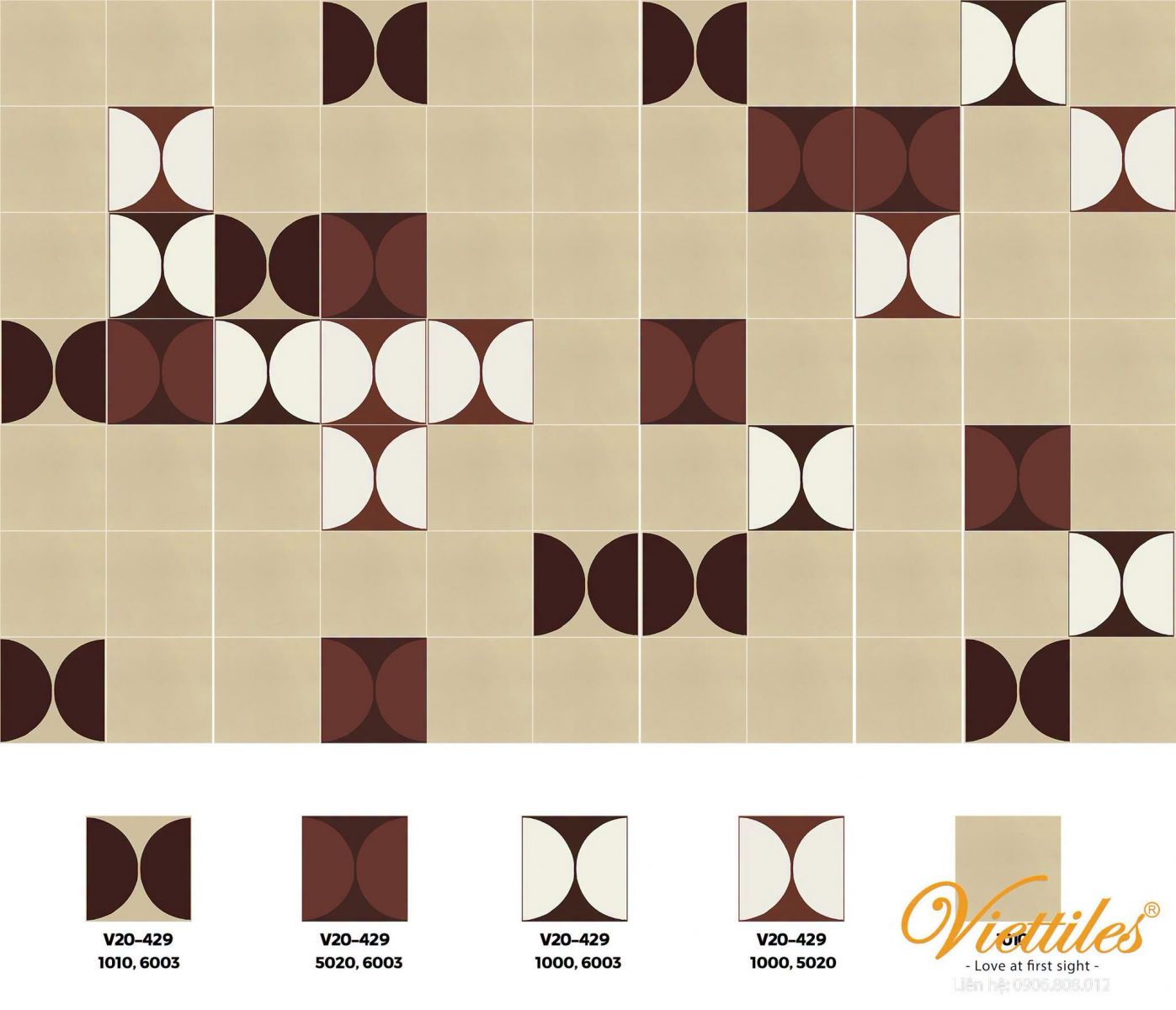
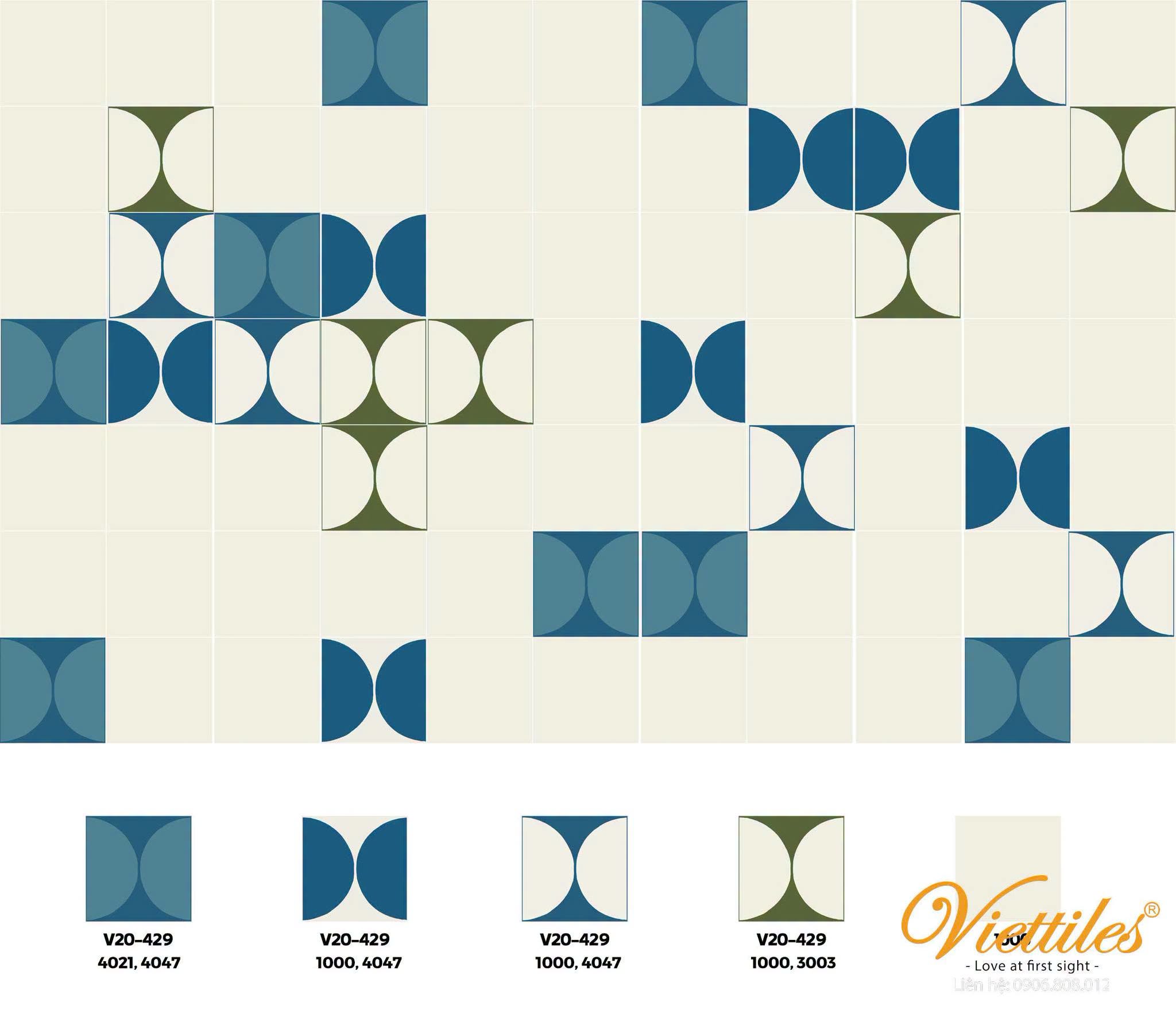
Each encaustic tile pattern is handcrafted by skilled artisans
Handcrafted Encaustic Tiles – Value Created by Human Hands
In an era dominated by mass-produced digitally printed ceramic tiles, cement encaustic tiles continue to hold a distinguished position among architects and art enthusiasts. The core value of this material lies in its “tactile character”—something that only human hands can create.
Every finished handcrafted encaustic tile is not a rigid, identical replica. The depth of the mineral pigments, the smoothness of the surface, and the natural variations along each pattern boundary bring a vibrant sense of life to the floor. The longer one looks, the more deeply they can appreciate the cultural depth and warmth of the artisan’s hands embedded in every corner of the home.
See more: Beautiful Encaustic Floor Tile Designs for Restaurants with a Nostalgic Style
The Handcrafted Encaustic Tile Production Process at Viettiles
To produce tiles with high mechanical strength and crisp patterns, Viettiles’ production workshops strictly follow a traditional craftsmanship process combined with modern compression technology:
-
Placing the pattern mold: The craftsman precisely places a copper or steel pattern mold into the flat-bottomed metal mold.
-
Pouring natural mineral pigment: A liquid mixture of mineral pigments, white cement, and fine stone powder is manually poured into each individual compartment of the pattern mold. This step requires great precision to ensure the colors are evenly distributed, free from air bubbles, and do not spill into adjacent compartments.
-
Applying the bedding and load-bearing base layers: After carefully lifting the pattern mold, a layer of dry bonding powder is evenly spread over the surface, followed by a mixture of cement and damp sand to create the tile body.
-
Hydraulic static pressing: The entire material block is placed into a hydraulic static press under extremely high compression pressure. This force tightly bonds the surface color layer and the tile body into a dense, homogeneous structure.
-
Natural curing: After demolding, the tile is immersed in water to activate the natural hydration reaction of the cement, then transferred to a strictly humidity-controlled curing room without undergoing high-temperature kiln firing.
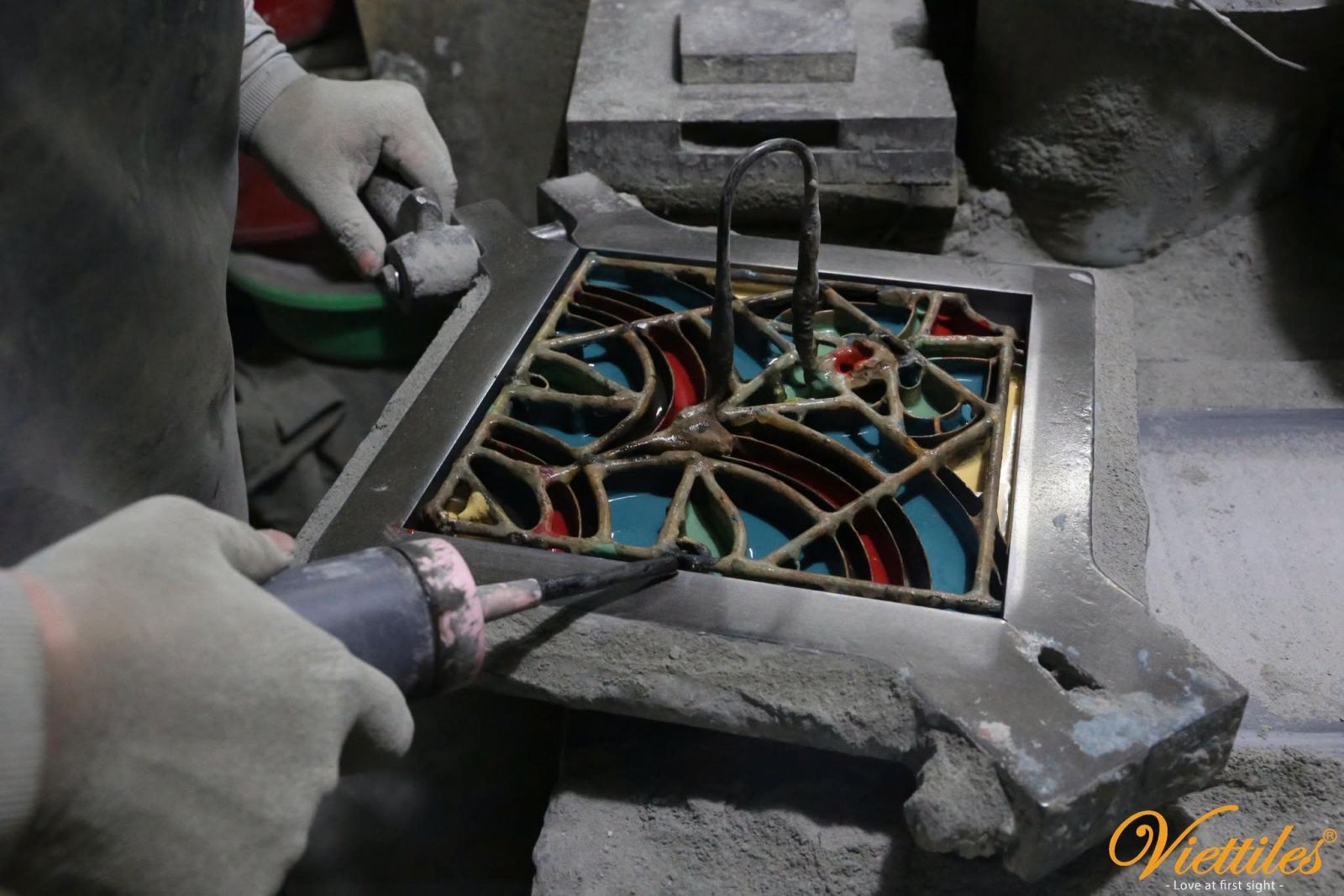
The hydraulic static pressing process gives the tile body high compressive strength
Viettiles Artisans – The Keepers of Traditional Craftsmanship
At Viettiles, artisans are more than workers who create building products. They are the successors and custodians of a traditional craft that has existed in Vietnam for more than a century.
Most of the craftsmen in Viettiles’ workshops are highly skilled artisans with decades of experience measuring pigment quantities and assessing the moisture content of aggregates by hand. They work with intense concentration, where every movement—lifting the mold, spreading the mixture, or pouring the pigment—has reached a high level of mastery and precision. The enduring dedication of these artisans has helped preserve traditional tile-making techniques from being lost amid the growing dominance of industrial machinery.
The Meticulous Detail in Every Encaustic Tile Color and Pattern
The demanding nature of handcrafted tile production is most evident in the surface quality control process:
-
Shades from mineral pigments: Viettiles selects high-quality mineral pigments imported according to European standards, creating warm, gentle tones that do not fade under the effects of time or sunlight.
-
Pattern layer thickness: The decorative color layer is 2–3 mm thick and extends deep into the tile body. This explains why encaustic tile floors can retain their sharp patterns even after decades of foot traffic without wearing down to the cement layer underneath.
-
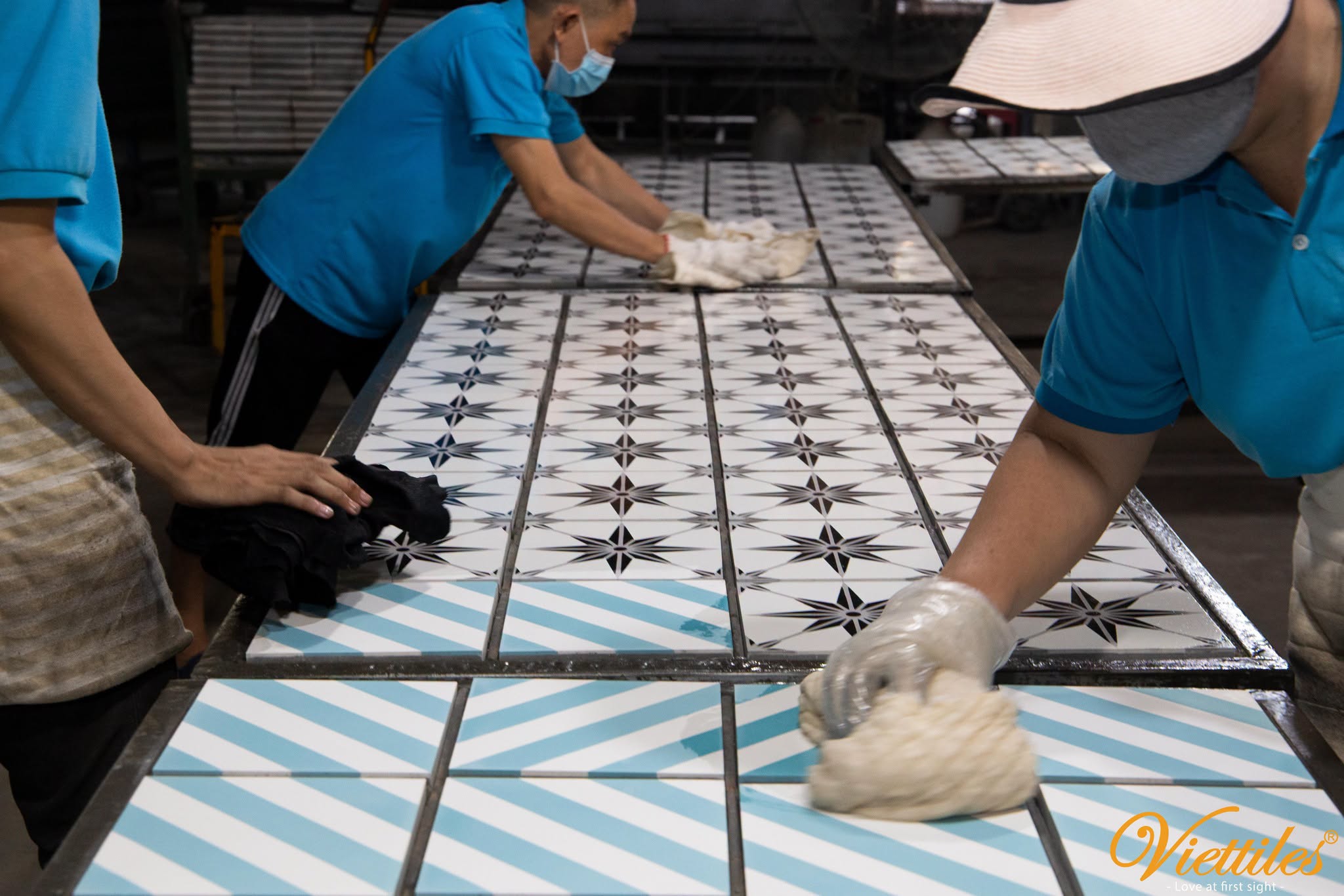
The principle of starting over: Even a minor defect, such as an inconsistent color tone, blurred edge, or tiny air bubbles on the surface, is enough for the tile to be rejected during the wet stage and remade. Once a product becomes part of a building, it becomes part of the space and represents the attention to detail of the entire home.
The Value of Handcrafted Encaustic Tiles in Spatial Design
In contemporary architecture, Viettiles encaustic tiles are considered a versatile storytelling material, creating impressive visual effects across a variety of styles:
-
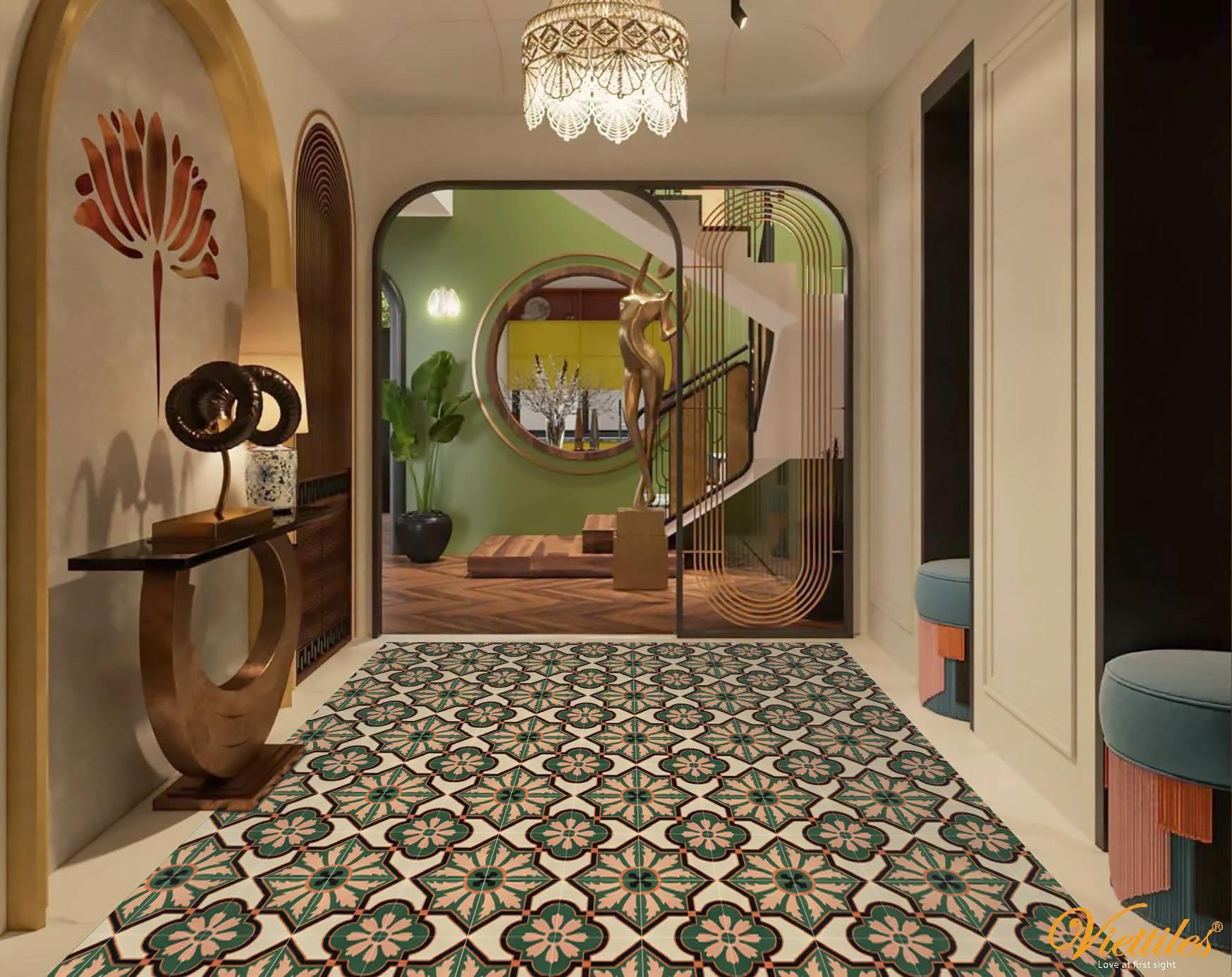
Creating floor-rug zones to define spaces: Instead of fabric rugs that easily collect dust, a framed area of classic patterned encaustic floor tiles beneath a dining table or in the living room creates an elegant visual stopping point, feels cool underfoot, and is easy to clean.
-
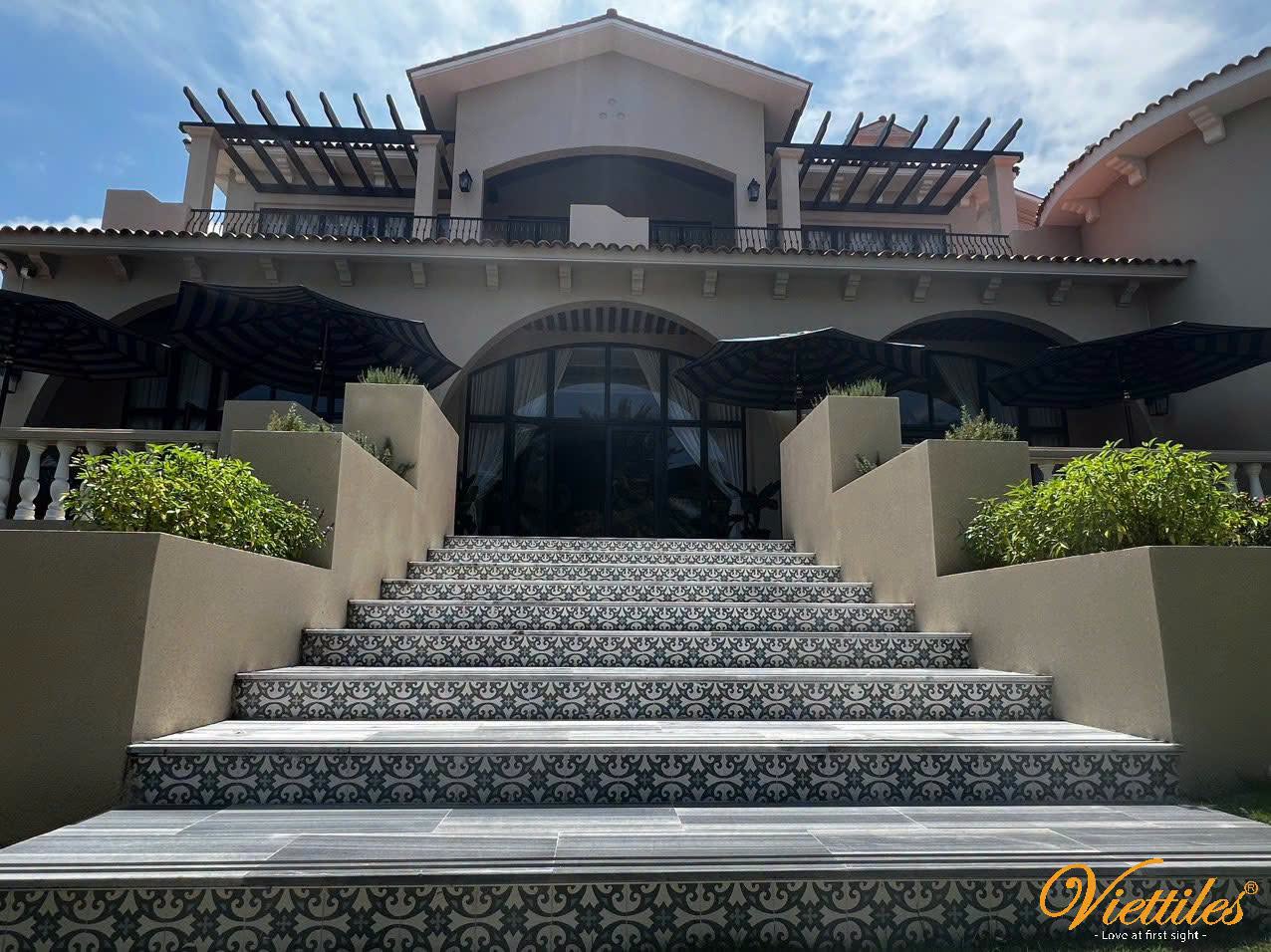
Emotionally rich vertical accents: Installing artistic encaustic tiles on kitchen walls, bar counters, stair risers, or shower walls eliminates the monotony of flat painted surfaces and adds artistic depth to vertical perspectives.
-
Increasing in character over time: Unlike easily scratched glazed tiles, cement-based tiles can naturally develop a subtle patina after years of use and cleaning with clean water, creating a nostalgic and mellow beauty that evolves over time.
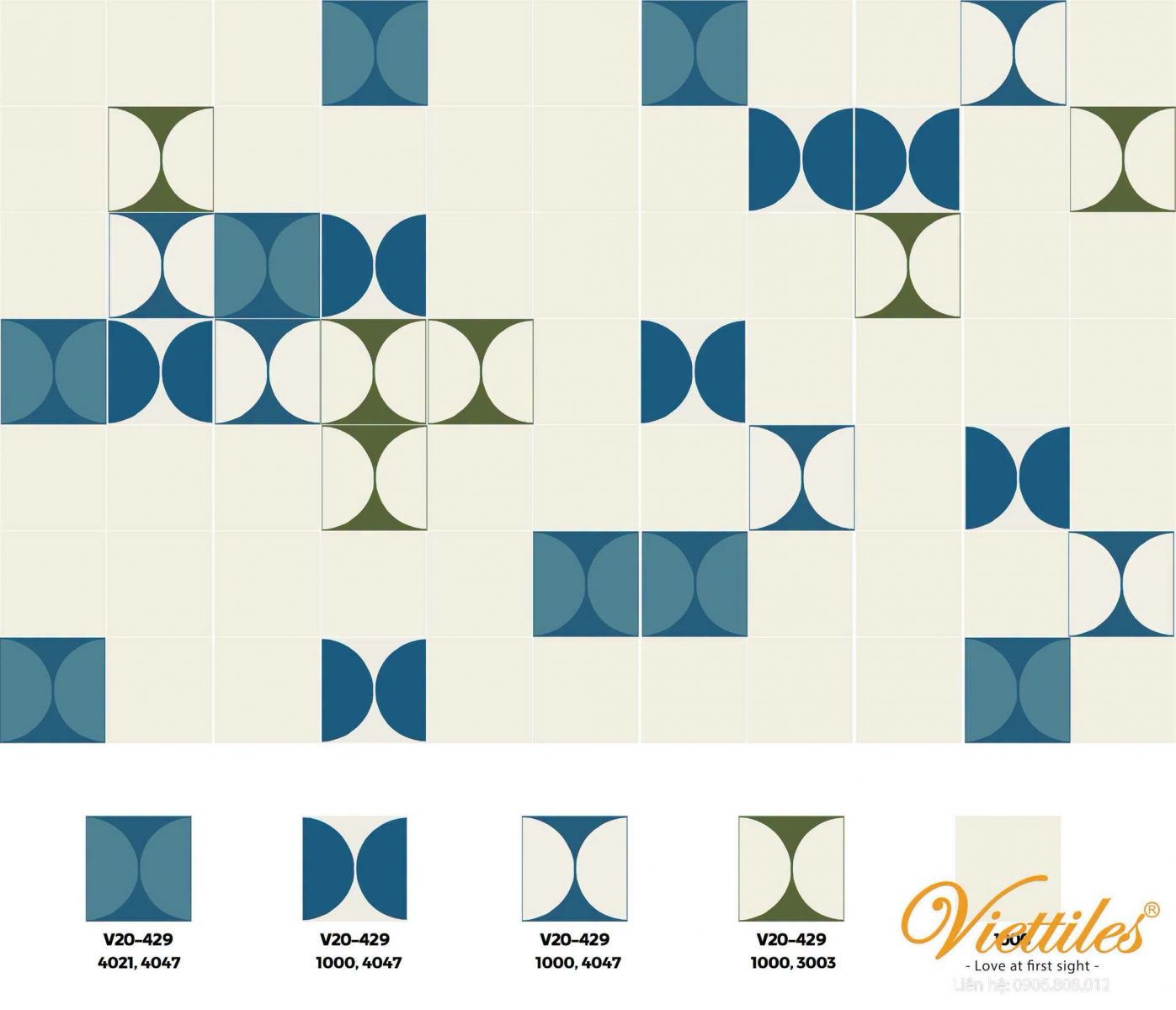
Handcrafted encaustic tiles blend harmoniously into contemporary architectural spaces
See more: Viettiles Partners with AA Tay Ninh on the Hoang Hau Nam Phuong Project – Hon Thom, Phu Quoc
Viettiles Encaustic Tiles – Where Tradition Meets Modern Architecture
Beyond restoring traditional patterns from the past, Viettiles continuously refreshes the visual language of encaustic tiles to integrate them into the evolving landscape of global architecture:
-
A rich color palette: More than 160 standardized tones, ranging from nostalgic shades such as mustard yellow, moss green, and flag red to modern tones such as gray, navy blue, and pastel, give architects the freedom to create.
-
Innovative geometric shapes: Alongside the traditional square format (200x200 mm), Viettiles develops diverse forms such as hexagonal and octagonal tiles, as well as border strips that harmoniously combine with Terrazzo polished stone tile flooring and Viettiles artistic ventilation tiles.
-
Commitment to green materials: The production process is completely kiln-free, saving firing energy and reducing greenhouse gas emissions while meeting the stringent standards of green buildings.
Discover the Viettiles Handcrafted Encaustic Tile Collection
Viettiles is proud to be a brand that brings handcrafted encaustic tiles with a distinctive Vietnamese identity to the world, with its products present in projects across more than 50 countries:
-
Large supply capacity: A system of three large-scale factories in Ho Chi Minh City and Binh Phuoc provides stable production capacity, meeting the schedules of residential projects, villas, and high-end resort developments.
-
Consistent quality: Every tile is carefully inspected for flatness, edge accuracy, and color vibrancy before being packed and shipped.
Are you looking for expressive handcrafted encaustic tiles to create a lasting focal point for your home?
Contact Viettiles or visit our showroom system to experience the rustic tactile character of each tile, explore our pattern collection, and receive a detailed quotation based on your project volume.
CONTACT INFORMATION
Phone: +84906830362
Email: info@viettiles.com
Address: No. 17, Street 40, An Khanh Ward, District 2
 (Domestics Viettiles's conflicted copy).jpg)