WALL BASE TILES - A SMALL DETAIL THAT COMPLETES THE SPACE
WALL BASE TILES – A SMALL DETAIL THAT COMPLETES THE SPACE
Wall base tiles are finishing elements installed at the junction between the wall and the floor. Although they occupy minimal space, a well-chosen base tile line can bring balance, seamlessness, and added depth to the overall design.
With handcrafted encaustic cement tiles, the base tile is more than just the termination point of a wall. Its patterns, colors, and materials can serve as a connecting element linking the floor, walls, and interior furnishings within the same space.
What are wall base tiles?
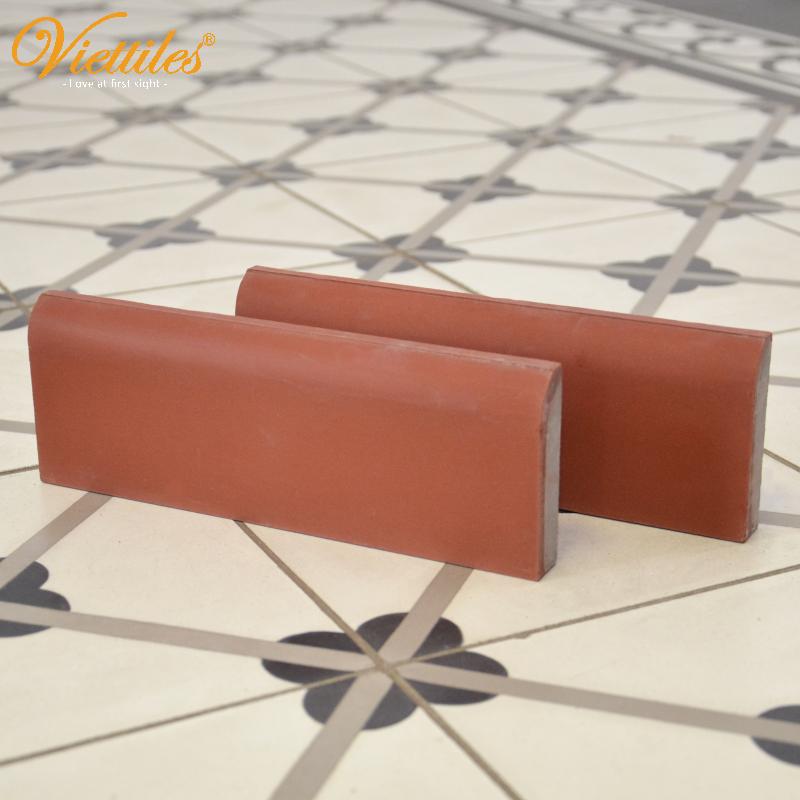
Wall base tiles—also known as "Base Trim Tiles"—are designed for installation at the base of the wall, typically acting as a transition between the flooring and the wall surface.
If the floor establishes the foundation of the space and the walls define its height and sense of enclosure, the base tile acts as a border that unites these two elements.
Positioned low and running along the bottom of the wall, base tiles are often not the first detail to catch the eye. Yet, their subtle presence lends a sense of meticulous finish to the entire project.
Viettiles categorizes wall base tiles as decorative tiles, offering the "Base Trim Tiles" line alongside other collections such as 3D tiles, gourd-shaped tiles, fish-scale tiles, and sandblasted tiles.
Why is the wall base tile important?
In interior design, a polished look does not always stem from a massive feature.
It often lies in how different materials meet.
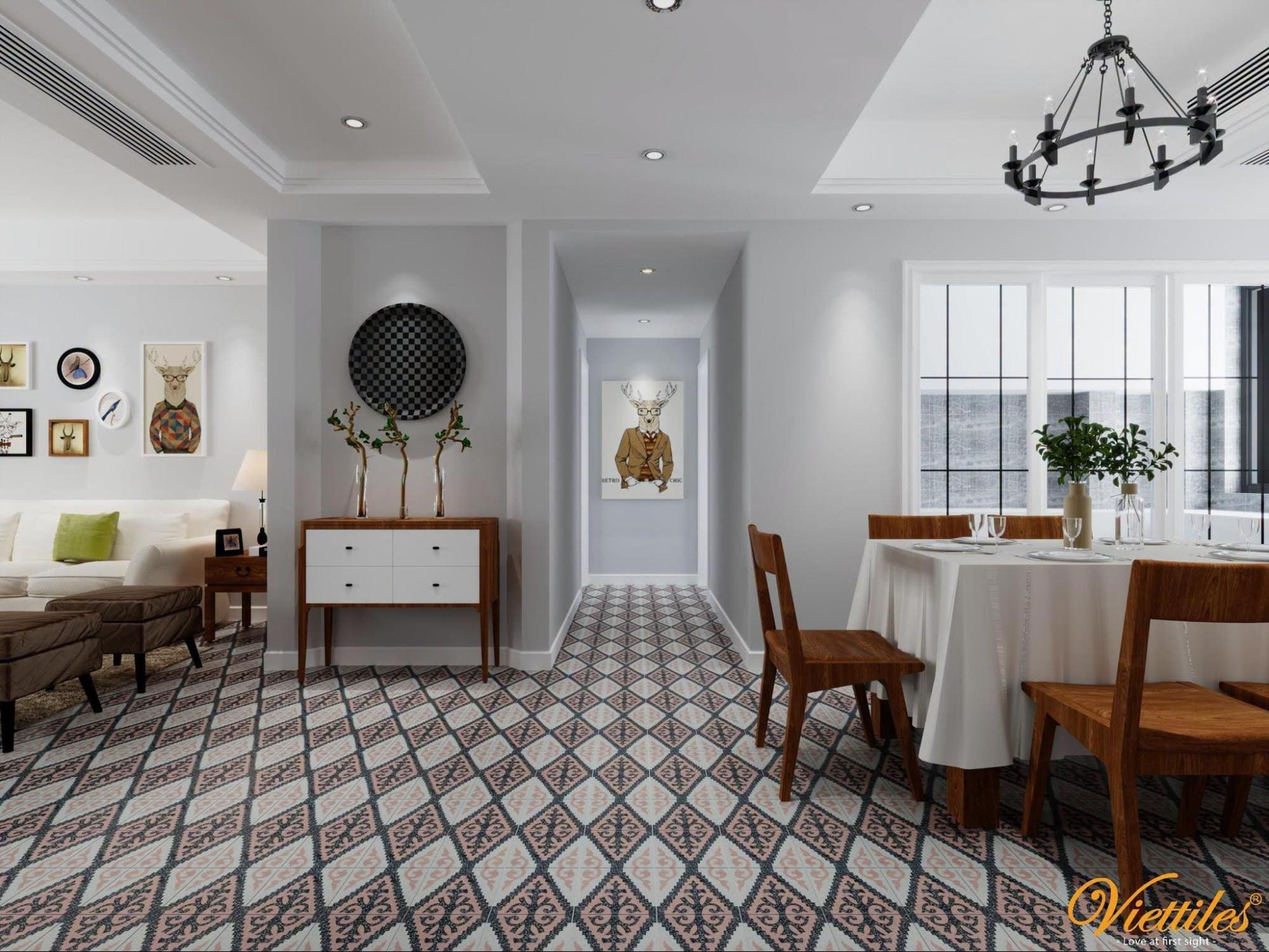
A beautiful floor that ends abruptly at the wall can leave a space feeling disjointed. Conversely, a harmoniously chosen base tile creates a soft boundary, allowing for a natural transition between the floor and the wall. Especially in spaces featuring encaustic cement tiles, the pattern on the skirting tiles can extend the visual narrative of the flooring.
A border echoing the colors of the floor tiles.
A motif inspired by the primary pattern.
Or simply a solid color serving as a backdrop for highly patterned tiles.
Each choice creates a distinct atmosphere.
Thus, skirting tiles serve a purpose beyond merely "covering the base of the wall"; they can provide the finishing touch to the room's overall design language.
%20(Domestics%20Viettiles's%20conflicted%20copy).jpg)
Skirting tiles—where a small detail becomes a focal point.
One of the interesting aspects of skirting tiles is that they do not necessarily have to stand out.
In spaces with Classic or Indochine styles, a patterned skirting line can evoke the charm of historic architecture, where decorative details were meticulously crafted from the floor up to the base of the wall.
In a kitchen, the skirting line can create a seamless transition between the encaustic floor tiles and the cabinetry.
In a bathroom, it adds a layer of decorative detail to the base of the wall without requiring an excess of materials.
In hallways, shops, restaurants, or hotels, a subtle skirting line running along the wall can serve as a unique signature for the space.
The goal is not necessarily to make the skirting tiles highly conspicuous.
Rather, it is about placing them correctly so they harmonize with their surroundings.
Common sizes for skirting tiles.
Skirting tiles come in various sizes to suit different proportions and design requirements. According to the Viettiles catalog, standard sizes for skirting tiles include:
• 300 × 200 mm
• 300 × 70 mm
• 200 × 150 mm
• 200 × 100 mm
• 200 × 70 mm
This variety of sizes offers architects and designers more options when detailing the base of the wall, particularly in projects requiring visual harmony between floor tiles and finishing elements.
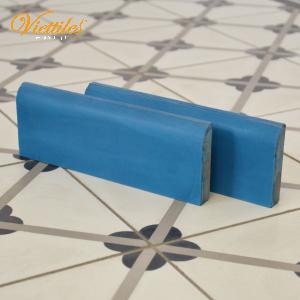
Viettiles also offers rectangular tiles that can serve as borders or skirting; these sizes are proportioned to integrate seamlessly with encaustic cement tile systems in the overall design.
Where are skirting tiles suitable for use?
As both a finishing and decorative element, skirting tiles offer versatile application across various types of projects.
Residential
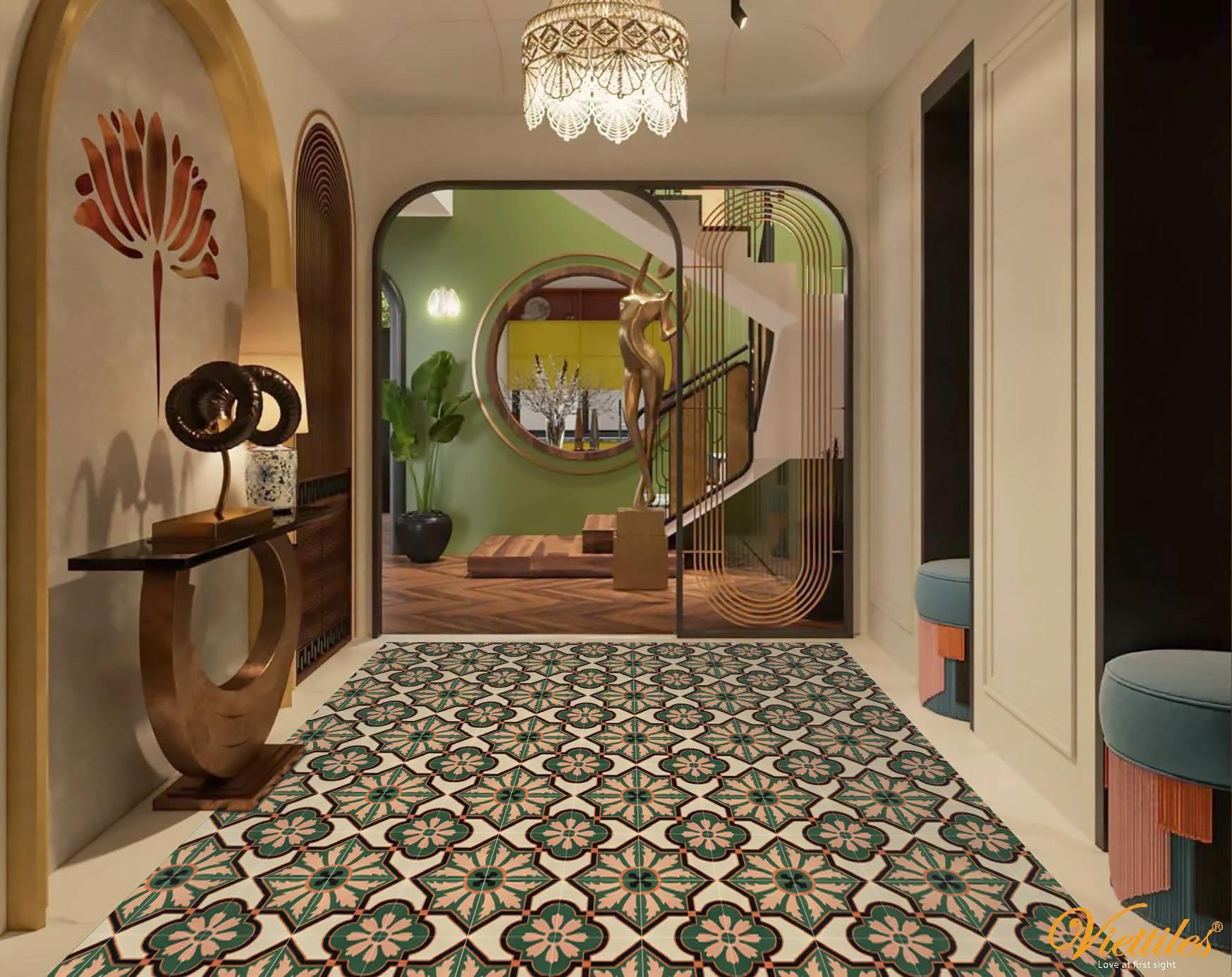
In living rooms, kitchens, dining areas, or hallways, skirting tiles create a transition between the floor and the wall—an especially fitting choice for homes that use encaustic cement tiles as a decorative feature.
Restaurants and cafés
These spaces often emphasize a specific design narrative. A patterned skirting tile can evoke a classic, nostalgic, or distinctive aesthetic for the venue.
Hotels and resorts
For projects requiring a cohesive spatial identity, skirting tiles can serve as a recurring design element across different areas, fostering visual unity.
Indochine-style projects
This style aligns perfectly with the character of handcrafted skirting tiles. Their borders, patterns, and nostalgic color palettes can be combined with encaustic cement tiles to create a beautiful fusion of tradition and modernity. Viettiles develops its line of encaustic and decorative tiles by blending traditional craftsmanship with modern design needs. Wall border tiles offer architects additional options for finishing and connecting surfaces within a project.
Discover the Viettiles wall border tile collection—find the perfect border to complete your design.
 (Domestics Viettiles's conflicted copy).jpg)