

Vietnamese Cultural Values Preserved Through the Hands of Handcrafted Tile Artisans
There are architectural values born to keep up with trends, but there are also values that endure to preserve the passage of time. When machines can reproduce millions of identical tiles, only human hands can create the unique “charm” that gives each patterned surface its own character.
At Viettiles, handcrafted tile making is not simply the process of mixing cement, clean sand, and natural pigments. It is a journey of preserving a traditional craft heritage through the hands of Vietnamese artisans, transforming simple raw materials into distinctive storytelling details for modern homes.

The hands of a Viettiles artisan carefully pouring each drop of mineral pigment into the patterned mold
Vietnamese Values Preserved Through Human Hands
The cultural identity of a place is found not only in history books or monumental heritage sites, but also vividly expressed through traditional crafts. The craft of making cement ventilation tiles and handcrafted encaustic tiles was introduced to Vietnam more than a century ago, where it became intertwined with the skillful hands of Vietnamese artisans to create patterned surfaces deeply rooted in local cultural identity.
Every handcrafted encaustic tile is the result of patience and dedication. There is no firing process involving high temperatures and no digital printing for mass production. Instead, the value of each tile lies in the unique “charm” of craftsmanship: mineral pigments penetrate deep into the body of the tile, creating a smooth and rich surface, while refined details can only be achieved when artisans devote their full attention to every movement of the trowel and every lift of the pattern mold.
Read more: Tiles Are Not Just Building Materials but Also the Language of Architecture
The Value of Handcrafted Craftsmanship in the Modern Era
As sleek concrete structures and tempered glass gradually cover modern cities, people are increasingly drawn to materials that bring a sense of warmth and a natural, tactile character:
-
Unique and subtly non-identical: Even when using the same pattern mold and color palette, every handcrafted tile carries its own subtle variation in tone. These delicate differences make walls and floors more dynamic and visually dimensional rather than flat and industrial.
-
A material suited to healthier living environments: Using hydraulic pressing and natural curing without firing, the handcrafted production process avoids the emissions associated with high-temperature firing, creating a material suitable for living spaces.
-
Beauty enriched by time: Natural mineral pigments integrated into the cement body are resistant to scratching and fading. After decades of use and cleaning with clean water, the tile surface can naturally develop a soft patina, creating an elegant and nostalgic appearance.
Artisans – The Keepers of Handcrafted Tile Heritage
Behind every beautiful tiled surface are artisans who have spent their lives working with molds and pigments. They have witnessed the many changes in the building materials industry, from the golden eras of earlier architectural styles to periods when handcrafted tile making faced the risk of being forgotten amid the rise of inexpensive industrial ceramic tiles.
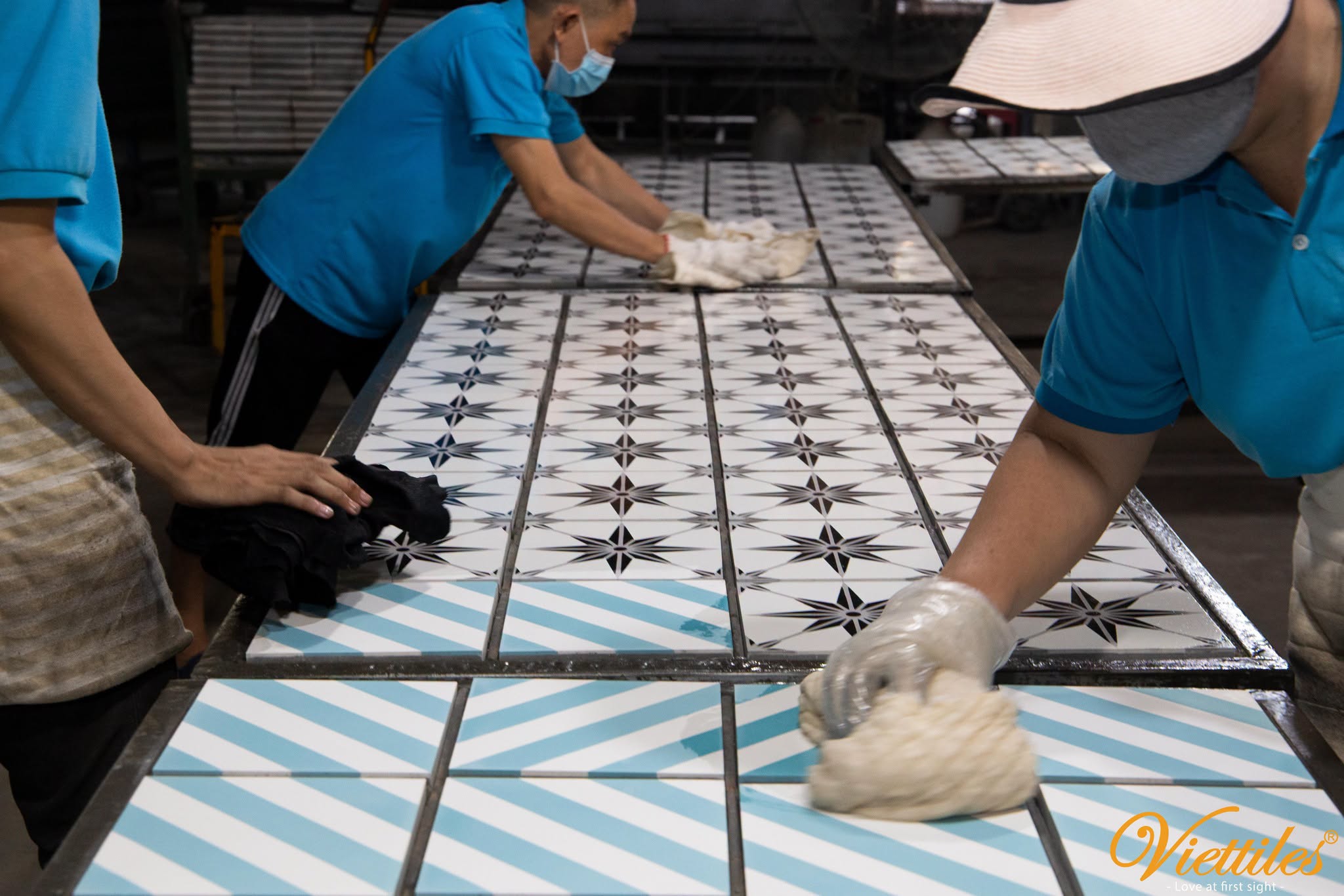
Driven by a simple passion for their craft, senior artisans at the workshop continue to work diligently at the pressing tables every day. More importantly, they serve as direct mentors, passing down techniques for measuring pigments and pressing molds to younger generations of artisans. Through this patient transfer of knowledge, the spirit of a traditional craft continues to be preserved across generations.

Handcrafted techniques passed down through generations of artisans at the workshop
From Human Hands to Every Handcrafted Tile
To create a refined tile for architectural applications, artisans must go through a series of meticulous steps that require a high level of concentration:
-
Carefully positioning the pattern mold: The metal pattern mold is precisely shaped at every corner and edge, then carefully positioned inside the mold box to create separate compartments for each color.
-
The art of pouring mineral pigments: The artisan uses a spoon to pour liquid natural mineral pigments into each compartment of the pattern mold. Gentle movements help the pigment cover every corner of the base evenly, prevent air bubbles, and ensure that colors do not spill into adjacent compartments.
-
Applying the load-bearing base layer: After carefully lifting the pattern mold vertically so that the design does not become distorted, layers of bonding powder and a moist cement-sand aggregate are applied on top.
-
Compacting with hydraulic pressure: The material block is placed into a hydraulic press under pressure reaching hundreds of tons, compacting the sand, stone particles, and pigment layer into a uniform mass with high strength and load-bearing capacity.
-
Natural curing: The tile is removed from the mold, immersed in clean water, and kept moist for several days to allow the hydration process to fully develop, forming a durable structure capable of withstanding exposure to sun and rain.
Viettiles – Continuing Vietnam’s Handcrafted Tradition
At Viettiles, preserving traditional craftsmanship does not mean keeping everything locked in the past or allowing the craft to remain unchanged:
-
Standardizing techniques on a traditional foundation: Viettiles applies an ISO 9001 international-standard quality management system at its production facilities, strictly controlling dimensions, edge accuracy, flatness, and moisture levels in each tile batch.
-
A large team of skilled artisans: With more than 400 skilled workers across three factories in Ho Chi Minh City and Binh Phuoc, Viettiles provides a stable working environment where artisans can stay committed to their craft and continue developing their skills.
-
Proudly exporting Vietnamese handcrafted products: In addition to serving domestic projects, tiles created by Viettiles artisans are now exported to more than 50 countries worldwide, showcasing the value of Vietnamese craftsmanship on the international architectural stage.
Read more: 2026 Trends in Artistic 3D Wall Design Using Tiles
Handcrafted Tiles – Where Tradition Meets Modern Architecture
No longer limited to nostalgic interiors, handcrafted tiles have become an endless source of inspiration for young architects seeking to connect cultural identity with contemporary lifestyles:
-
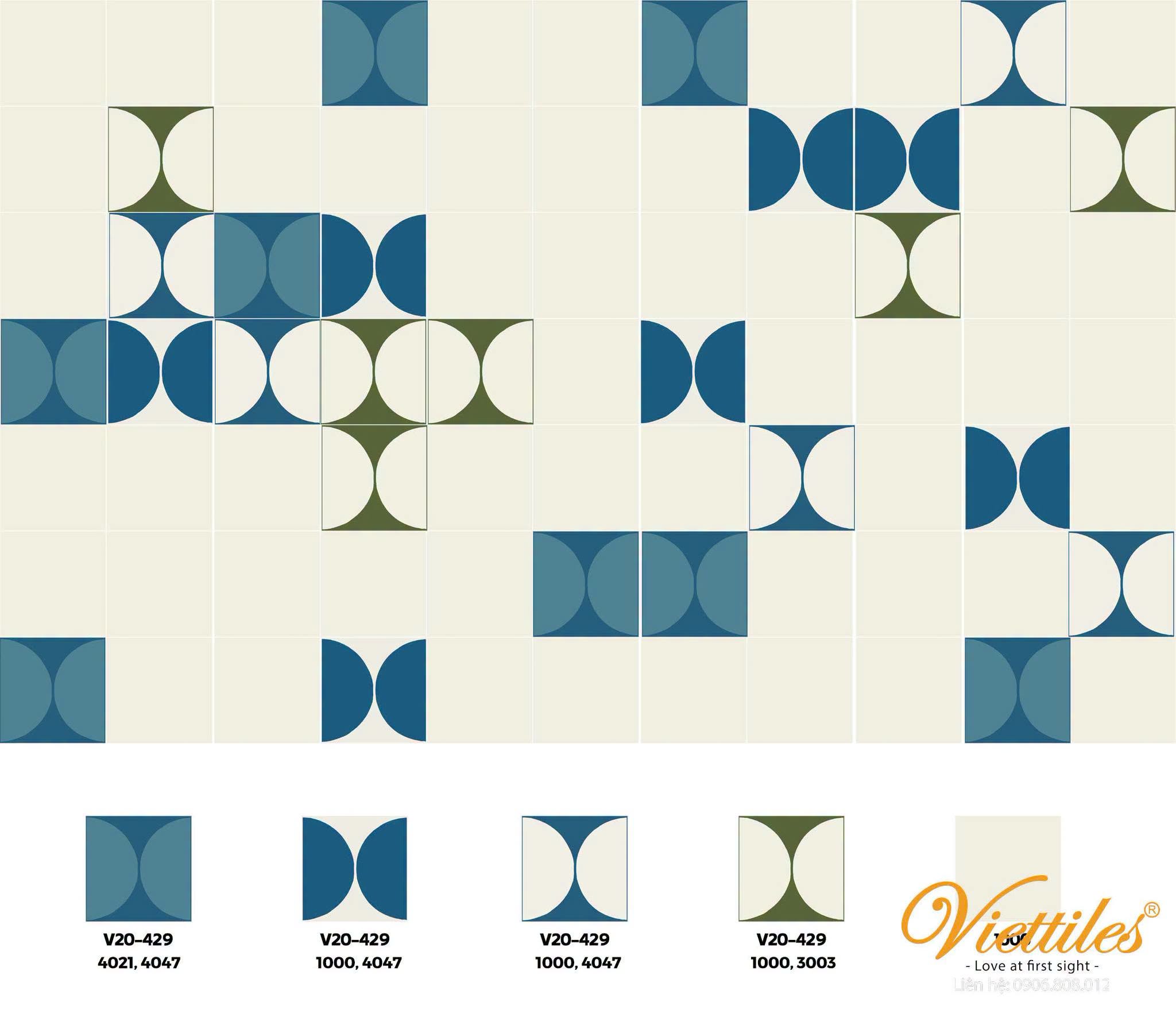
Creating new geometric languages: Alongside classic symmetrical patterns, Viettiles develops a wide range of solid-color tiles, minimalist geometric tiles, hexagonal encaustic tiles, and artistic 3D tiles, opening up countless creative combinations with Terrazzo polished stone tiles and Viettiles artistic ventilation tiles.
-
A diverse contemporary color palette: With more than 160 standard shades ranging from terracotta, moss green, and mustard yellow to cement gray and soft pastels, the tiles can easily complement architectural styles such as Minimalist, Japandi, Indochine, and Modern Rustic.
-
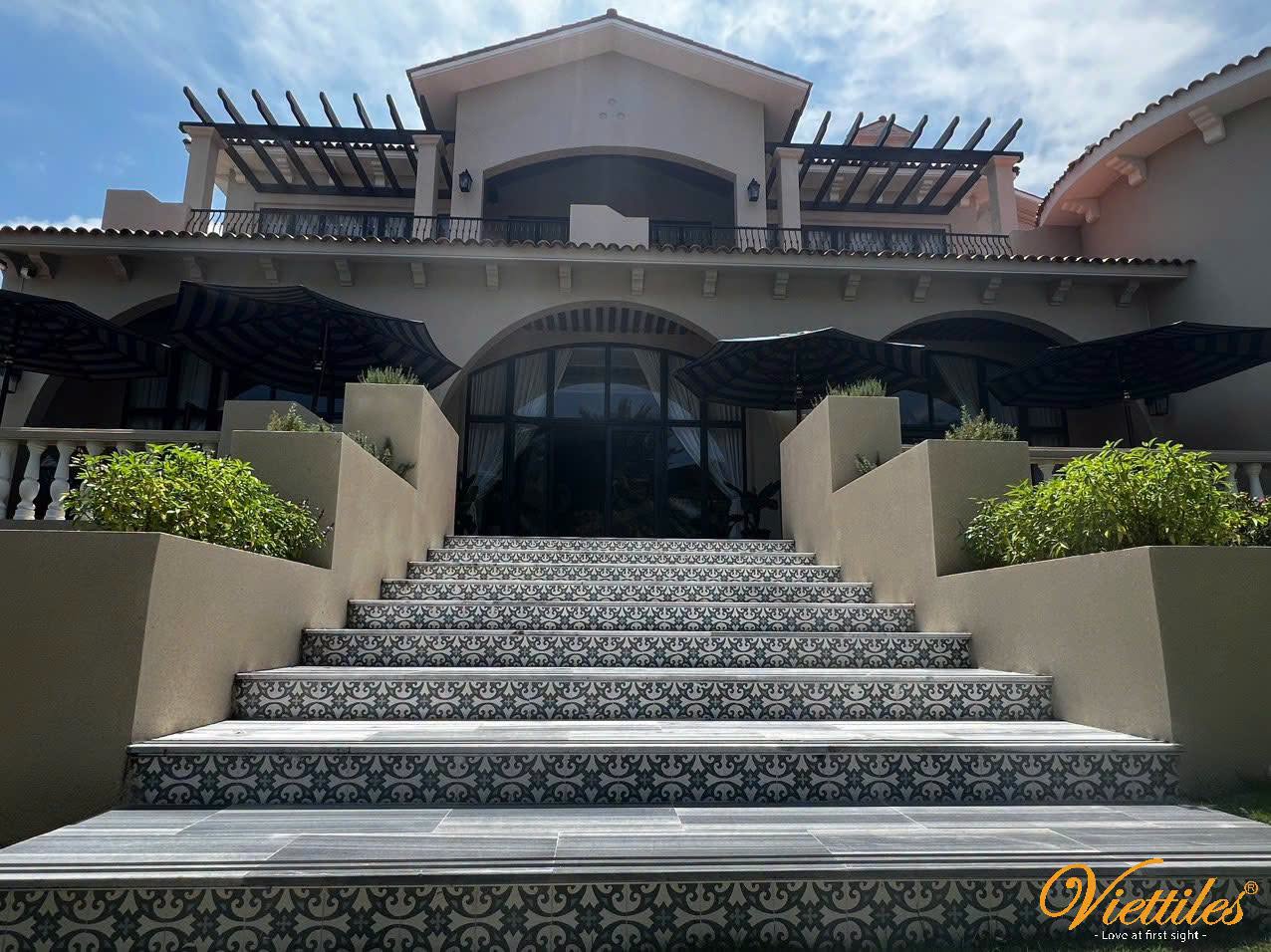
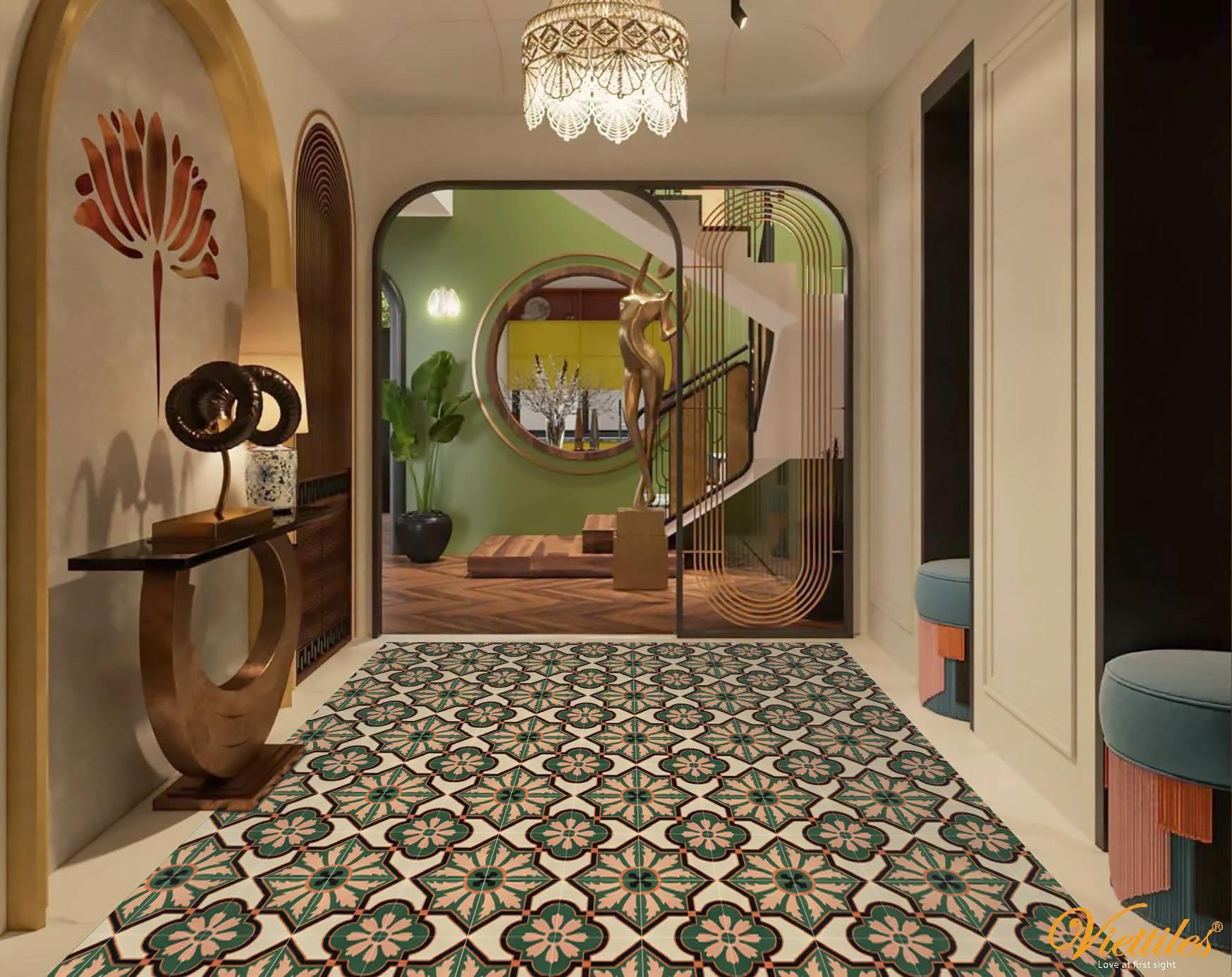
Versatile accents for living spaces: From a warm living-room floor rug made with classic patterned encaustic floor tiles, decorative stair risers, kitchen walls designed for easier cleaning, to café bar counters featuring artistic encaustic tiles, handcrafted tiles consistently bring a warm and distinctive character to architectural spaces.

Handcrafted encaustic tiles bring cultural depth to modern architecture
Are you looking for a material that carries the meticulous handcrafted character of Vietnamese artisans while meeting the aesthetic and technical requirements of contemporary architecture?
Contact Viettiles or visit our showroom system to experience the smooth texture of mineral pigments firsthand, hear the story behind every tile, and receive advice on a suitable material solution for your project.
CONTACT INFORMATION
Phone: +84906830362
Email: info@viettiles.com
Address: No. 17, Street 40, An Khanh Ward, District 2
 (Domestics Viettiles's conflicted copy).jpg)