How to Choose Ventilation Tiles That Harmonize with Modern Home Architecture?
How to Choose Ventilation Tiles That Harmonize with Modern Home Architecture?
Faced with hundreds of designs on the market, many homeowners and architects wonder how to incorporate ventilation tiles into townhouses or villas without compromising the clean lines of modern architecture. The answer lies in choosing ventilation tile designs with refined shapes that complement the proportions of the façade and the overall architectural language of the building.
Modern architecture emphasizes minimalism and practical functionality. Choosing the wrong design or overusing elaborate patterns can easily make a wall look visually cluttered and disrupt the structure of the façade. Selecting the right style of ventilation tiles allows a building to benefit from effective natural airflow while retaining an open, elegant, and sophisticated appearance.

LET IN THE SUNLIGHT, INVITE THE BREEZE – BREATHING SPACES IN ARCHITECTURE
How Do Ventilation Tile Designs Affect a Building's Appearance?
Beyond providing natural light and reducing direct sunlight, the shape of each tile has a direct impact on visual perception:
-
Defining the façade's architectural lines: Square, circular, and rectangular openings create clear horizontal and vertical lines, enhancing the building's strong and modern character.
-
Creating dynamic shadow effects: As sunlight moves throughout the day, façade ventilation tiles cast layered shadows across floors and ceilings, creating a changing spatial experience from one hour to the next.
-
Balancing solid and open surfaces: The combination of solid wall sections and ventilated areas makes multi-story buildings appear lighter, more open, and visually refined.
Choosing Ventilation Tiles Based on Architectural Style and Building Form
Each design style requires a distinct visual language when selecting decorative ventilation tiles:
1. Minimalist and Modern Styles
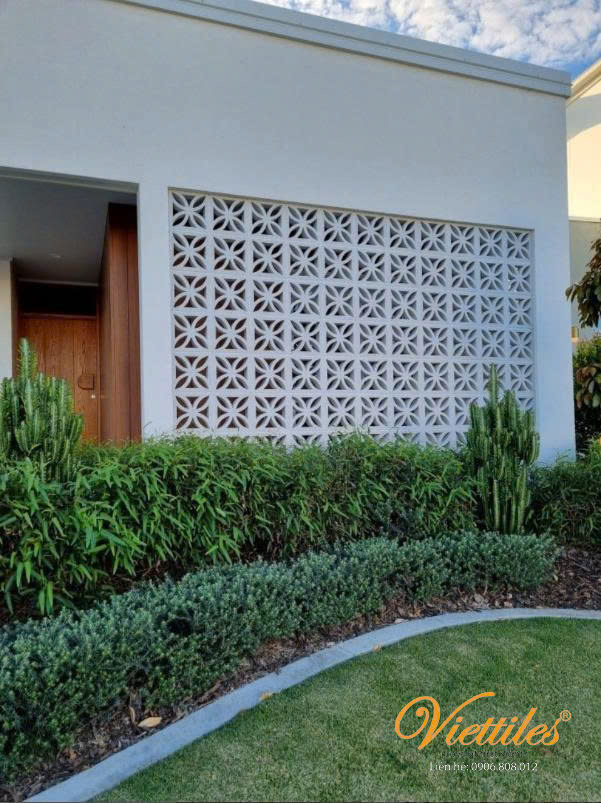
Prioritize ventilation tile designs featuring basic geometric shapes, such as squares, circles, rectangles, and triangles. Simple geometric forms without decorative borders help façades retain a clean, streamlined, and sophisticated appearance.
2. Modern Tropical Style
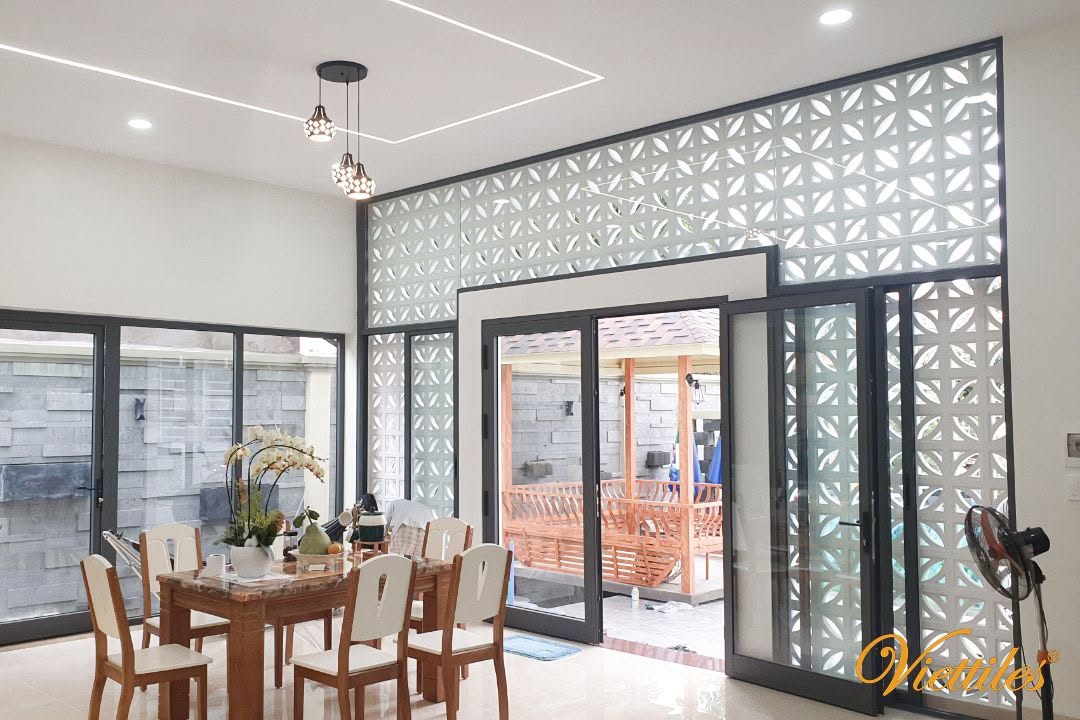
This style works well with beautiful ventilation tile designs inspired by nature, such as curved flower petals, leaves, or gentle wave patterns. These designs can be combined harmoniously with flower beds and lush climbing plants.
3. Contemporary Art Style
Combining raised 3D ventilation tiles, such as Mountain and Space designs, creates striking sculptural façade surfaces that immediately capture attention.

LET IN THE SUNLIGHT, INVITE THE BREEZE – BREATHING SPACES IN ARCHITECTURE
Read more: Which Ventilation Tile Designs Are Beautiful? Suggestions by Architectural Style and Application
Should You Choose Simple or Elaborate Ventilation Tile Patterns?
For modern buildings, the answer is generally: the simpler the design, the more effective the result.
1. Minimalist Patterns for Large Wall Areas
Simple patterns are easy to apply to full-height wall sections ranging from 15 m² to 30 m² without creating a visually cluttered effect. Their open structure also tends to accumulate less dust, making routine cleaning more convenient.
2. Elaborate Patterns for Limited Accent Areas
Intricate patterns should only be used in small accent areas of less than 5 m², such as window openings, skylight wells, or decorative interior partitions. This creates localized visual interest without overwhelming the overall design.

LET IN THE SUNLIGHT, INVITE THE BREEZE – BREATHING SPACES IN ARCHITECTURE
Coordinating Ventilation Tile Colors with Façades and Finishing Materials
The colors of decorative ventilation tiles should create a natural connection with the building's exterior finishes:
-
Natural cement white: This tone reflects solar radiation effectively, creating a bright and airy appearance. It is also easy to coordinate with wood-plastic louvers, black Xingfa aluminum frames, and tempered glass.
-
Raw concrete gray: An ideal choice for homeowners who favor Brutalist or Industrial styles. It works particularly well with board-formed concrete surfaces and natural stone.
-
Terracotta: This warm tone creates an inviting accent and is suitable for transitional areas between white-painted wall sections and tropical gardens.
Ventilation Tile Applications That Create Architectural Highlights
-
West-facing façades or areas exposed to intense sunlight: Ventilation tiles can function as a double-skin façade, helping cool the air before it reaches the bedroom interior.
-
Skylights and central stairwells: These areas can support natural air circulation, allowing fresh air to enter from the ground floor and warm, stagnant air to escape through the roof.
-
Partitions in open-plan living spaces: Ventilation tiles can visually separate the living room and kitchen while maintaining privacy without blocking open views.

LET IN THE SUNLIGHT, INVITE THE BREEZE – BREATHING SPACES IN ARCHITECTURE
Factors to Consider Before Finalizing a Ventilation Tile Design
1. Open-Area Ratio and Rain Protection
For buildings directly exposed to strong winds and storms, choose designs with a moderate open-area ratio or angled louver-like openings to reduce the amount of rainwater entering the interior.
2. Recessed Grooves for Structural Reinforcement
For outdoor wall sections exposed to strong wind loads, it is essential to choose tiles with four-sided recessed grooves designed to accommodate 6 mm or 8 mm steel reinforcement bars. These bars help securely connect the wall section to beams and columns, reducing the risk of movement, cracking, or collapse.

Read more: Coin-Pattern Ventilation Tiles: A Refined Accent for Building Façades
Creating Modern, Breathable Façades with Viettiles Ventilation Tiles
At Viettiles, we develop a collection of decorative ventilation tiles manufactured using high-pressure hydraulic static pressing technology without kiln firing. This production method delivers sharply defined edges and a dense, solid surface. In particular, our exclusive four-sided recessed groove design, reinforced with steel and developed to export standards, gives modern architectural projects greater flexibility in creating large wall sections while supporting structural safety.
Customers can contact Viettiles directly to receive a detailed catalogue, review technical specifications, and get advice on choosing the most suitable ventilation tile designs for their projects.
Contact Information & Product Consultation:
-
Showroom: No. 17, Street 40, An Khanh Ward, Thu Duc City, Ho Chi Minh City
-
Hotline: 0906 808 012 – 0906 830 362
-
Email: info@viettiles.com
-
Website: www.viettiles.com
-
Factories: Le Minh Xuan Industrial Park (Ho Chi Minh City) & Chon Thanh (Binh Phuoc)