Where Should You Install 3D Wall Tiles in a Living Room to Create a Focal Point?
In contemporary interior design, the living room is often considered the focal point of a home, reflecting the homeowner’s lifestyle and aesthetic preferences. Instead of using plain, single-color walls that can easily become monotonous, incorporating 3D wall tiles for living rooms has become a popular trend among architects. These tiles create striking three-dimensional visual effects and add depth to interior spaces. However, their bold geometric forms require careful consideration. Without proper planning of the installation location, coverage area, and interaction with lighting, an accent wall can easily feel overwhelming. Choosing the right location for living room wall tiles helps create an elegant, balanced, and visually appealing layout.

Using 3D wall tiles in the living room helps create visual depth and enhance the aesthetic appeal of the living space.
The Most Suitable Areas for Installing 3D Wall Tiles in a Living Room
The key principle when using 3D decorative wall tiles is to install them selectively on designated accent areas rather than covering all four walls. The most suitable locations include:
-
The wall behind the sofa: An ideal focal point that naturally attracts attention as guests enter the living room.
-
The central TV feature wall: A prominent area that family members face directly during shared activities.
-
The decorative wall in the entrance foyer or an entryway niche: A subtle visual focal point that welcomes visitors before they enter the main living area.
-
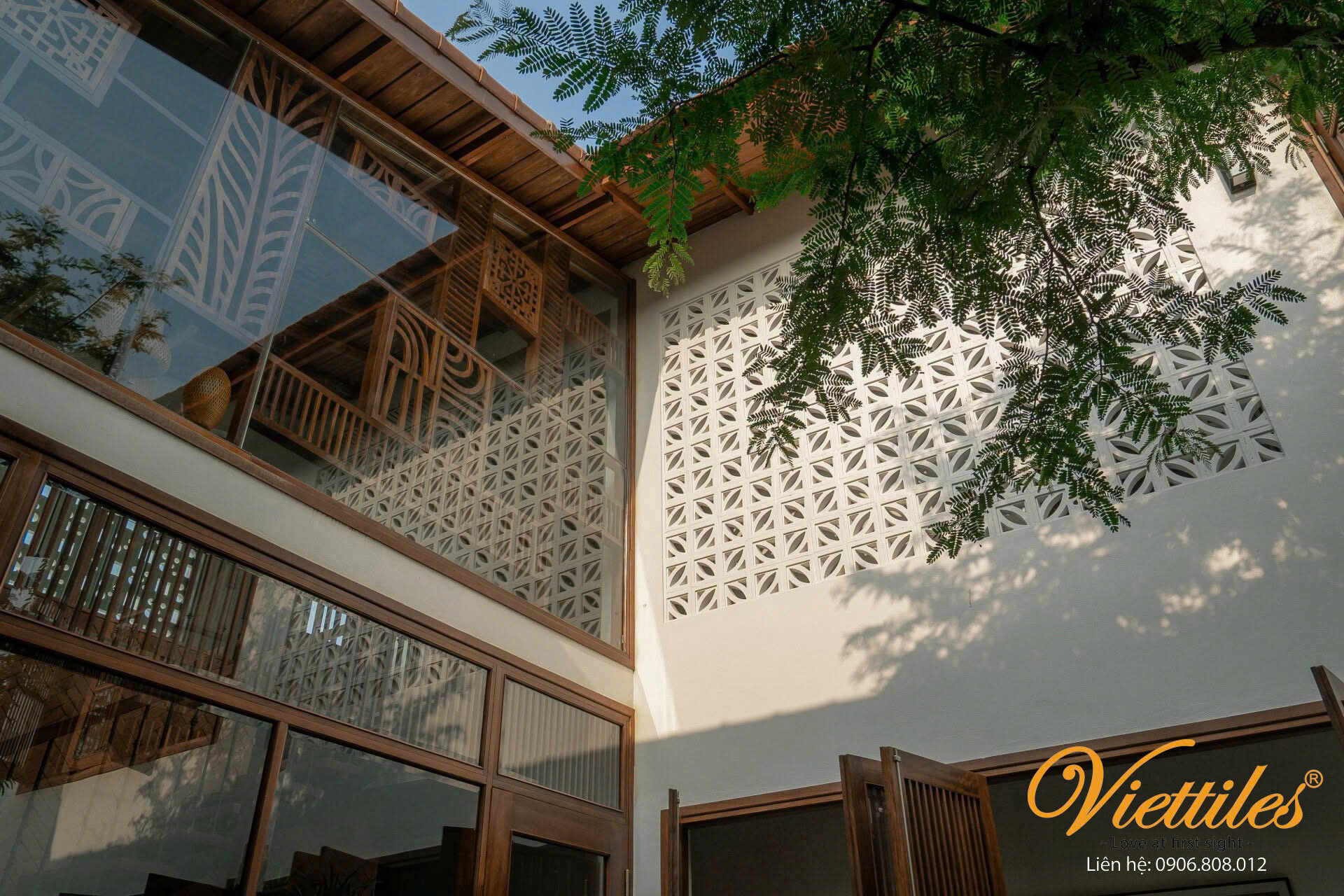
The wall adjoining a living-room skylight or indoor landscape feature: This location takes advantage of natural light to highlight the textured surface of artistic cement tiles.

Raised lines, recessed surfaces, and geometric forms create natural areas of light and shadow.
See also: Tips for Installing 3D Decorative Wall Tiles to Create Depth in Living Rooms
How Should You Choose Different 3D Tile Designs for the Walls Behind the Sofa and TV?
These two accent walls serve different visual purposes. Therefore, choosing the right 3D tiles requires a clear distinction between their design characteristics.
Wall Behind the Sofa:
This area is not frequently viewed by people sitting on the sofa while entertaining guests. You can therefore experiment with raised 3D decorative tiles featuring pronounced relief, sharply angled geometric forms, or asymmetrical polygonal patterns to create a bold, distinctive, and impressive effect.
Wall Behind the TV Cabinet:
This is an area where the eyes remain focused for extended periods. It is better to choose more understated decorative wall tiles, such as those with gentle wave patterns (Seafoam), fine parallel grooves, or subtle symmetrical 3D designs. Avoid excessively high, pointed protrusions, as they may cause visual fatigue and distract viewers while watching television.

Choosing the 3D Tile Coverage Area Based on Living Room Size
The size of the living room directly determines the appropriate proportions of an accent wall.
-
Small apartments and townhouses (under 20 m²): Limit the tiled area to approximately 3–5 m², focusing on one central accent section. Avoid covering the entire wall from floor to ceiling. Instead, consider framing the tiled area with decorative trim to create the appearance of a large three-dimensional artwork.
-
Large villas and garden homes (over 30 m²): You can consider a floor-to-ceiling accent wall covering approximately 8–12 m², particularly behind the sofa. At this scale, repeating 3D tile patterns creates a striking architectural rhythm and a sense of grandeur.

Angled track lighting creates defined shadows that highlight every contour of the raised 3D decorative tiles.
Coordinating 3D Tiles with Lighting and Furniture to Enhance the Space
The visual appeal of a 3D surface depends significantly on how lighting is designed and positioned.
-
Use angled grazing light: Light directed straight at the wall at a 90° angle can make raised details appear flatter. Instead, install track lights or recessed LED strip lighting along ceiling coves, directing the light downward at an angle of 15°–30° across the wall. This creates layered shadows that emphasize the three-dimensional texture.
-
Coordinate tile colors with the interior: If the living room already features dark leather sofas or heavily patterned curtains, choose neutral tile colors such as cement white or natural concrete gray to maintain visual balance.

Hexagonal 3D wall tiles create a distinctive visual effect in otherwise simple spaces.
Common 3D Tile Installation Mistakes That Can Make a Living Room Look Unbalanced
-
Covering too many walls with matching patterns: Installing 3D tiles on both the TV wall and the wall behind the sofa can make the room feel cramped, as decorative elements compete for visual attention.
-
Using grout in a contrasting color: Raised tiles look best when the grout closely matches their color. Narrow grout joints of approximately 1.5–2 mm are recommended. White grout against gray tiles, for example, can interrupt the seamless appearance of the design.
-
Mounting fixtures over raised surfaces: Avoid installing electrical outlets, clocks, or picture frames directly over uneven tile sections. Their mounting bases may not sit securely against the surface, potentially affecting both appearance and safety.
See also: 2026 Trends in Artistic 3D Wall Design
What Should You Prepare Before Choosing 3D Wall Tiles for Your Living Room?
-
Check the wall's load-bearing capacity: Raised cement tiles are dense and heavier than conventional wall tiles. Masonry walls must be properly plastered, level, and free from peeling or loose surfaces. High-performance, specialized tile adhesive should also be used.
-
Determine the floor and ceiling reference levels: Carefully measure the actual wall dimensions so installers can align full tiles from the center toward both edges. This helps avoid cutting 3D tiles at the central focal point.
Artistic 3D Tile Solutions from Viettiles
At Viettiles, our range of 3D decorative wall tiles is handcrafted from cement and natural mineral pigments using a high-pressure hydraulic pressing process without firing. This manufacturing method produces mechanically dense tiles with a refined matte surface. Viettiles offers a diverse selection of designs, from cubic geometric forms and organic water-wave patterns to contemporary angular motifs, helping meet a wide range of requirements for creating distinctive 3D wall tile features in living rooms.
Customers can contact Viettiles directly to receive a detailed catalogue, review technical specifications, and get advice on selecting the most suitable products for their projects.
Contact Information & Product Consultation:
-
Showroom: No. 17, Street 40, An Khanh Ward, Thu Duc City, Ho Chi Minh City
-
Hotline: 0906 808 012 – 0906 830 362
-
Email: info@viettiles.com
-
Website: www.viettiles.com
-
Factories: Le Minh Xuan Industrial Park (Ho Chi Minh City) & Chon Thanh (Binh Phuoc)