How to Style Red Cement Tiles to Create a Warm Focal Point for Kitchens, Porches, and Cafés
The color red in architecture and interior design always creates a strong visual appeal, bringing a sense of togetherness and warmth while evoking a nostalgic depth. Unlike the smooth, glossy red tones of industrial materials, handcrafted red cement tiles possess a warm, understated beauty thanks to natural mineral pigments and their distinctive raw surface.
To use this warm color palette with sophistication without making a space feel enclosed or overwhelming, designers need to understand the material itself as well as the principles of visual balance.

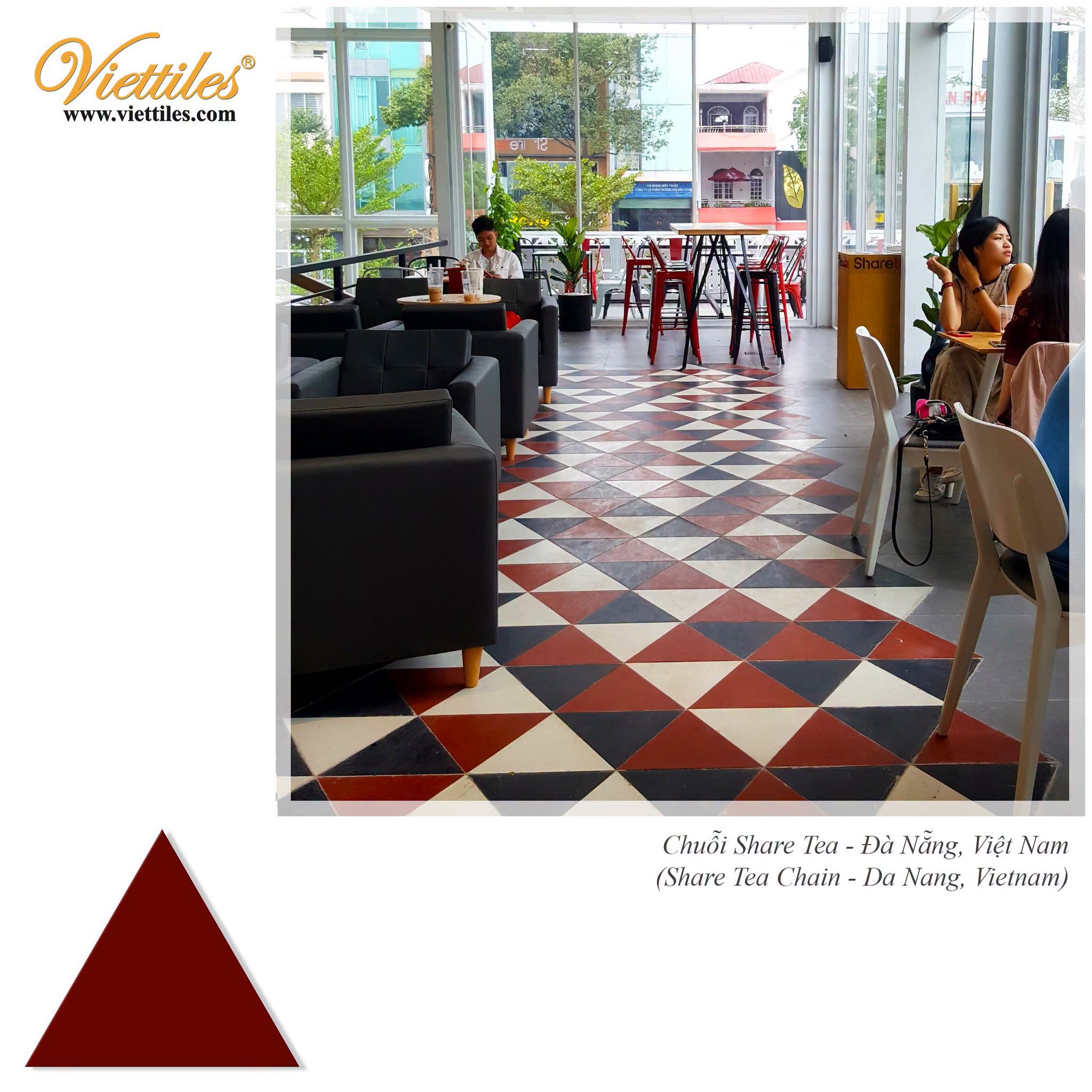
The deep red tone from natural mineral pigments brings a warm, understated beauty to the space
What Makes Red Cement Tiles Special for Creating Focal Points?
The greatest distinction of red cement tiles lies in the origin of their color and their traditional handcrafted, non-fired production technique:
-
Warm, earthy tones from minerals: The red color of traditional cement tiles does not come from a printed surface glaze but is created from natural mineral pigments, primarily iron oxide, cast as an integral part of a 2–3 mm-thick surface layer. As a result, the red takes on earthy shades such as terracotta red, brick red, and deep red without appearing overly bright under artificial lighting.
-
Natural light-diffusing surface: The naturally fine, slightly textured surface of the cement body absorbs and diffuses light softly, creating a gentle visual effect with greater depth rather than the reflective gloss commonly associated with glazed tiles.
-
Long-lasting color: Under high static pressing pressure, the mineral-colored layer bonds firmly with the concrete tile base, helping prevent peeling or color loss caused by foot traffic and friction. This makes the tiles suitable for both flooring and decorative wall applications.
At Viet Tiles, red cement tile collections are produced using a semi-automated process combined with modern static pressing technology. Precise control of the mineral pigment ratio and compression force helps preserve the raw, natural beauty of each tile while maintaining pattern definition and consistent physical properties.
See also: Viettiles – Partner Supplying Handmade Green Materials for Luxury Villa and Resort Projects
Principles for Combining Red Cement Tiles Harmoniously
Red has a high visual intensity, so its application should follow principles of moderation:
-
The 60–30–10 accent ratio: Red cement tiles should account for around 10% to a maximum of 30% of the surface area, such as a partial wall, a small floor rug effect, or the front face of a bar counter. The remaining 60% should be reserved for neutral background tones.
-
Balance with cooler tones: Combine red cement tiles with cool or light neutral shades such as creamy white, cement gray, beige, or moss green. This contrast helps highlight the red tile area as the focal point without making the space feel stuffy.
-
Make use of natural light: Sunlight allows mineral-based red tones to reveal their warmth and natural character most clearly, while helping prevent dark or visually heavy areas.
How to Style Red Cement Tiles for Different Spaces
1. Kitchen: Warmth and a More Inviting Atmosphere
Kitchen backsplash: The wall between the upper and lower kitchen cabinets is an ideal location for red cement tiles featuring geometric patterns or small floral motifs. This color works particularly well with light oak, ash wood, or matte white kitchen cabinetry.
Floor rug effect around the kitchen island or dining table: A section of red cement tiles with rounded borders beneath the kitchen island or family dining table can help conceal everyday stains better than a white-tiled floor while also creating a visual boundary for the cooking area.
2. Porches and Balconies: Connecting with Nature
Tropical transitional space: A porch finished with red cement tiles combined with broad-leaved greenery such as ornamental banana plants and ferns creates a distinctive Tropical style suited to hot and humid climates.
Hallway pathway: In a long, covered corridor, strips of red cement tiles running along the length of the walkway can create a formal and warm sense of direction before entering the main foyer.

Red cement tiles used in a bathroom
3. Café Spaces: Evoking a Nostalgic Style
Bar counter front: Using red cement tiles on the front face of the ordering counter creates a strong visual focal point as soon as customers enter the café.
Check-in wall: A red cement tile feature wall combined with warm yellow spotlight lighting (2700K–3000K), rustic wooden furniture, or aged brown leather sofas can create a distinctly nostalgic photo corner in a Vintage/Retro style.
Suggestions for Combining Red Cement Tile Patterns with Interior Styles
| Interior Style | Suitable Red Cement Tile Patterns | Complementary Interior Materials |
|---|---|---|
| Indochine | Classic symmetrical patterns, swastika motifs, lotus flowers, and coin motifs in red, white, and black. | Dark natural wood, woven rattan and bamboo, brass metal details. |
| Contemporary / Retro | Zigzag geometric patterns, checkerboard stripes, and cube motifs in red and gray. | Black powder-coated metal, ribbed glass, cowhide leather, polished concrete. |
| Mediterranean / Rustic | Soft stylized floral patterns or solid terracotta-red tiles. | White lime-effect walls, rustic wood, tropical greenery. |
Common Mistakes When Styling Red Cement Tiles
-
Covering the entire area: Tiling an entire small room with red patterned tiles can become visually overwhelming, making the space feel smaller and more enclosed, particularly during hot weather.
-
Choosing the wrong grout color: Using grout powder with overly strong contrast or applying grout carelessly can cause white cement residue to stain the capillaries of red tiles, reducing the visual sharpness of the patterns.
-
Skipping the preliminary sealer before grouting: Cement tiles naturally have capillary properties. Without applying a preliminary sealing layer before grouting, white or gray grout can penetrate the red tile surface and leave stains that are difficult to remove.
-
Overloading the surrounding décor: When a red cement tile area is already the focal point, adding too many pictures or brightly patterned curtains can make the overall space visually cluttered.
See also: Guide to Choosing a Specialized Penetrating Sealer for Cement Tiles
How to Choose Red Cement Tiles That Suit Your Interior Style
To select the right tile design, first determine the dominant design language of the project:
-
For a classic, nostalgic look: Prioritize traditional symmetrical patterns from Viet Tiles’ Classic collection. Deep red tones combined with fine geometric lines can enhance a quiet and elegant aesthetic.
-
For a youthful, unconventional space: Red cement tiles with geometric patterns or random Patchwork combinations in red, gray, and white can create a more dynamic and contemporary rhythm.
-
For a minimalist, rustic aesthetic: Solid earth-red cement tiles without patterns, combined with matching grout or light cement-gray grout, provide a refined solution that highlights the natural, raw character of the floor.

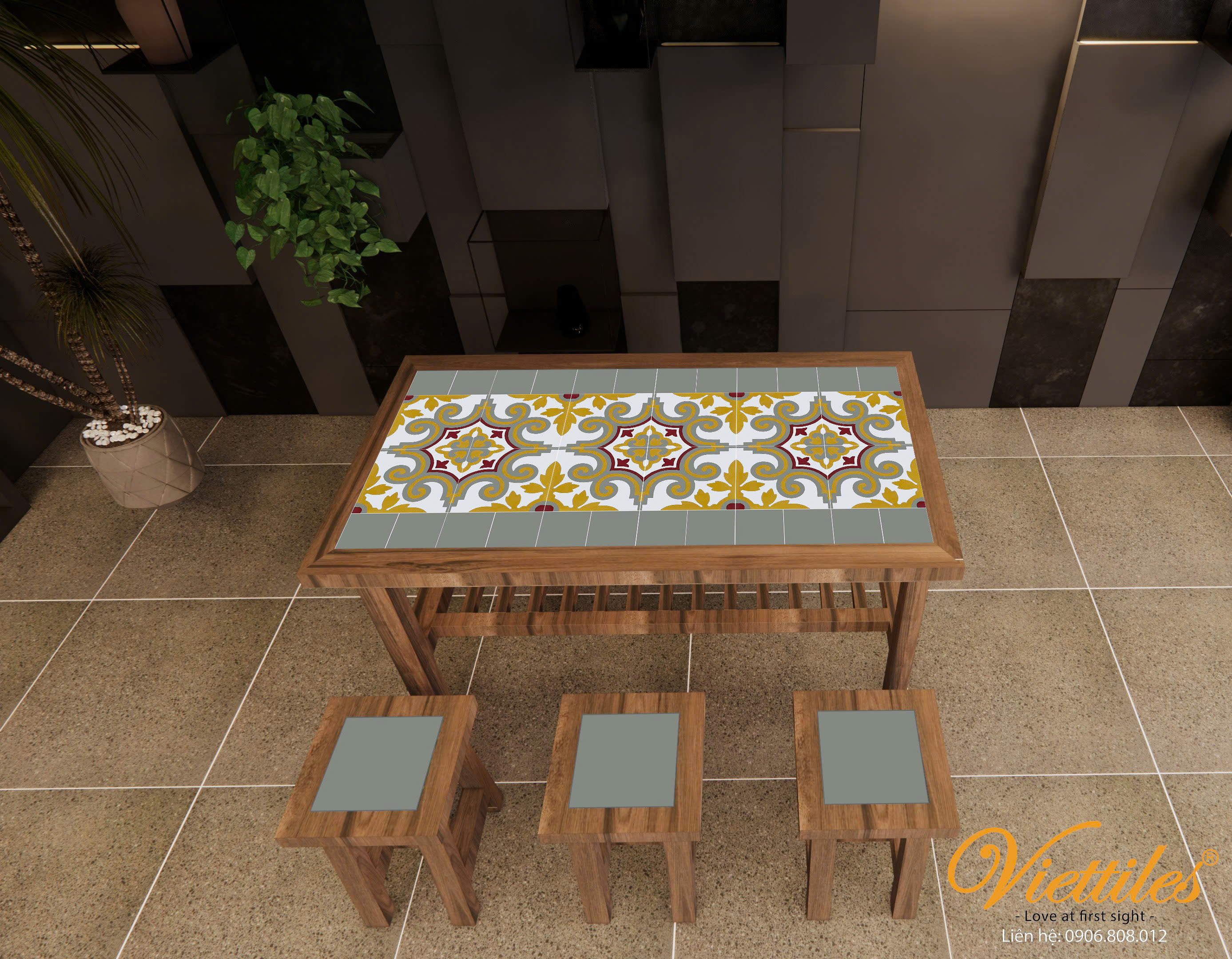
Set of three square ornamental planters decorated with cement tiles for gardens and balconies
How to Choose Red Cement Tiles That Are Both Attractive and Practical
-
Choose the right size: The 20x20 cm tile size is a standard and versatile option for most flooring and wall applications. For small wall sections or tabletop surfaces, 15x15 cm tiles or hexagonal tiles can create more balanced proportions.
-
Check tile flatness and edges: High-quality handcrafted tiles should have straight, square edges and consistent thickness so that grout lines remain straight and tight after installation. Viet Tiles products undergo strict mechanical quality control to help minimize warping and uneven floor levels.
-
Prioritize products with a sufficiently thick mineral color layer: A quality cement tile should have a mineral color layer at least 2 mm thick to help maintain the visual depth of the red pattern despite years of cleaning and surface friction.
-
Prepare a proper sealing process: Ask the supplier for detailed instructions on applying a specialized penetrating sealer to cement tiles before and after installation to improve resistance to water and grease.
Conclusion
Using red cement tiles is a direct way to bring energy, warmth, and artistic character into a living space. By moderating the application area, selecting suitable patterns, and following proper sealing and installation procedures, red cement tile surfaces can retain their crisp appearance and become a distinctive architectural feature that lasts for years.
VIET TILES CONTACT INFORMATION
-
Address: No. 17, Street 40, An Khanh Ward, District 2
-
Phone: +84 906 830 362
-
Email: info@viettiles.com
-
Website: www.viettiles.com
-
Fanpage: facebook.com/viettiles1910