Ideas for Using Patterned Cement Tiles in Restaurants to Create Eye-Catching Focal Points
In the food and beverage (F&B) business, spatial design plays a key role in shaping diners’ experiences from the moment they take their first step inside. A visually dimensional floor or feature wall not only helps strengthen brand recognition but can also encourage customers to spend more time in the space.
With diverse patterns and a distinctive raw mineral surface, patterned cement tiles for restaurants are a familiar material solution that never goes out of style. However, incorporating cement tiles into an F&B space requires careful consideration of proportions, layout, and functional placement to create an aesthetic focal point while ensuring durability during continuous operation.

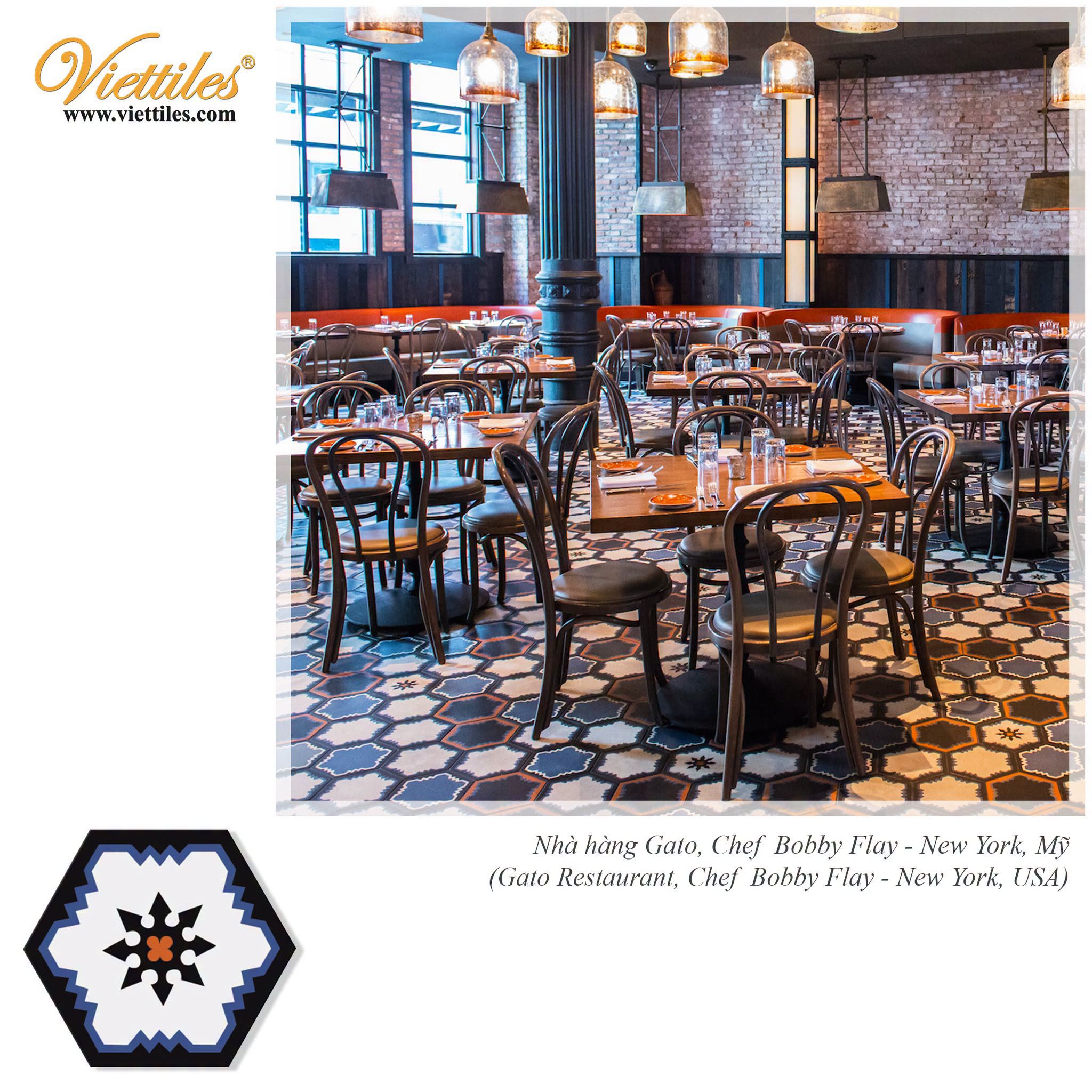
Handcrafted cement tiles with raw mineral surfaces create visual depth in F&B spaces
The Nature of Handcrafted Cement Tiles in F&B Spaces: Advantages and Operational Limitations
Before developing a design plan, restaurant owners and contractors need to understand the physical and mechanical properties of cement tiles in order to use them appropriately.
Practical Advantages of Using Cement Tiles in Restaurants
-
Durable mineral-based color layer: Unlike industrial ceramic tiles with patterns printed onto a glazed surface, traditional cement tiles use natural mineral pigments poured into metal molds and then hydraulically pressed together with a cement base layer. The color penetrates deeply into the surface layer, approximately 2–3 mm thick, helping minimize fading or peeling under heavy foot traffic.
-
Naturally slip-resistant surface: Cement tiles are not coated with glossy glaze but instead feature the fine natural texture of mineral materials. This characteristic increases friction and helps reduce the risk of slipping, an important safety consideration in restaurants and cafés.
-
Distinctive visual character: Each pattern is shaped by artisans, creating a softer and more visually dimensional appearance compared with mass-produced industrial prints.
Functional Considerations
-
Susceptibility to staining: As a non-fired cement tile with micro-capillary porosity, cement tiles can absorb spilled sauces, grease, or coffee if the surface is not properly sealed from the outset, potentially allowing stains to penetrate the material.
-
Cleaning requirements: Clean with clean water or a neutral-pH cleaning solution (pH = 7). Avoid strong acidic cleaning agents, as they can erode the calcium-based components and mineral pigments on the tile surface.
Four Effective Locations for Creating Focal Points with Restaurant Cement Tiles
Covering the entire restaurant floor with dense, highly patterned tiles can make the space feel visually heavy and cluttered while reducing its perceived visual area. Instead, the principle of using cement tiles as localized accents often delivers greater design efficiency.
Zoning Dining Areas (Cement Tile Rug Effect)
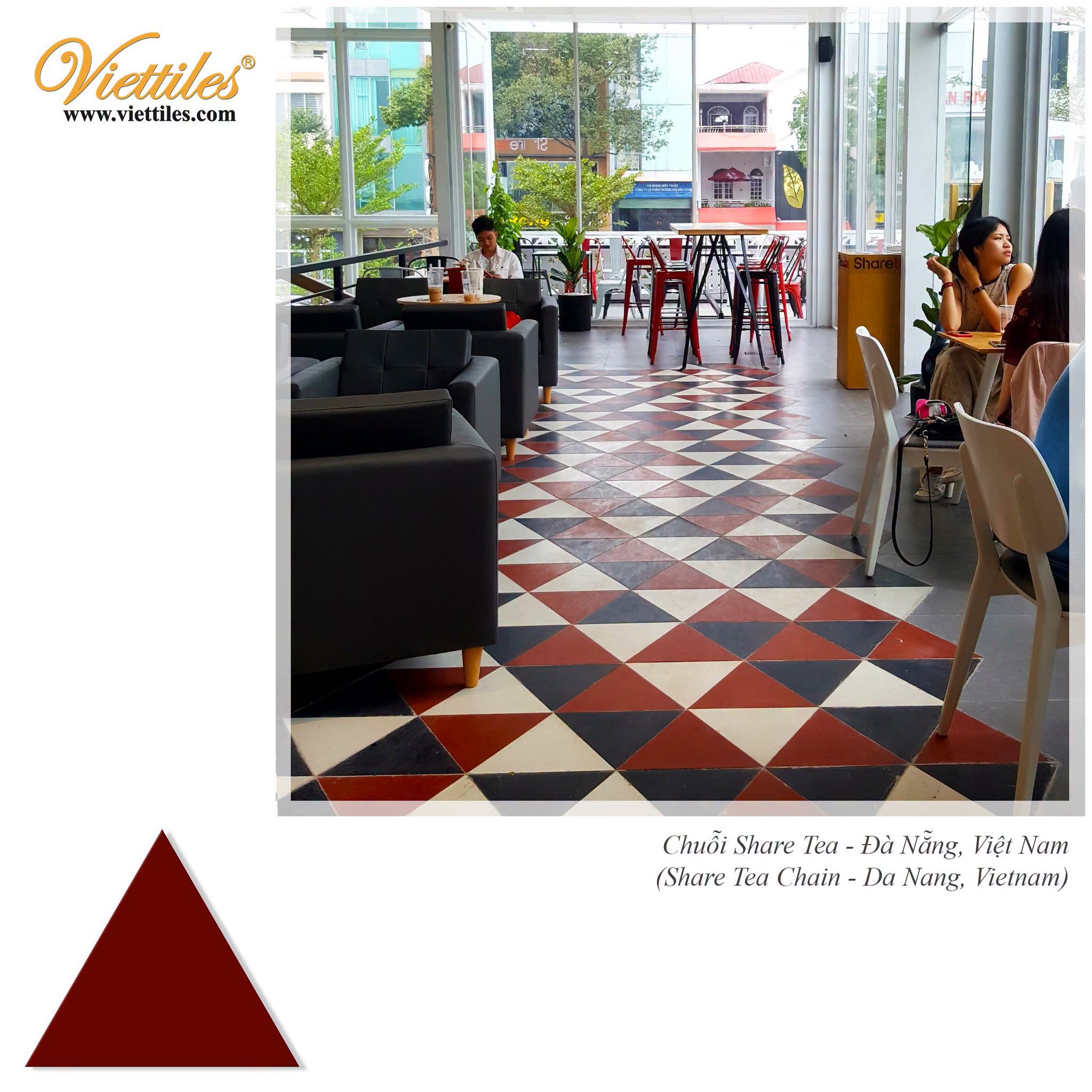
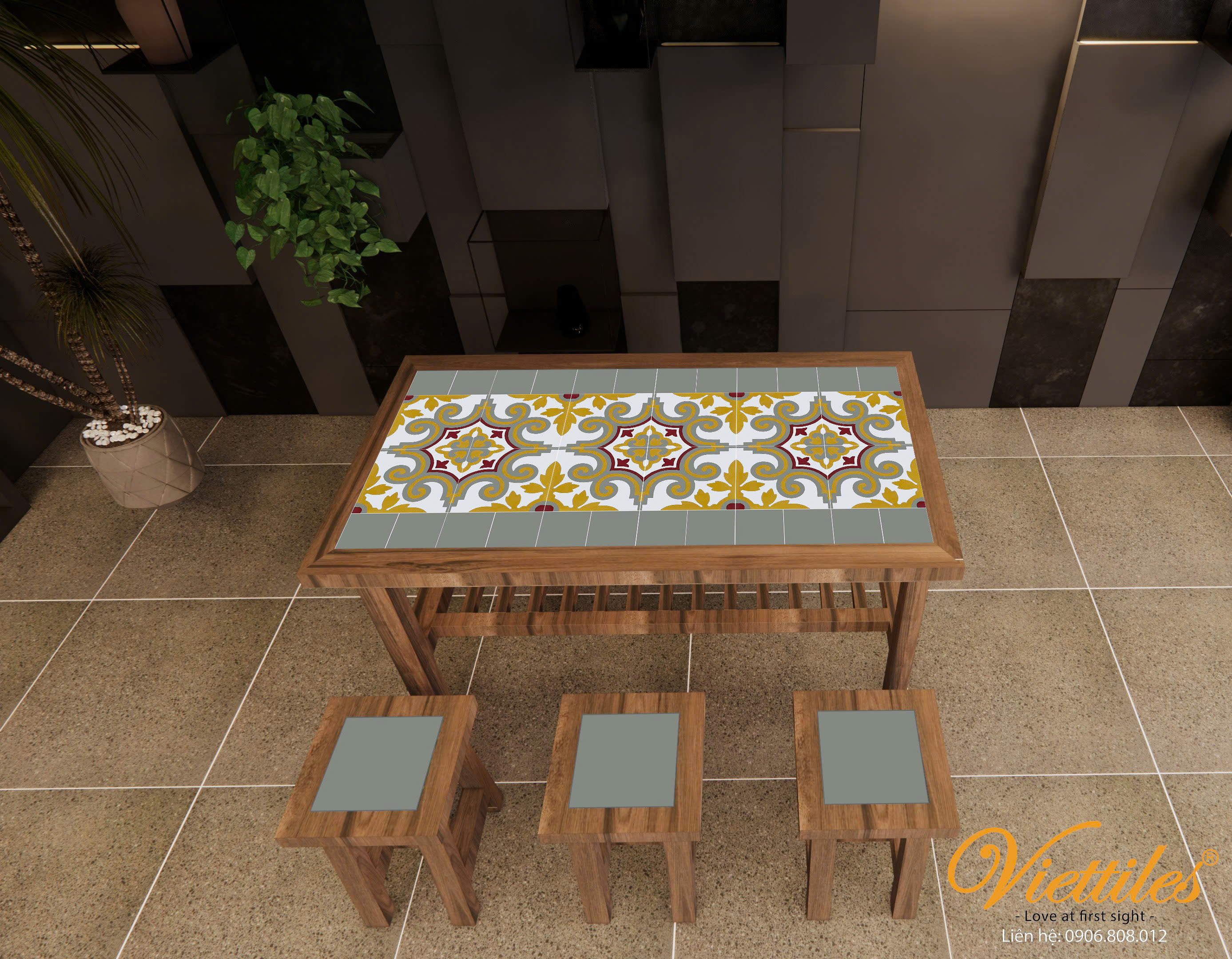
Instead of using fabric rugs that are difficult to clean in dining environments, many restaurants apply the cement tile rug effect. Cement tiles with a border are arranged around a central patterned section in long-table or VIP dining areas, while the surrounding floor is finished with plain tiles, polished concrete, or terrazzo flooring. This arrangement visually defines different areas without requiring partitions that obstruct sightlines.

The cement tile rug technique separates formal dining areas without the need for partitions
Bar and Ordering Counter Fronts
The cashier and food preparation/serving areas are among the first visual points customers encounter when entering a restaurant. Using cement tiles along the front of a bar counter can transform an otherwise plain concrete or wooden structure into an artistic focal point. This area experiences less foot friction but is more exposed to dust and accidental contact with chair or table legs; the substantial structure of cement tiles provides good resistance to surface scratching.
Accent Wall
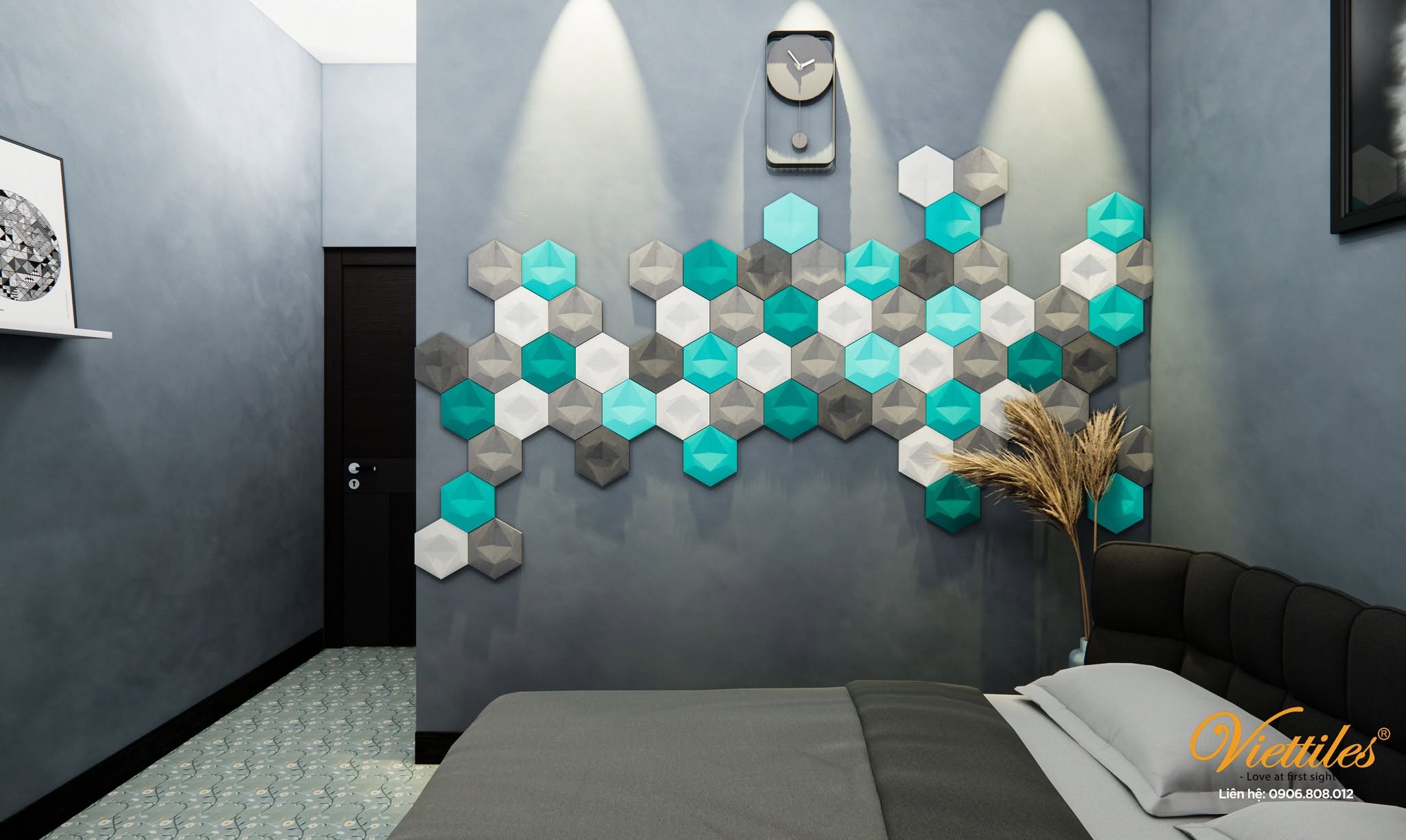
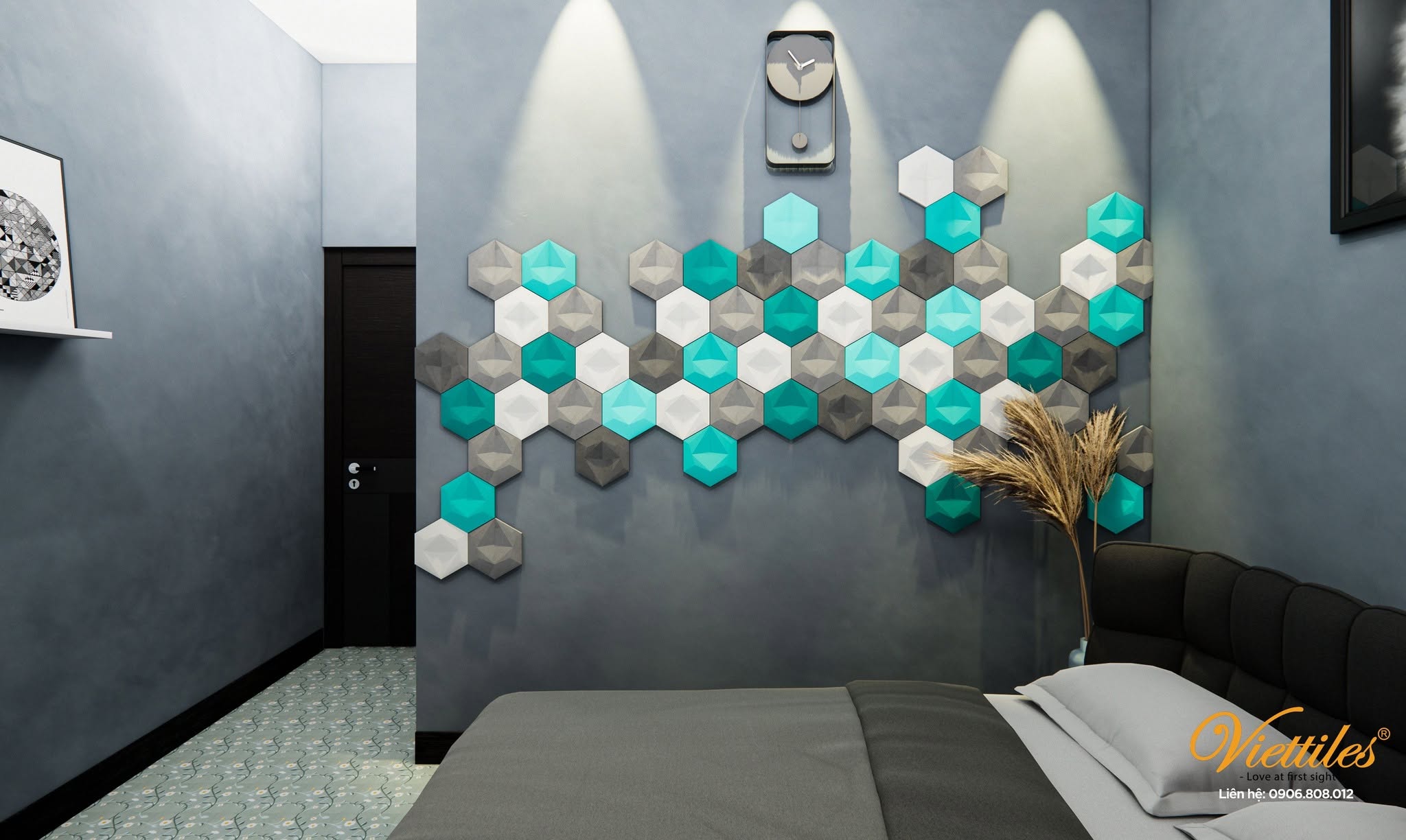
A cement tile feature wall combined with angled spotlighting creates shadow effects and highlights the material’s natural character. This is also an area that customers often use for taking photos, indirectly supporting the restaurant’s visual promotion across social media platforms.
Handwashing Area and Restroom Entrance
A restaurant’s restroom area can strongly influence customers’ perception of cleanliness and the level of attention invested in the space. Using cement tiles along the lower wall or on the floor of the handwashing area, combined with a metal-framed mirror and greenery, creates a polished and elegant atmosphere.
See also: Modern Cement Tile Production Process: From Raw Materials to Quality Finished Products
Suggested Cement Tile Patterns by Restaurant Style
| Restaurant Style | Suggested Patterns & Color Palette | Practical Applications |
|---|---|---|
| Traditional / Indochine (Indochinese) | Classic symmetrical patterns, coin motifs, lotus flowers, and floral vines.Color palette: Earthy yellow, brick red, moss green, black and white. | Flooring for the main dining area, or wall skirting to help reduce dirt and chair impact. |
| Modern / Minimalism | Geometric patterns, zigzag lines, checkerboard patterns, or hexagonal tiles.Color palette: Monochrome (white, gray, black). | Bar counter facades and main walkways that guide customer circulation. |
| Retro / Vintage (1980s–1990s) | Nostalgic apricot blossom and butterfly motifs, or an eclectic combination of multiple patterns (Patchwork). | Feature walls for check-in areas, small dining corners, or entrance lobbies. |
| Mediterranean / Cozy Bistro | Soft patterns inspired by nature.Color palette: Cobalt blue, terracotta brown, and teal. | Covered outdoor dining areas, open-kitchen walls, or beverage counters. |
Handcrafted Cement Tile Solutions from Viet Tiles
To meet the continuous-use demands of food service and hospitality projects, Viet Tiles’ cement tile collections are standardized through strict technical quality-control processes:
-
High-pressure static pressing technology: Cement, fine-grained sand, and stone powder aggregates are compressed using static pressing equipment. The dense tile structure improves resistance to impact and helps reduce cracking or chipping caused by contact with tables and chairs.
-
Durable natural mineral colors: High-quality imported natural mineral pigments are used to help maintain the visual appeal of the patterns over years of operation.
-
Custom manufacturing support: In addition to hundreds of available patterns, Viet Tiles can produce custom molds and color combinations based on the brand identity palette of restaurant chains or the design concepts of architects.
-
Consistent supply capacity: With three factories in Ho Chi Minh City and an average production capacity of 60,000 m² per month, Viet Tiles can support project schedules and color consistency for F&B projects ranging from individual restaurants to large-scale brand chains.
Installation and Maintenance Principles for Restaurant Cement Tile Floors to Prevent Staining and Mold
The durability of restaurant cement tile flooring depends 50% on tile quality and 50% on the installation and finishing process.
-
Apply multi-layer waterproofing before use: After installation and complete drying, a specialized penetrating sealer should be applied before grouting. This step helps prevent cement grout from entering surface pores. After thoroughly cleaning the grout lines, apply an additional 1–2 protective surface coats to prevent grease and organic liquids from penetrating the tiles during restaurant operations.
-
Clean grease and food spills promptly: Staff should be instructed to clean food, sauces, tea, or coffee spills from the floor immediately rather than allowing stains to dry and remain overnight.
-
Avoid acidic cleaning chemicals: Do not use toilet bowl cleaners or floor-cleaning solutions containing hydrochloric acid (HCl) on cement tile floors. Acids can react with calcium-based components in cement, causing surface pitting and fading the patterns. Use only clean water or neutral floor cleaners with a pH of around 7.
-
Regular maintenance: For restaurants with high customer traffic, deep cleaning and reapplication of a protective surface treatment are recommended every 12–18 months to maintain the freshness and appearance of the tile patterns.

Ideas for Using Patterned Cement Tiles in Restaurants to Create Eye-Catching Focal Points
Using patterned cement tiles for restaurants effectively requires a balance between handcrafted aesthetics and an understanding of