Terrazzo Tile Manufacturing Process: From Raw Materials to Finished Products
In contemporary building materials, terrazzo tiles are making a strong comeback in villas, restaurants, cafés, and premium commercial projects. Their appeal goes beyond a simple, flat cement surface: the beauty of these tiles lies in the visual depth created by naturally scattered stone chips embedded in a mineral-colored base. To produce tiles that combine structural strength and durability with a smooth, polished finish, the terrazzo tile manufacturing process for non-fired products requires strict control over material proportions, pressing techniques, and finishing craftsmanship.

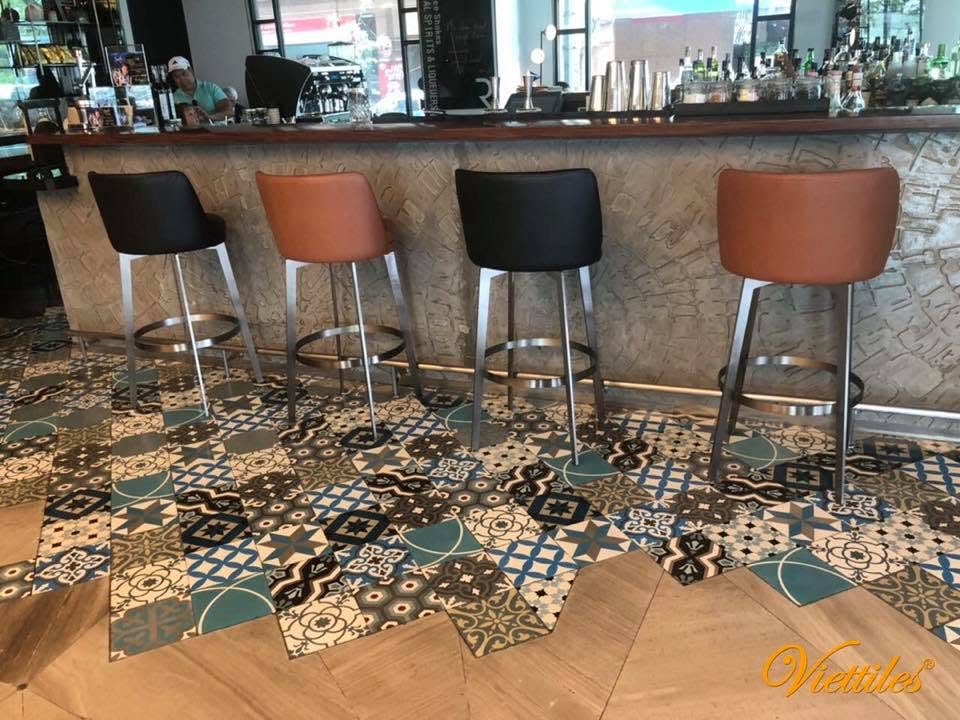
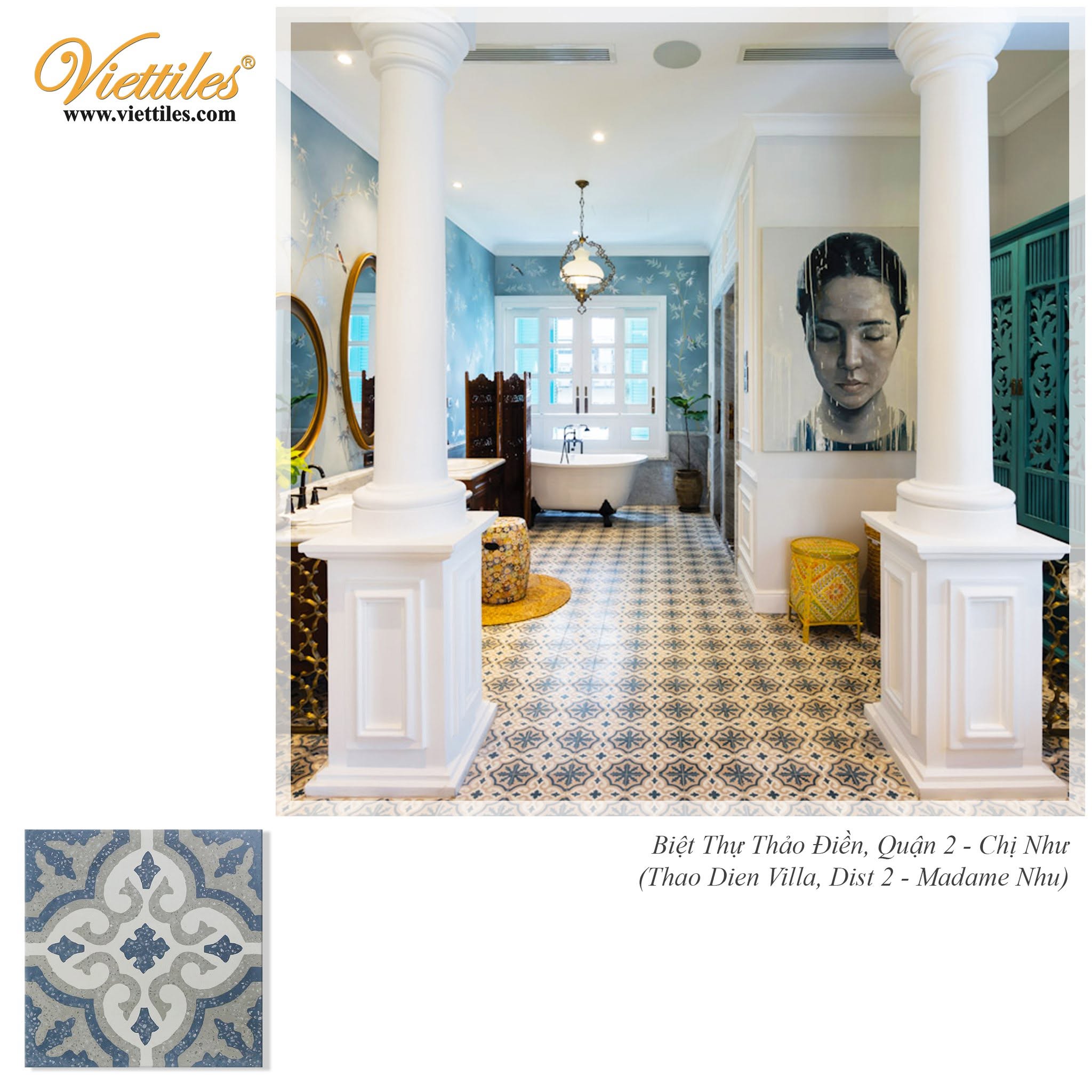
Viet Tiles terrazzo tiles combine the decorative patterns of traditional cement tiles with the contemporary appeal of stone, without being limited by color or shape.
1. What Materials Are Used to Make Terrazzo Tiles?
Unlike tiles fired at high temperatures, terrazzo tiles are an eco-conscious, non-fired material. Their durability and decorative patterns depend on the composition of their natural ingredients.
Decorative Surface Layer (Colored Layer):
This layer consists of high-quality white or gray cement, finely ground marble powder, alkali-resistant inorganic mineral pigments, and natural aggregates, such as marble chips, quartz, small pebbles, or glass fragments in various sizes.
Load-Bearing Base Layer (Backing):
A mixture of clean sand, cement, and stone fines forms the tile's structural base and helps distribute the loads generated by foot traffic.
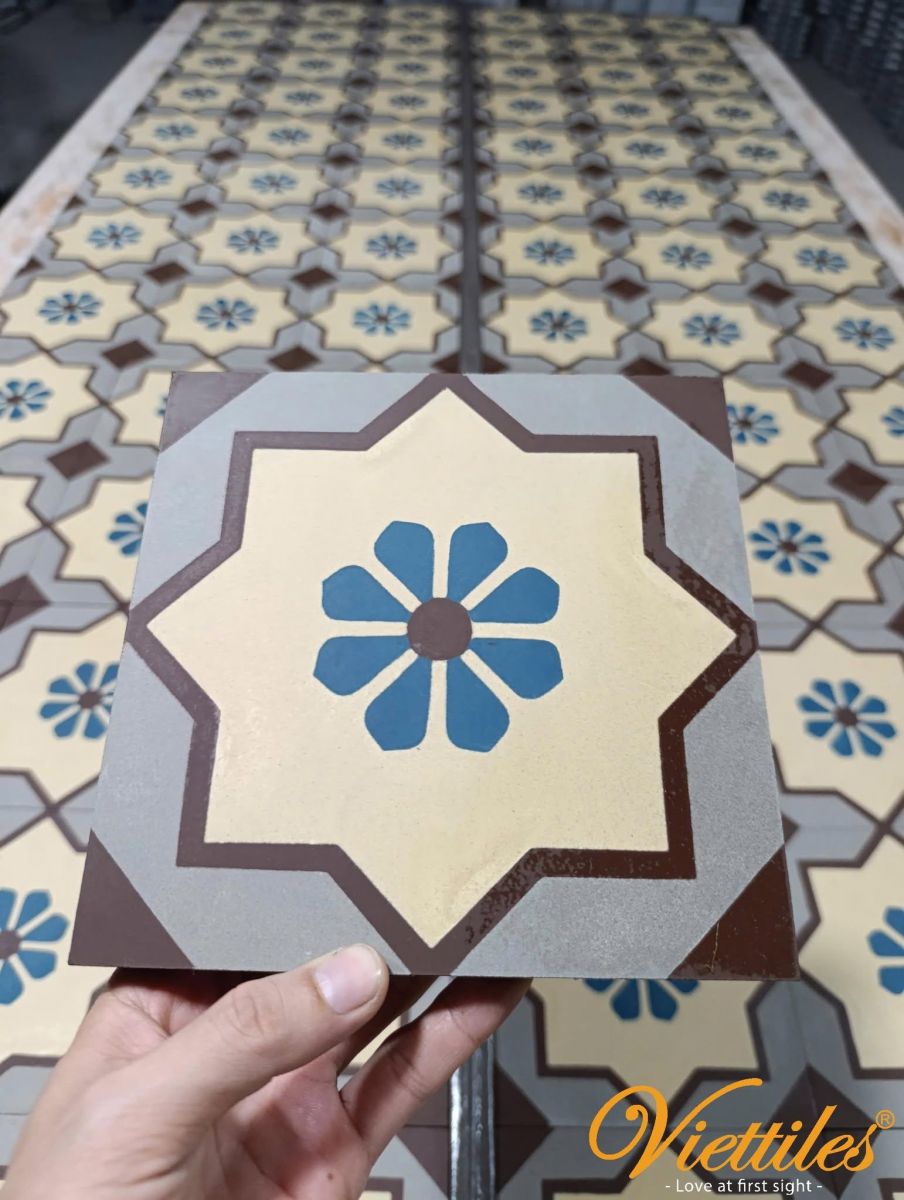
See also: How Plain Terrazzo Tiles Create the Perfect Foundation to Enhance Interior Architecture
2. Preparing the Mix and Creating the Tile Surface
This stage determines the distinctive aesthetic character of each tile design.
-
Preparing the mold and aligning the pattern dividers: For terrazzo cement tiles with segmented patterns, technicians bend metal dividers according to the design drawings, then carefully align them with the pressing mold to ensure a precise fit.
-
Mixing and pouring the colored layer: The surface mortar, containing stone chips and mineral pigments, is measured according to precise proportions and poured evenly into each section of the mold. Skilled craftsmanship ensures that the stone chips are distributed naturally without clumping or sinking too deeply into the layer.
3. Pressing, Curing, and Finishing the Tiles
Once the decorative surface layer is complete, the tile moves to the pressing stage, where its shape and structure are formed.
-
Adding the base layer and hydraulic pressing: Workers spread a semi-dry sand-and-cement mixture to form the load-bearing base, then place the tile in a high-pressure hydraulic press. The substantial compressive force helps drive moisture from the surface layer toward the base, consolidating the two material layers into a cohesive unit while minimizing air voids.
-
Natural curing: After demolding, the tiles are carefully placed on racks to cure naturally. Through cement hydration, they gradually develop strength and hardness without the energy consumption associated with kiln firing.
-
Surface polishing: Once the tiles reach the required hardness, they undergo multiple stages of mechanical grinding and polishing. Coarse grinding exposes the natural stone chips, while finer stages refine the finish and create a smooth, polished surface.
-
Sealing: A specialized protective sealer is applied to penetrate and seal the tiny pores in the surface, helping resist stains from coffee and grease while preserving the tile's appearance.

Each Viettiles terrazzo tile is carefully shaped through hydraulic pressing and fine surface polishing.
4. Quality Inspection Before Dispatch
Within the terrazzo tile manufacturing process, quality control (QC) takes place at several stages.
-
Checking squareness and dimensional tolerances: Tile edges must be square and thickness consistent. A dimensional tolerance of ±0.5 mm is used as a reference in the described production process to help achieve neat, consistent grout joints during installation.
-
Evaluating the surface and exposed stone chips: Inspectors check the distribution of natural aggregates and the smoothness of the polished finish, rejecting tiles with air voids, chipped corners, cracks, or unusual color variations.
-
Export packaging: Tiles that pass inspection are protected with foam padding over the finished surface, packed in labeled cardboard cartons, and securely arranged on wooden pallets.

The smoothness of the surface and distribution of natural stone chips are carefully checked before the tiles are packed for dispatch.
5. How Does Manufacturing Technology Affect Durability and Appearance?
The quality of a terrazzo tile directly reflects the production facility's manufacturing expertise.
-
Hydraulic pressing force: Insufficient pressing force can leave the tile body porous, increasing water absorption and the risk of cracking or breaking under heavy loads.
-
Polishing techniques: The different grades of abrasive discs determine how deeply the stone chips are exposed. Proper polishing helps the chips appear clear and integrate smoothly with the cement base, without leaving fine scratches.
-
Quality of protective treatments: A high-quality penetrating sealer helps improve stain resistance, especially in restaurants and food-service environments where grease and oil are common.
See also: Why Terrazzo Tiles Can Become More Valuable With Time
6. What Makes Viettiles' Terrazzo Tile Manufacturing Process Stand Out?
Building on the craftsmanship of traditional handmade cement tiles, the terrazzo tile manufacturing process at Viettiles combines skilled artisanship with a quality management system designed to meet export requirements for markets in more than 50 countries.
Viettiles terrazzo tiles are manufactured using high-pressure hydraulic pressing without kiln firing, with carefully selected natural stone chips and imported mineral pigments. The tiles are then naturally cured and undergo multiple rounds of fine surface polishing. Each finished tile receives a premium protective surface treatment to help maintain a solid, smooth appearance and reduce staining.
Customers, architects, and project partners can explore the terrazzo tile designs in the Viettiles product catalog or get in touch to request a technical catalog and discuss custom color combinations and stone-chip sizes tailored to their project designs.

Viettiles terrazzo tiles — an artistic touch designed to stand the test of time.
Contact Information and Material Consultation:
-
???? Showroom: No. 17, Street 40, An Khanh Ward, Thu Duc City, Ho Chi Minh City
-
???? Hotline: 0906 808 012 – 0906 830 362
-
✉️ Email: info@viettiles.com
-
???? Website: www.viettiles.com
-
???? Factories: Le Minh Xuan Industrial Park (Ho Chi Minh City) and Chon Thanh (Binh Phuoc Province)