Popular Cement Tile Sizes and How to Choose the Right Tile Size for Each Space
In interior design, patterns and colors are often the first elements to catch the eye, but cement tile sizes are the structural framework that defines the proportions and rhythm of an entire space. Choosing the wrong tile size can make a small room feel visually fragmented or diminish the subtle beauty of handcrafted patterns. Understanding standard tile dimensions and the relationship between tile size, grout joints, and installation area will help you select the right materials for each floor plan.

Viettiles’ range of handcrafted cement tile sizes, from traditional square formats to distinctive hexagonal designs
Common Cement Tile Sizes on the Market
Unlike industrial ceramic tiles, which can be manufactured in standardized large formats, handmade cement tiles are cold-pressed in individual metal molds. As a result, these products follow several established practical size standards.
1. Square Cement Tiles
-
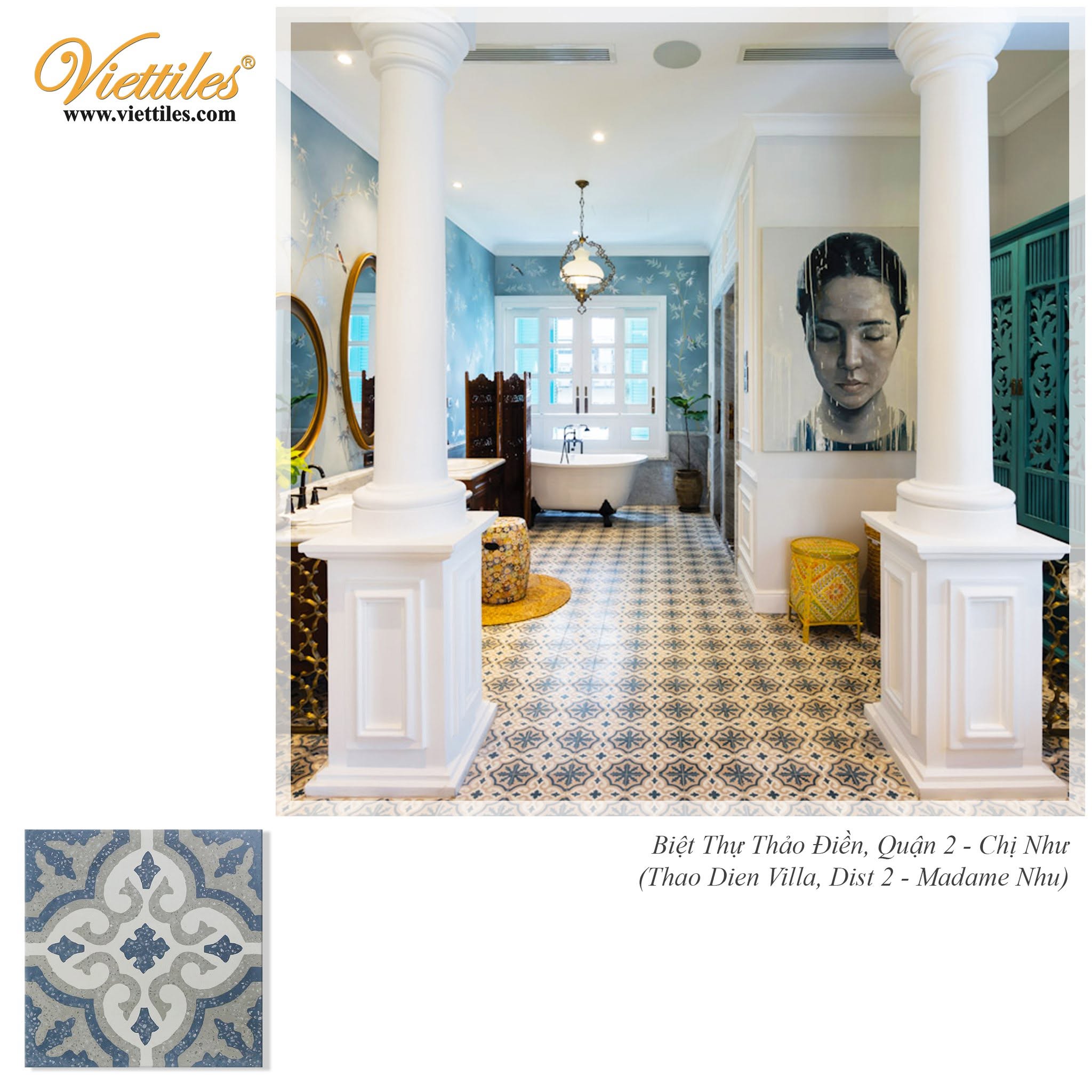
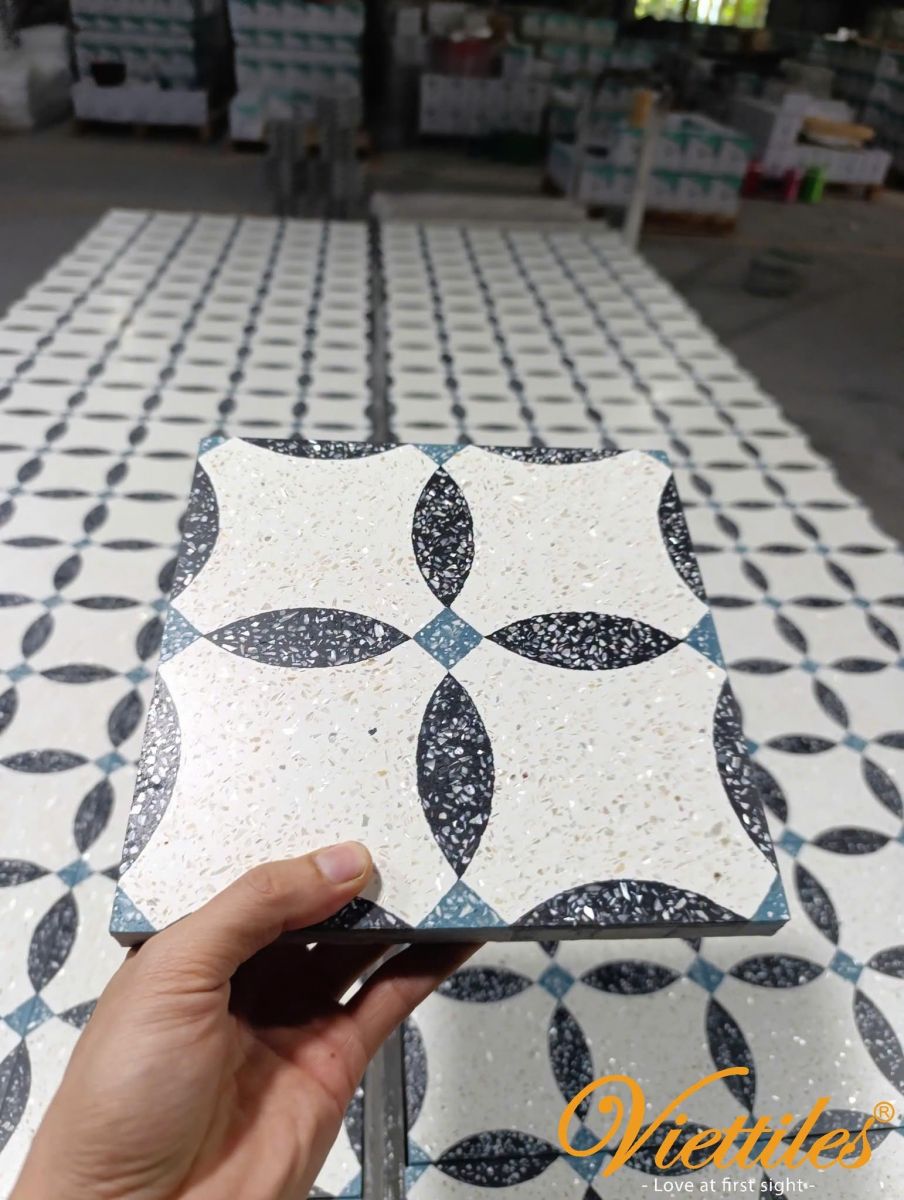
200 x 200 mm (16 mm thick): The classic and most widely available size on the market, equivalent to 25 tiles per m² and weighing approximately 1.35 kg per tile. This format offers the widest variety of patterns, from classic to contemporary, and is suitable for both flooring and wall cladding.
-
Small formats: 140 x 140 mm, 150 x 150 mm, and 100 x 100 mm: Commonly used for kitchen backsplash accents, small bathrooms, stair risers, and decorative borders.
-
Medium and large format: 300 x 300 mm: Suitable for spacious entrance halls and lobbies where fewer grout lines are desired.
2. Distinctive Geometric Tile Shapes
-
Hexagonal tiles (200 x 230 mm): Their honeycomb-inspired shape creates a flowing visual effect and is popular in contemporary interior designs.
-
Rectangular tiles (100 x 200 mm, 300 x 150 mm): Commonly used in herringbone or staggered zigzag layouts.
-
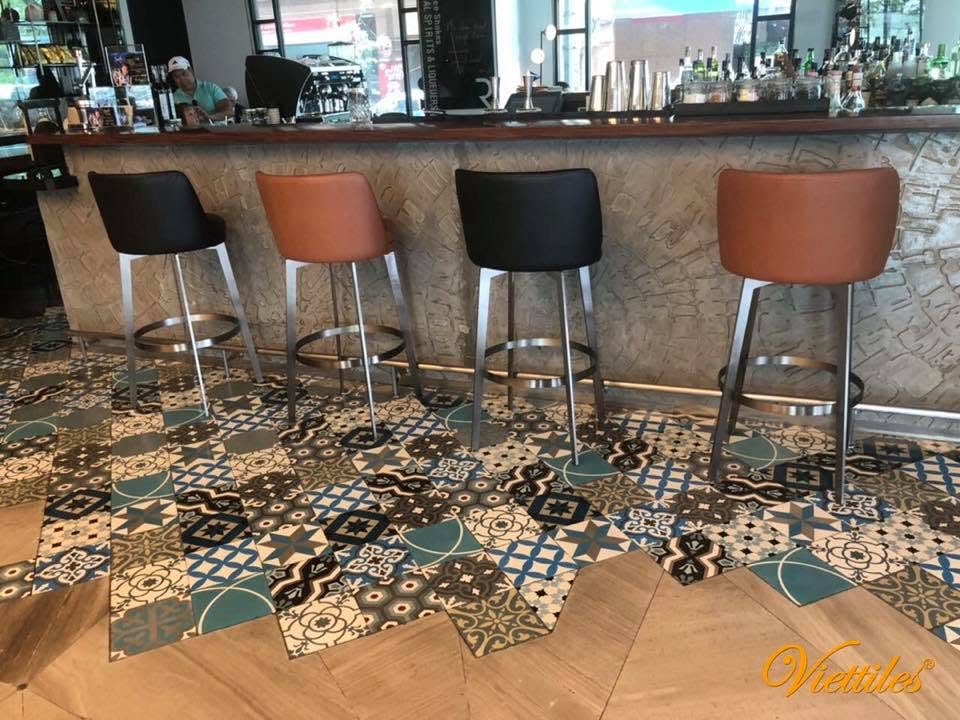
Fishscale and lantern-shaped tiles: These distinctive formats are ideal for decorative feature walls, bar counters, and resort-style bathroom interiors.
See also: cement floor tile designs
How to Choose Cement Tile Sizes Based on Area and Function
The key principle when choosing tile sizes is to maintain the right proportion in relation to the floor area and the intended function of each space.
-
Small spaces (under 10 m² – bathrooms, toilets, and narrow balconies): Consider smaller formats such as 100 x 100 mm, 140 x 140 mm, or 200 x 200 mm, preferably with fine patterns and light colors. Smaller tiles allow installers to make more precise adjustments to accommodate bathroom floor slopes for drainage without excessively distorting the pattern.
-
Medium-sized spaces (10–30 m² – bedrooms, kitchens, and living rooms in townhouses): The 200 x 200 mm format is generally a well-balanced choice. In a living room, corner tiles and border tiles in the same 200 x 200 mm format can be combined to create a “tile rug” that visually defines the sofa and coffee table area.
-
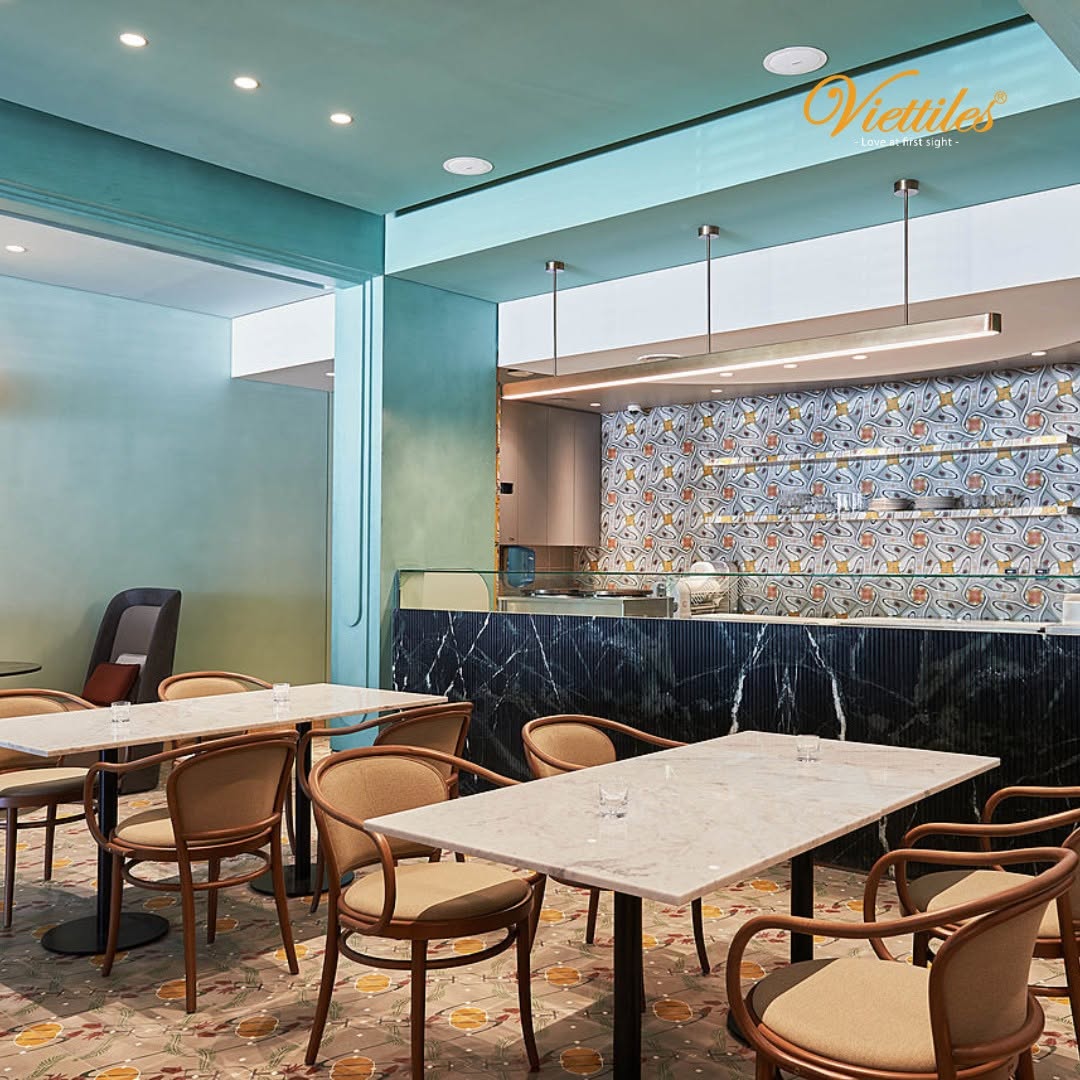
Large spaces (over 30 m² – restaurant lobbies, cafés, and resorts): The 200 x 200 mm format can be used across large continuous areas, or hexagonal and square tiles can be combined to define open-plan functional zones without building partition walls.

Popular cement tile sizes and how to choose the right format for each space
How Do Tile Sizes Affect Layout and Grout Lines?
Tile dimensions directly influence the visual continuity of a floor and the technical requirements of installation.
-
Grout line density: The smaller the tiles, the more grout lines there will be per square meter. Using small tiles with busy patterns in a large room can make the floor look fragmented. Handmade cement tiles, however, can be installed with narrow standard grout joints of approximately 1.5–2 mm. When the tile size is appropriate for the space and installation is carried out correctly, the subtle grout lines help patterns formed by groups of four tiles blend into seamless circular or diamond-shaped motifs.
-
Cutting waste along edges: Larger tiles can generate more waste when diagonal cuts are required at corners or where walls are irregular. In rooms that are not perfectly square, medium-sized tiles such as the 200 x 200 mm format make it easier for installers to keep full tiles centered and place cut pieces along the walls.

Narrow 1.5–2 mm grout joints help patterns across adjoining cement tiles appear as continuous designs
How to Calculate the Number of Tiles Required
To order the correct quantity, you can follow these simple calculation steps:
-
Calculate the number of tiles per square meter:
Tiles per m² = 1 / (Tile length × Tile width)
Example: For 200 x 200 mm tiles (0.2 x 0.2 m), 1 / 0.04 = 25 tiles/m².
-
Calculate the total number of tiles to purchase, including 5%–8% extra for cutting waste:
Total tiles = Floor area (m²) × Tiles per m² × 1.05 (or 1.08)
Practical example: Suppose you need to tile a 12 m² kitchen floor using 200 x 200 mm cement tiles, packaged in boxes of 12 tiles.
Total including 5% extra = 12 × 25 × 1.05 = 315 tiles → Number of boxes = 315 / 12 = 26.25 → Order 27 boxes.
Important Considerations When Choosing and Ordering Cement Tiles
-
Each tile shape has its own coverage rate: Do not assume that every type of cement tile requires 25 tiles per m². Geometric formats such as hexagons, fishscale tiles, and rectangular tiles have different coverage areas. Ask the manufacturer for accurate conversion figures before placing an order.
-
Tile thickness and finished floor level: Handmade cement tiles are typically around 16 mm thick, making them thicker than conventional ceramic tiles, which are usually 8–10 mm thick. If cement tiles are installed alongside wood flooring or ceramic tiles on the same level, instruct the installation team to lower the subfloor in the cement tile area as needed to achieve a level finished surface.
-
Order the full quantity at once: Cement tiles are handcrafted products that undergo natural curing. Ordering small additional quantities at different times may result in slight variations in molded dimensions or color shade between batches.
See also: decorative cement tiles for living rooms
Standardized Handmade Cement Tile Sizes from Viettiles
At Viettiles, every cement tile format combines architectural proportions with the dimensional precision of high-quality hydraulic pressing molds. Our range includes classic square tiles measuring 200 x 200 mm and 140 x 140 mm, as well as hexagonal tiles, fishscale tiles, and symmetrical corner and border designs. The Viettiles technical team is ready to help calculate material quantities, recommend tile sizes compatible with floor slopes, and advise on color combinations based on your design drawings, supporting a cohesive finish for every project.
Contact Information and Technical Consultation:
-
???? Showroom: No. 17, Street 40, An Khanh Ward, Thu Duc City, Ho Chi Minh City, Vietnam
-
???? Hotline: 0906 808 012 – 0906 830 362
-
✉️ Email: info@viettiles.com
-
???? Website: www.viettiles.com
-
???? Factories: Le Minh Xuan Industrial Park (Ho Chi Minh City) and Chon Thanh (Binh Phuoc Province)