Which Cement Tiles Should You Choose for Flooring? Beautiful Design Ideas and Installation Tips
The floor is the surface that comes into direct and constant contact with us during everyday activities. Unlike wall tiles, which primarily serve a decorative purpose, choosing cement floor tiles requires a careful balance between aesthetics, mechanical durability, abrasion resistance, and slip resistance. If you are looking for a flooring solution that showcases distinctive craftsmanship but are still unsure about the available types, suitable applications, and installation techniques, the practical information below will help you make an informed decision.

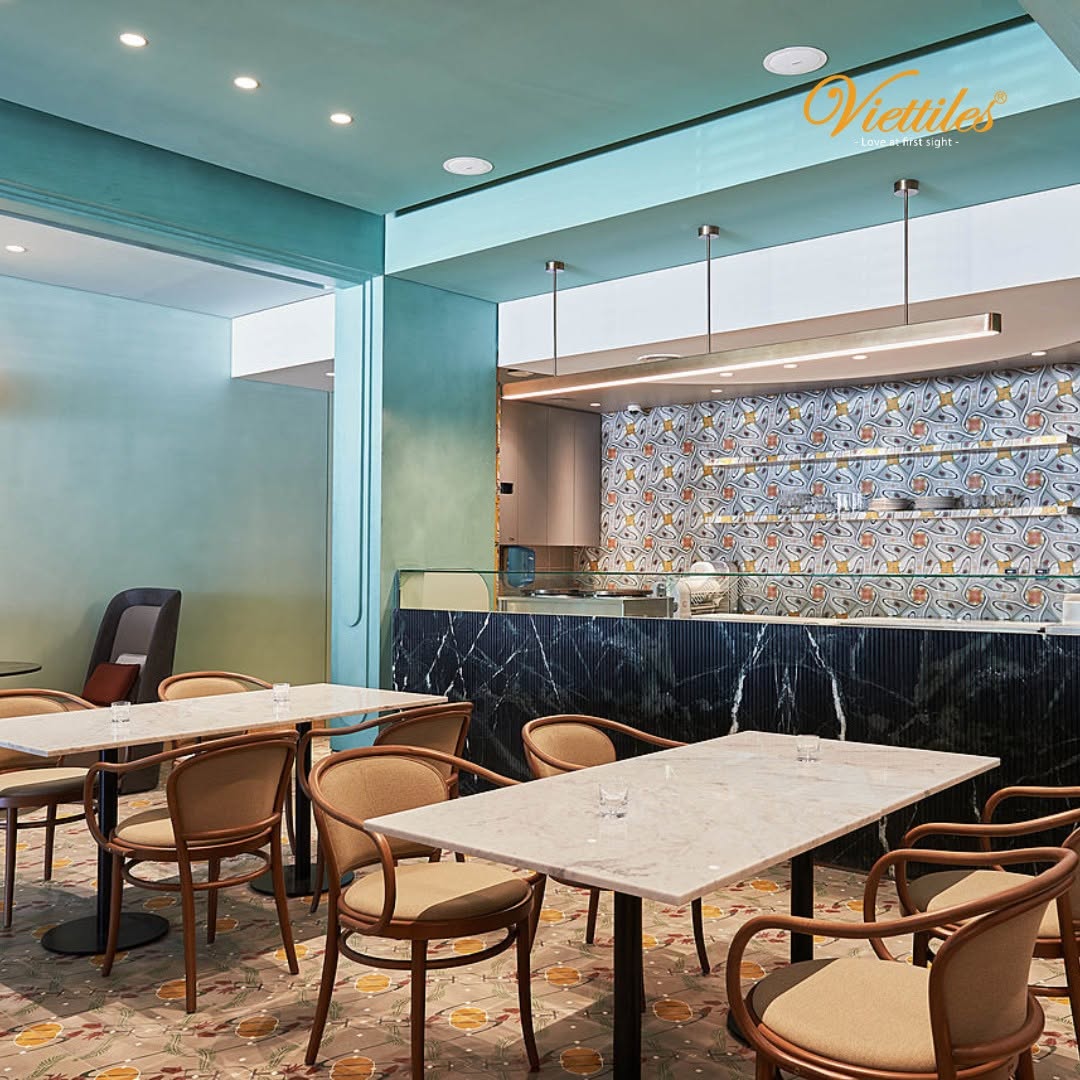
Viettiles handmade cement tile flooring offers a solid feel underfoot, a naturally matte finish, and timeless aesthetic appeal.
What Types of Cement Tiles Are Available for Flooring?
Today, cement tiles used for flooring are primarily classified according to their material structure and manufacturing methods.
Traditional Handmade Cement Tiles
These tiles are entirely handcrafted using cold hydraulic pressing and natural curing. They feature a distinct two-layer structure: a load-bearing concrete base and a mineral-pigment surface layer measuring 3–4 mm thick. Their naturally matte finish and solid feel give them a distinctive character. Over the years, regular foot traffic can gradually enhance the surface’s polished, timeworn appearance. Because the patterns are formed using mineral pigments rather than a thin printed layer, they are not simply printed designs that can wear away independently of the tile body.
Terrazzo Tiles
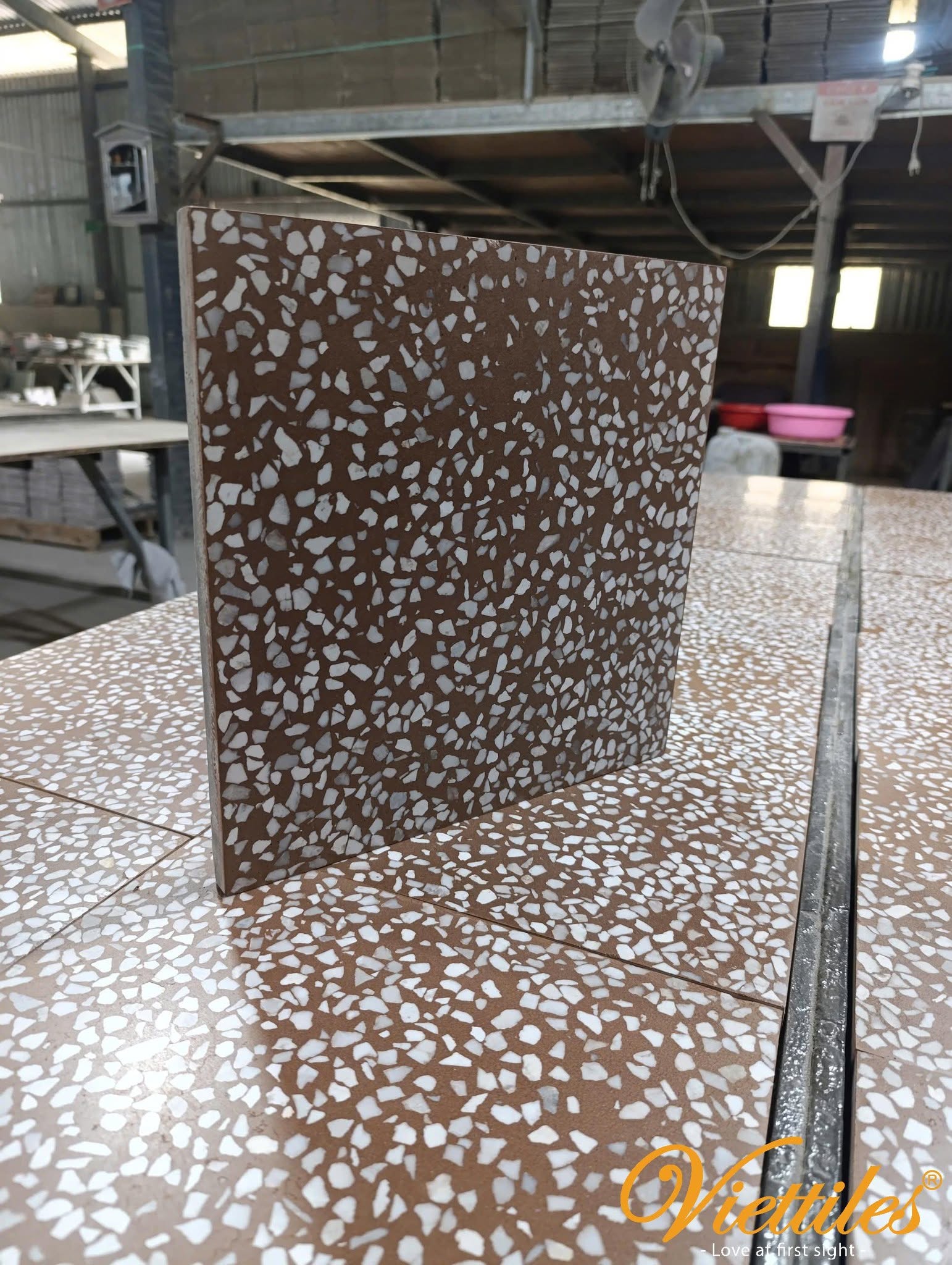
The surface combines colored cement powder with natural marble or quartz aggregates before being ground smooth. These tiles offer a dense, durable surface and good impact resistance, making them suitable for areas exposed to heavier loads and frequent foot traffic.
Ceramic/Porcelain Tiles with Printed Cement-Tile Patterns
These industrially manufactured tiles have a clay- or stone-based body fired at high temperatures, with digitally printed patterns finished with either a glossy or matte glaze. Their advantages include relatively low weight and low water absorption through the tile body. However, the decorative pattern is printed on the surface, so chips may expose the underlying clay or ceramic body.
See also: Patterned Cement Tiles – An Artistic Touch for Inspiring Spaces
Choosing Cement Tiles for Living Rooms, Bedrooms, Kitchens, and Commercial Spaces
Each area has different requirements in terms of humidity, friction, and ease of cleaning.
-
Bedrooms: This space calls for a calm, cozy atmosphere and a comfortable surface for bare feet. Consider handmade cement tiles in pastel shades, light beige, or delicate floral patterns. Avoid overly angular geometric designs if you want to maintain a visually relaxing environment.
-
Kitchens and dining areas: These spaces are frequently exposed to grease, seasonings, and cleaning water. Choose tiles with patterns incorporating darker shades, such as navy blue, dark gray, or black and white. Properly applying a suitable protective sealer is essential to make cleaning easier and reduce the risk of staining.
-
Bathrooms and verandas (high-humidity areas): Avoid glossy tiles because they can become slippery when wet. The naturally matte surface of cement tiles may provide better traction than a glossy finish, depending on the specific product. However, the substrate must be properly waterproofed, and the tile surface should receive periodic protective treatment to help prevent moisture penetration and mold-related problems.
-
Commercial spaces (cafés, restaurants, and homestays): These areas experience frequent foot traffic, footwear abrasion, and furniture movement. Traditional cement tiles with a 3–4 mm mineral-pigment surface layer or terrazzo tiles with stone aggregates are worth considering for their durability and ability to maintain their appearance over years of use, provided they are installed and maintained correctly.

Which Cement Tiles Are Best for Flooring? Beautiful Design Ideas and Installation Tips
How to Choose Colors, Patterns, and Sizes for Floor Tiles
-
Tile size: The 200 × 200 mm format is a versatile flooring option for spaces ranging from 10 m² to several hundred square meters. In narrow corridors or transitional areas, hexagonal tiles measuring 200 × 230 mm can help break up the monotony of straight lines.
-
Color scheme: Consider the 60–30–10 rule: use 60% of the space for the dominant background color, 30% for the interior color scheme, and 10% for accent shades featured in the cement-tile patterns. Treat the floor as a visual foundation. If the walls and ceiling already feature many details, choose tiles with two gently contrasting colors to maintain a spacious, balanced feel.
-
Floor layout: A continuous pattern across the floor can make a space feel more open, while a decorative rug-style layout with a border can help define functional areas, such as a dining table or a reception space.

Using a suitable tile adhesive and maintaining 1.5–2 mm grout joints are important factors in achieving durable cement-tile flooring.
Preparing and Installing Cement Floor Tiles
For cement-tile flooring to remain attractive and durable for decades, installation requires greater attention to detail than conventional mass-produced glazed tiles.
-
Prepare the substrate: The underlying floor must be level, firmly compacted, and completely dry. Since cement tiles are approximately 16 mm thick, the finished floor level should be planned around 20–25 mm below adjacent rooms, accounting for the tile adhesive layer.
-
Soak the tiles before installation: Cement tiles naturally absorb moisture. Before installation, soak them in clean water for approximately 5–10 minutes, then remove them and allow excess water to drain. This helps prevent the tiles from drawing moisture from the adhesive and potentially compromising adhesion. Follow the manufacturer's installation instructions, as soaking requirements may vary by product.
-
Apply a suitable tile adhesive: Spread the adhesive with a notched trowel over the substrate and the back of each tile. Gently tap the tiles into position with a rubber mallet to align the surface and minimize voids beneath the tiles.
-
Maintain narrow grout joints (1.5–2 mm): Use tile spacers to keep the gaps consistent and help the decorative patterns align neatly across the floor.
-
Grout and clean immediately: Use a fine-grain grout suitable for the tile. Work in small sections and wipe the surface with a damp sponge as you go. Do not allow cement residue or grout to dry and harden on the decorative surface.
-
Apply a protective sealer: Once the floor has dried completely—typically after 48–72 hours, depending on site conditions and product instructions—apply two to three coats of a suitable penetrating sealer to help protect the tile's pores and reduce staining during use. Follow the sealer manufacturer's instructions for application and drying times.
Common Mistakes When Choosing and Installing Cement Tiles
-
Using a traditional cement slurry instead of tile adhesive: Traditional cement slurry can shrink as it dries, potentially causing tiles to loosen or become hollow-sounding. Moisture and soluble salts migrating from beneath the floor can also contribute to white deposits, known as efflorescence, on the tile surface.
-
Skipping surface sealing: Unsealed cement tiles are vulnerable to staining from tea, coffee, red wine, and grease. If dark liquids are spilled and not cleaned promptly, they may penetrate the cement surface and leave persistent marks.
-
Using highly acidic cleaning products: Toilet cleaners and strong acid-based products can damage the calcium-based components of the mineral-pigment layer, dulling the colors and permanently pitting the surface. Clean the floor with water or a pH-neutral floor-cleaning solution instead.
See also: Patterned Cement Tiles – An Artistic Touch for Inspiring Spaces
Durable Cement Flooring Solutions with Viettiles
Choosing floor tiles is about more than finding a pattern you like. It is an investment in the long-term functionality and character of your space. At Viettiles, our cement tiles are compacted using hydraulic pressing and feature substantial natural mineral-pigment surface layers. They are designed for durability and resistance to everyday wear, with suitability depending on the intended application and installation conditions.
We provide specialist advice on waterproofing solutions, assistance with quantity calculations, and comprehensive technical installation guidance to help you create a stable, attractive floor that retains its distinctive character over time.
Contact Viettiles for Flooring Advice and Technical Support:
-
???? Showroom: No. 17, Street 40, An Khanh Ward, Thu Duc City, Ho Chi Minh City, Vietnam
-
???? Hotline: 0906 808 012 – 0906 830 362
-
✉️ Email: info@viettiles.com
-
???? Website: www.viettiles.com
-
???? Factories: Le Minh Xuan Industrial Park (Ho Chi Minh City) and Chon Thanh (Binh Phuoc Province)