Lotus Pattern Cement Tiles: An Artistic Focal Point for Architectural Spaces
In the language of East Asian visual design, the lotus has never been merely a random decorative detail. It is a symbol of purification, order, and inherent beauty. As Western architectural trends gradually become saturated with gray concrete surfaces and cold glass, people are increasingly turning back to seek cultural “anchors” with greater depth.
Bringing this motif onto handcrafted cement, lotus pattern cement tiles are not intended to cover an entire surface, but to create artistic moments of stillness – spaces where the eyes can rest and the mind can find tranquility within a contemporary architectural setting.

Each lotus petal on the cement tile is the result of precisely crafted brass molds combined with the smooth, natural texture of mineral powders.
What Kind of Focal Point Does the Lotus Motif Create in Cement Tiles?
The fundamental difference between the lotus motif and geometric patterns lies in its organic form. The sharp, angular lines of modern architecture often need a visual counterbalance to soften the space, and the flowing curves of lotus petals provide one of the most natural solutions.
“The lotus motif on a cement surface does not compete for attention through vivid colors. Instead, it attracts the eye through a centrifugal composition – petals unfold symmetrically from the lotus center, gently guiding visual movement and making the space feel more open and tranquil.”
In particular, the unglazed surface of cement tiles creates a deep, understated matte finish. Under natural light, the outlines of the lotus petals do not produce harsh reflections but emerge through warm, subtle tonal transitions, creating an authentic tactile quality reminiscent of a relief engraving beneath the feet.
✤ See also: Decorating Cafés with Classic Patterned Cement Tiles
What Spaces Are Suitable for Lotus Pattern Cement Tiles?
The lotus motif carries an introspective quality, making it more selective about its setting than conventional decorative patterns. To achieve aesthetic maturity, this material is best incorporated into architectural styles with a strong sense of depth:
Indochine Style
The lotus is a defining element of Indochine aesthetics, acting as a bridge between French romantic standards and local nostalgic character.
Zen & Spa Spaces
Its ability to evoke relaxation and emotional balance makes it particularly suitable for meditation, therapy, and wellness spaces.
Boutiques & Villas
It can function as an independent statement art piece, positioned among the clean, geometric lines of modern architecture.
How to Coordinate Lotus Pattern Cement Tile Colors in Architecture
The success of a design featuring lotus-pattern tiles lies in controlling tonal intensity. Natural mineral pigments allow architects to reinterpret the motif through three distinct emotional palettes:
| Color Styling Approach | Main Palette | Spatial Effect |
|---|---|---|
| Monochrome | Charcoal Black, Ivory White, Cement Gray | Modernizes traditional motifs with a crisp, minimalist, and elegant character. |
| Earth Tone | Mustard Yellow, Deep Jade Green, Terracotta Red | Creates a rich classic Asian atmosphere with warmth and sophistication. |
| Zen Pastel | Celadon Ceramic Green, Ash Gray, Powder White | Softens the visual field and creates a light, serene sense of depth for wellness spaces. |

The flexibility of mineral color formulation allows lotus motifs to adapt easily to both classical and contemporary architecture.
Suitable Locations for Lotus Pattern Cement Tiles
In high-end spatial composition, covering an entire floor with decorative patterned tiles is increasingly considered outdated. The value of lotus pattern cement tiles is maximized when they are treated as an intentional focal point:
1. Foyer Entrance Mat: A lotus-pattern composition framed by symmetrical border tiles at the entrance can serve as an elegant welcome while visually defining the transition between the noise of the outside world and the tranquility of the home.
2. Worship & Meditation Spaces: The purity of the lotus symbolizes a sense of solemnity. Placing a lotus motif at the center of the floor or on the wall behind a statue or altar can create a quiet and contemplative atmosphere.
3. Bathroom Dry-Zone Decorative Wall: Turn the wall behind a mirror or washbasin into an artistic stone-and-ceramic-like composition. Professional note: Avoid using cement tiles on wet-zone shower floors to protect the cement surface from chemical cleaners and calcium deposits.
4. Stair Landings & Reception Bar Walls: These are places where people pause for a few seconds to change direction. Here, lotus-pattern tiles can function like a wall painting while remaining neatly integrated into the floor plane.

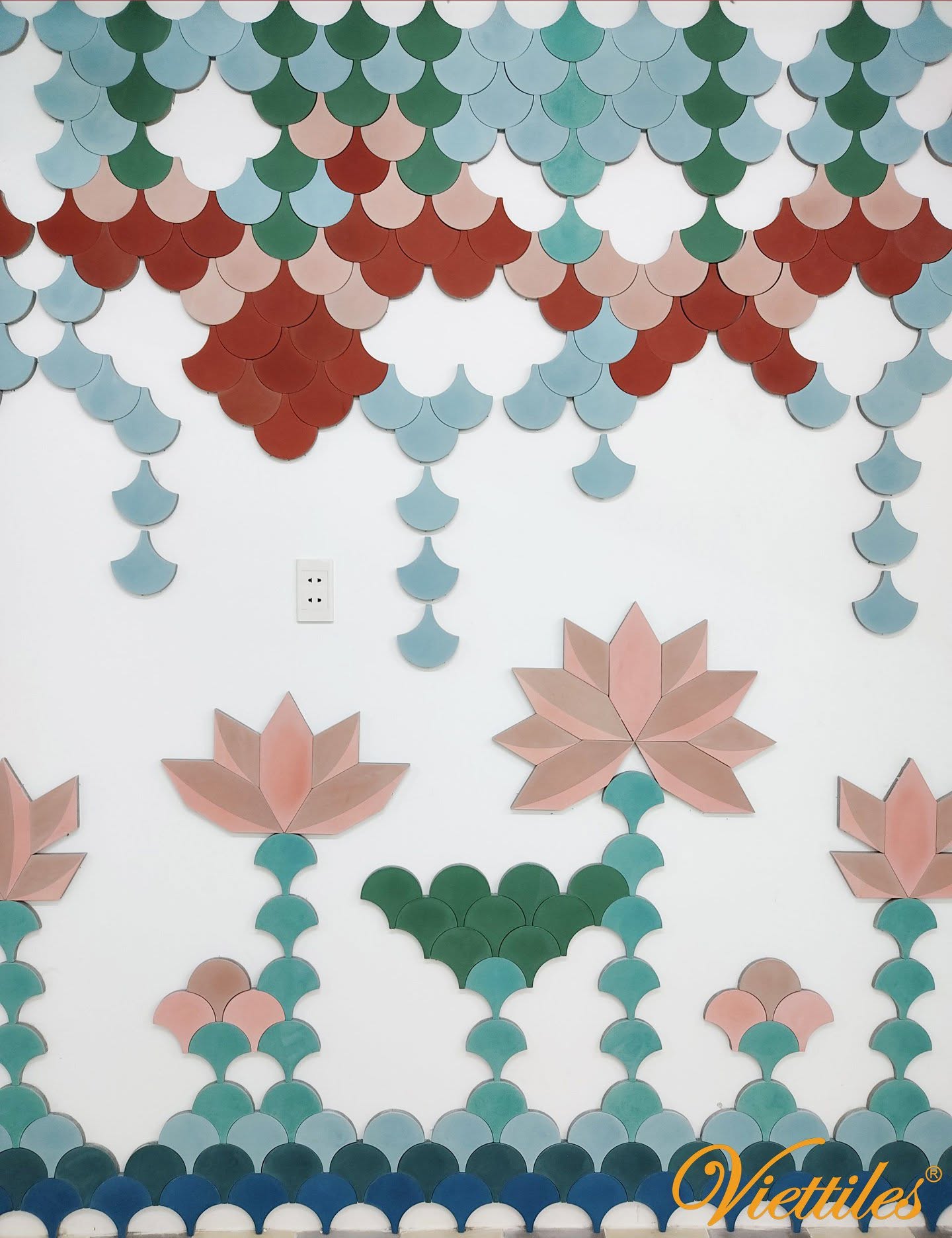
Artistic creation of a lotus wall mural made from cement tiles
Combining Lotus Pattern Cement Tiles with Other Materials
Architecture is a harmony of materials. With its raw cement character, lotus pattern cement tile can look crude when placed beside inexpensive glossy surfaces, but it can become highly expressive when paired with authentic materials:
-
Dark-Grained Natural Wood (Walnut, Teak, Oiled Oak): Warm wood tones provide the perfect counterbalance to the coolness of cement, creating a nostalgic atmosphere with a distinctly Indochine character.
-
Solid Brass Inlay: A slim brass strip recessed between the lotus tile area and a wood floor or border creates a refined transition down to the millimeter, emphasizing the demanding finish standards of a high-end project.
-
Woven Rattan & Natural Linen: Bringing natural textures alongside the lotus motif gives the space a sense of breathing room, openness, and lightness.
-
Textured Limewash Walls or Exposed Concrete: A quiet, raw wall surface highlights the refined curves of each lotus petal, transforming the tiled area into a distinctive visual focal point.
✤ See also: Viettiles – Where Art and Sustainable Architecture Converge
Tips for Making the Lotus Motif Stand Out While Maintaining Harmony
A beautiful design can be completely compromised by carelessness during composition and finishing installation.
1. The “Border & Solid Tile” Framing Principle
The lotus motif has an outward-blooming visual direction. Cutting the tile directly against the wall edge can create a visually cramped effect. A strip of plain border tiles or solid-color tiles should be used around the composition to frame the lotus artwork properly.
2. Sealer Application Before Grouting (Mandatory)
Cement tiles have an open capillary structure. Before grouting, installers must apply a penetrating protective sealer. This helps seal the tiny pores on the white pigment surface of the lotus petals and prevents grout powder from bleeding onto and permanently staining the tile.
3. Choosing the Right Grout Tone
The ideal grout width for handmade cement tiles is 1.5–2 mm. It is recommended to use only Light Grey grout to create a soft, seamless transition between tiles, while strongly contrasting black grout should be avoided.
4. Focused Lighting Techniques
Cement tiles naturally have a smooth matte surface. Avoid using overly diffuse white lighting. Instead, use a spotlight with a 24°–36° beam angle and a warm 3000K color temperature directed toward the center of the lotus composition to highlight the depth of each mineral color layer.

Artistic creation of a lotus wall mural made from cement tiles
Viettiles – Handcrafted Material Solutions for Architecture with a Strong Sense of Identity
At Viettiles, we view every lotus pattern cement tile as a work shaped by patience and craftsmanship. The combination of traditional brass-mold craftsmanship and a quality-control process supporting exports to more than 50 countries provides architects with tangible material values:
-
Inorganic Color Durability: A 2.5–3 mm layer of natural mineral pigment is hydraulically pressed under high pressure, non-fired, environmentally friendly, and designed to endure throughout the lifespan of the project.
-
Flexible Customization: Lotus petal color systems can be customized according to the interior design palette of each individual project.
-
Specialized Technical Support: Provides high-resolution hatch map libraries for 3D rendering software and supplies on-site samples for project evaluation.
✤ See also: Façade Decoration with Rectangular Breeze Block Tiles – When Architecture Knows How to “Breathe”
VIET TILES
Showroom: No. 17, Street 40, An Khanh Ward, Thu Duc City, Ho Chi Minh City
Hotline: 0906.80.80.12 - 0906.83.03.62
International Partner Support (English): +84 909 407 983
Email: info@viettiles.com
Website: www.viettiles.com
Manufacturing facilities: Le Minh Xuan Industrial Park (Binh Chanh, Ho Chi Minh City) & Chon Thanh (Binh Phuoc).