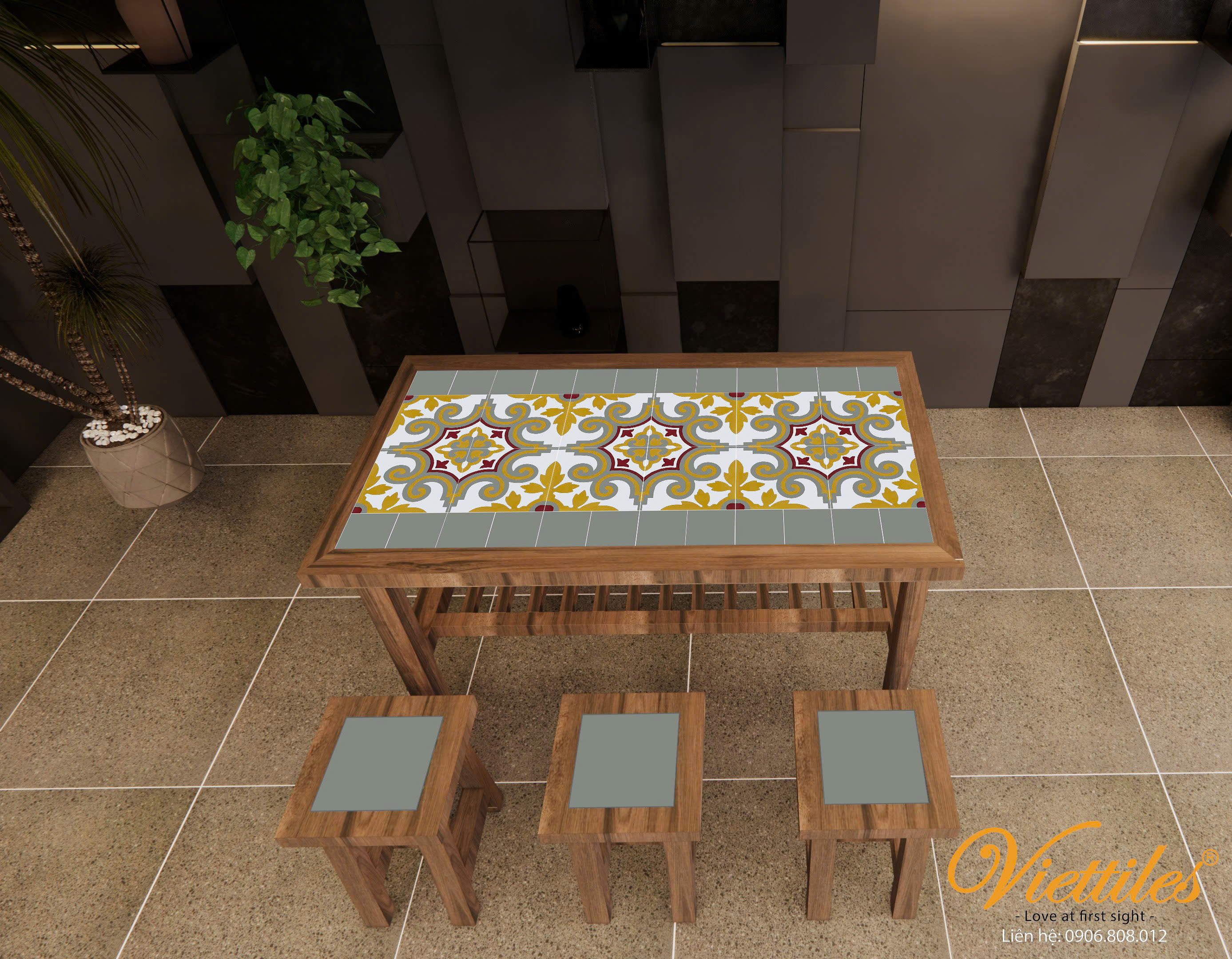
Patterned Cement Wall Tiles for Living Rooms and Beautiful Styling Ideas for Modern Homes
No longer limited to sidewalks or old school corridors, terrazzo floor tiles in precast slab form are making a strong comeback in modern designs. Thanks to high-pressure hydraulic pressing technology combined with a diverse mineral aggregate mix, terrazzo delivers material depth, a sense of spontaneity, and outstanding load-bearing performance that industrial printed surfaces cannot replicate.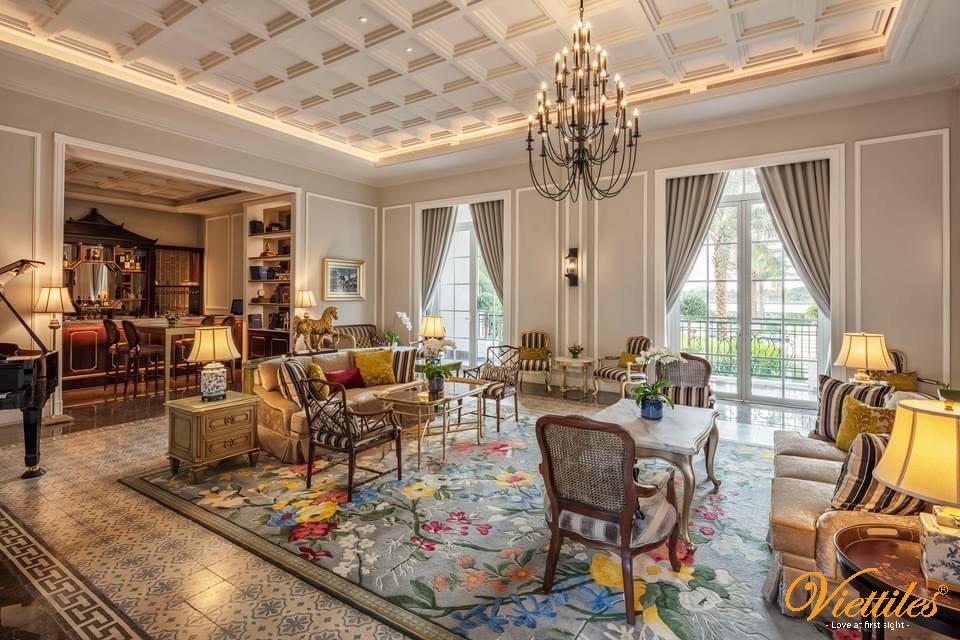
The natural stone aggregate texture of terrazzo floor tiles creates an elegant architectural focal point for entryways.
1. Terrazzo Tiles – Repositioning a Classic Trend for Modern Design
The essence of terrazzo lies in combining natural stone aggregates with a hydrated cement binder. In its modern form, this material offers several clear technical advantages:
-
Spontaneous stone aggregate texture: The interplay of marble, quartz, glass, and mineral-pigment bases creates a multidimensional visual effect without repetitive, machine-generated patterns.
-
High mechanical density: Precast tiles are compacted under high static pressure to eliminate internal air voids. The surface is then polished to expose the stone aggregates through multiple grades of diamond discs, providing resistance to abrasion and heavy foot traffic.
-
Green, non-fired material: The natural hydration-curing process reduces thermal energy emissions, making it suitable for sustainable building projects.
2. Architectural Focal Point Solutions with Terrazzo Tiles
To prevent floors from feeling monotonous, designers commonly apply three visual zoning solutions:
Creating an Open-Zone "Floor Rug"
Lay large-aggregate terrazzo (Macro chips) beneath a kitchen island, dining table, or entryway, and frame it with metal edging to define functional zones without constructing partition walls.
Transitioning Stone Aggregate Scales
Combine fine-aggregate tiles (Micro chips: 2–5 mm) across general areas with large-aggregate tiles (Mega chips: 15–30 mm) at focal points to create a dynamic visual rhythm.
Balancing Material Textures
The cool, solid character of terrazzo can be complemented by warm natural wood, slim black steel frames, or transparent glass, allowing the distinctive qualities of each material to stand out.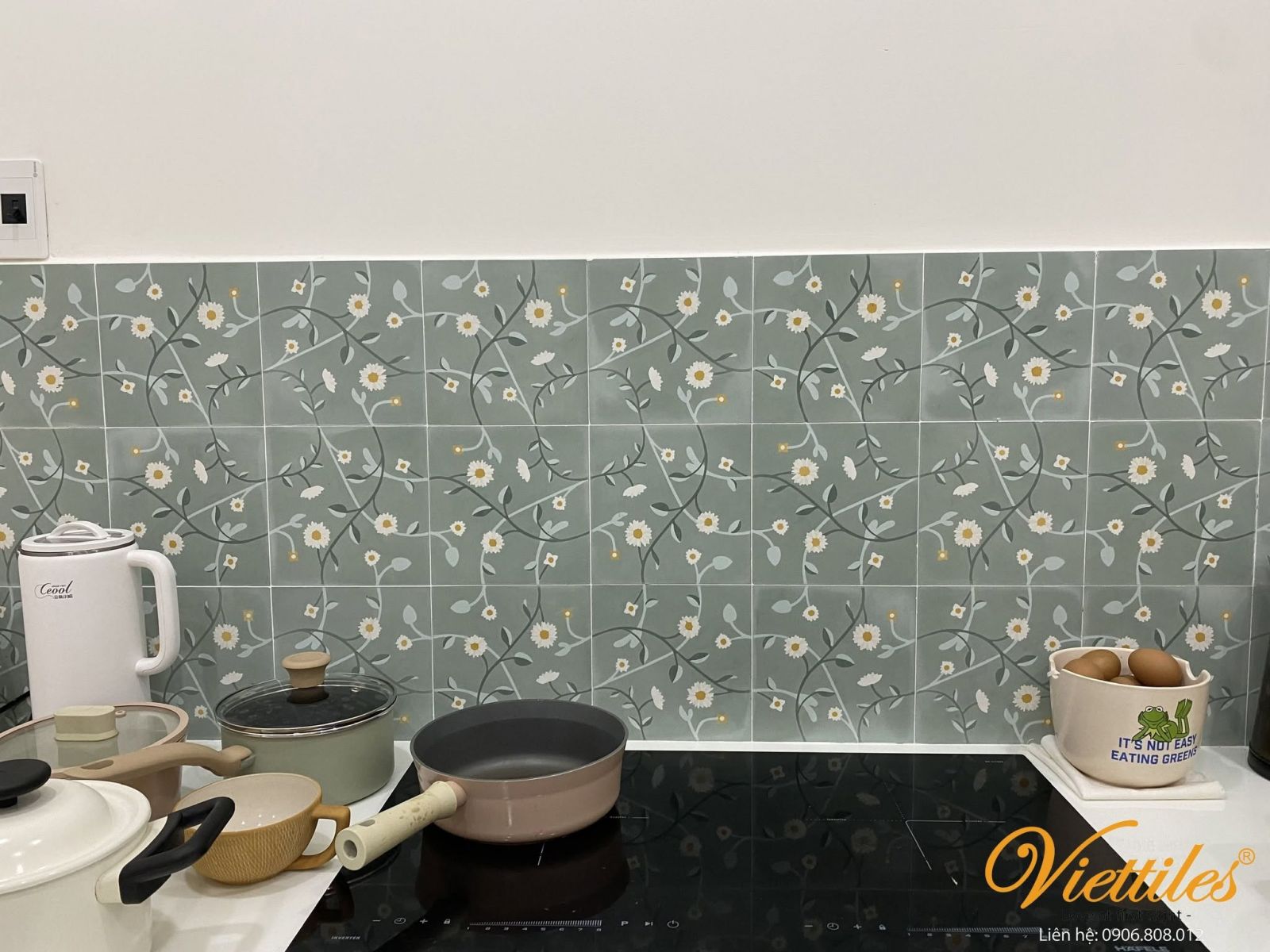
Terrazzo tile zoning used to separate the cooking area from the open dining space
See also: Viettiles Cement Tiles – Unique Design Solutions for Every Project
3. Practical Applications by Project Type
| Project Type | Effective Application Areas | Practical Operational Benefits |
|---|---|---|
| Restaurants, Cafés | Bar floors, check-in areas, main walkways | Withstands heavy foot traffic; resistant to scratches caused by frequently moving tables and chairs |
| Resorts, Boutique Hotels | Reception areas, open corridors, dry restroom areas | Durable in humid climates; creates a sophisticated local handcrafted character |
| Townhouses & Villas | Kitchens, kitchen islands, entrance foyers | Speckled stone surfaces help conceal everyday dust and dirt |
| High-End Showrooms | Display platforms, product experience paths | Creates a neutral mineral-textured backdrop that highlights displayed products |
4. Tips for Optimal Aesthetics and Installation
To ensure terrazzo flooring achieves the desired durability and aesthetic quality, contractors and homeowners should understand four key technical principles:
-
Thickness of the exposed aggregate layer: The stone aggregate and mineral pigment layer on the tile surface should be at least 6–8 mm thick to ensure that the floor can still be mechanically ground and polished for restoration after 5–10 years of use without exposing the concrete base.
-
Two-layer penetrating sealing: Cement has capillary properties. A penetrating sealer must be applied before grouting, followed by a final protective coat after cleaning to prevent coffee, wine, or grease from penetrating and causing stains.
-
Grout joint tightness and color: Use grout powder that matches the base color of the tile, maintaining joint widths of 1–2 mm. Joints that are too wide or have mismatched colors can visually break up the aggregate composition.
-
Substrate and tile adhesive: The concrete substrate must meet flatness requirements and have cured for at least 21 days. Polymer-based tile adhesive must be used, with a notched trowel applied to fully cover the back of the tile. Do not use self-mixed cement slurry, as it may create hollow areas beneath the tiles.
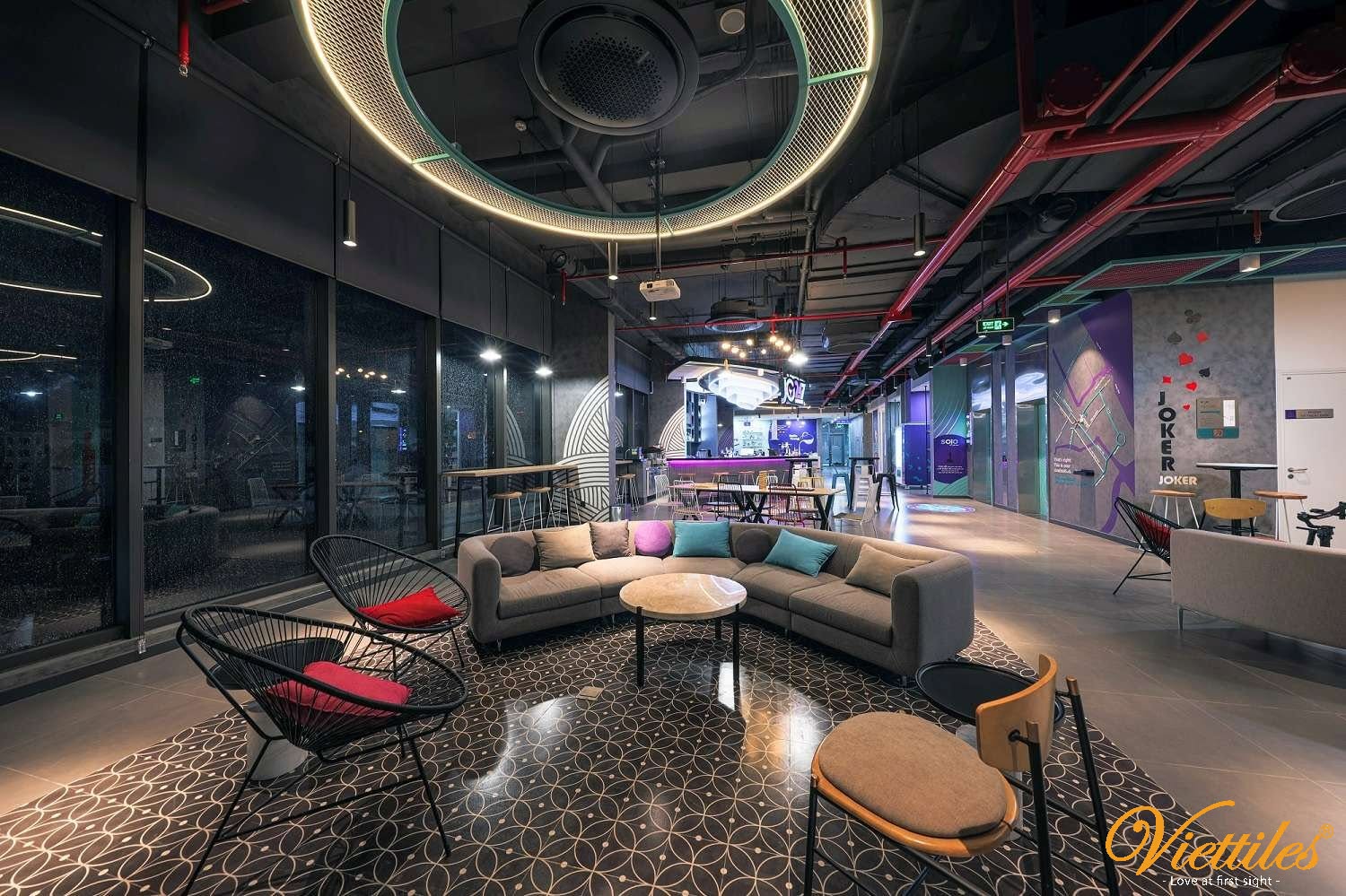
When Every Tile Becomes a Work of Art
Project-Grade Terrazzo Tile Solutions from Viet Tiles
Viet Tiles supplies export-quality precast terrazzo tiles, addressing schedule and quality requirements for projects with demanding aesthetic standards:
-
Consistent static-pressing quality: Manufactured using high-pressure static pressing lines across a system of 3 factories in Ho Chi Minh City (capacity of approximately 60,000 m²/month). Flatness and squared edges are strictly controlled, helping shorten installation time.
-
Customizable aggregate mixes: Flexible combinations of natural stone, quartz, and mineral base colors according to the individual identity of each F&B chain or high-end resort project.
-
Proven in international projects: Viet Tiles products are present in more than 64 countries and have been selected by major hospitality brands for their color stability and mechanical consistency.
VIET TILES
Office & Showroom: No. 17, Street 40, An Khanh Ward, Thu Duc City (formerly District 2), Ho Chi Minh City
Hotline: +84 906 830 362
Email: info@viettiles.com
Website: www.viettiles.com