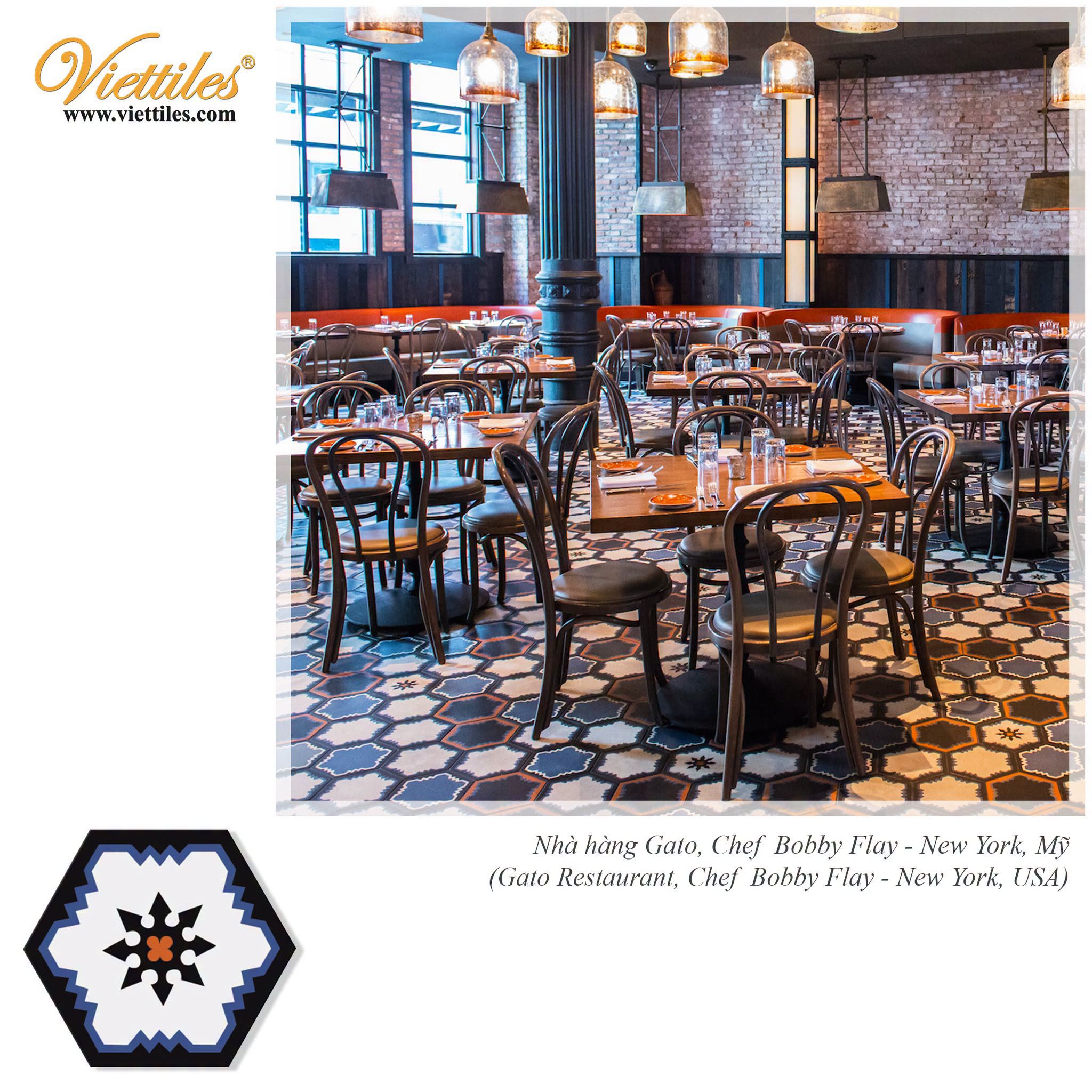
Patterned Cement Wall Tiles: 7 Styling Ideas to Make Your Project Stand Out
Instead of plain, monochromatic wall surfaces, patterned cement wall tiles add visual depth and a distinctive raw character through a high-pressure cement base combined with natural mineral pigments. However, cement tile patterns carry significant visual weight; if used over too large an area or installed incorrectly, the wall can quickly feel overwhelming and become difficult to maintain.

Patterned cement wall tiles create a visual focal point while protecting kitchen walls from grease and oil
When Should You Use Cement Tiles to Create a Wall Focal Point?
Areas Exposed to Friction & Grease
Backsplashes behind cooking areas, bar counter bases, and sink walls. The 2–3 mm mineral color layer offers superior resistance to scratches and abrasion compared with water-based paint.
Defining Open Spaces
Create a soft boundary for dining areas, work corners, or entryways without constructing partitions that block natural light.
Walls Exposed to Angled Light
The naturally smooth-matte surface softly diffuses light from windows or spotlights without creating the harsh glare associated with industrial ceramic tiles.
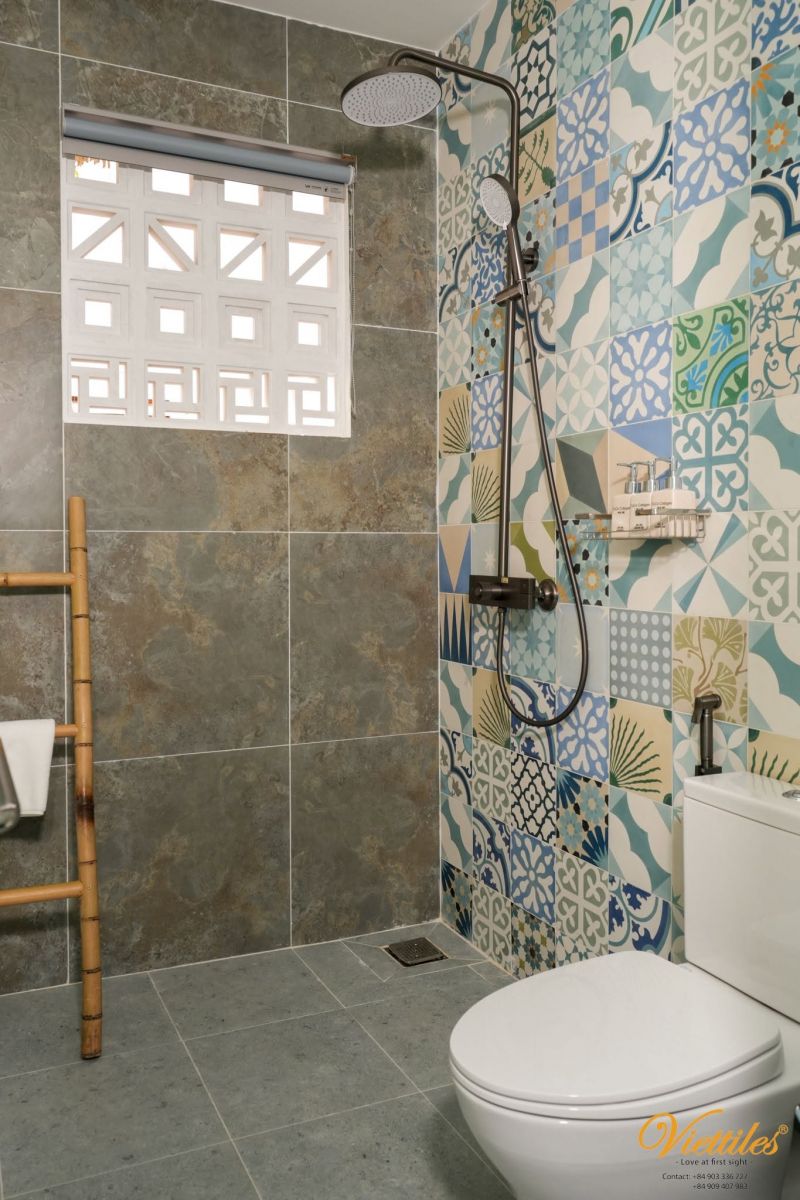
Grade 2 cement tiles – A cost-effective and aesthetically appealing solution
7 Ways to Style Patterned Cement Wall Tiles for Different Architectural Styles
-
Recessed Indochine Arch: Place a symmetrical classic pattern inside a stepped recessed arch frame with a depth of 5–10 cm. Suitable for boutique hotel lobbies, resorts, and villas.
-
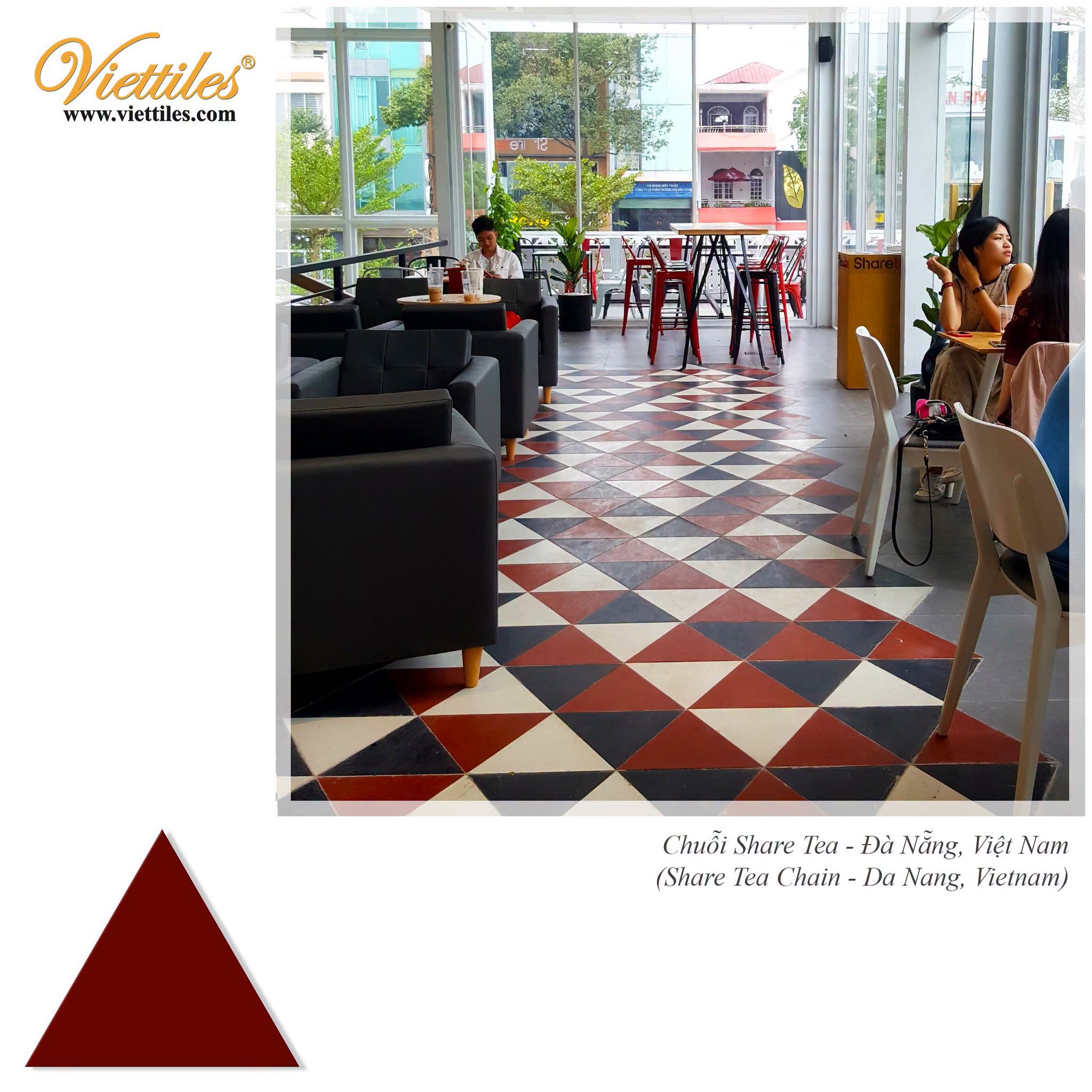
Modern Geometric Vertical Strip: Use geometric or monochrome zigzag patterns (black – gray – white) from floor to ceiling. Suitable for townhouses, showrooms, and bars.
-
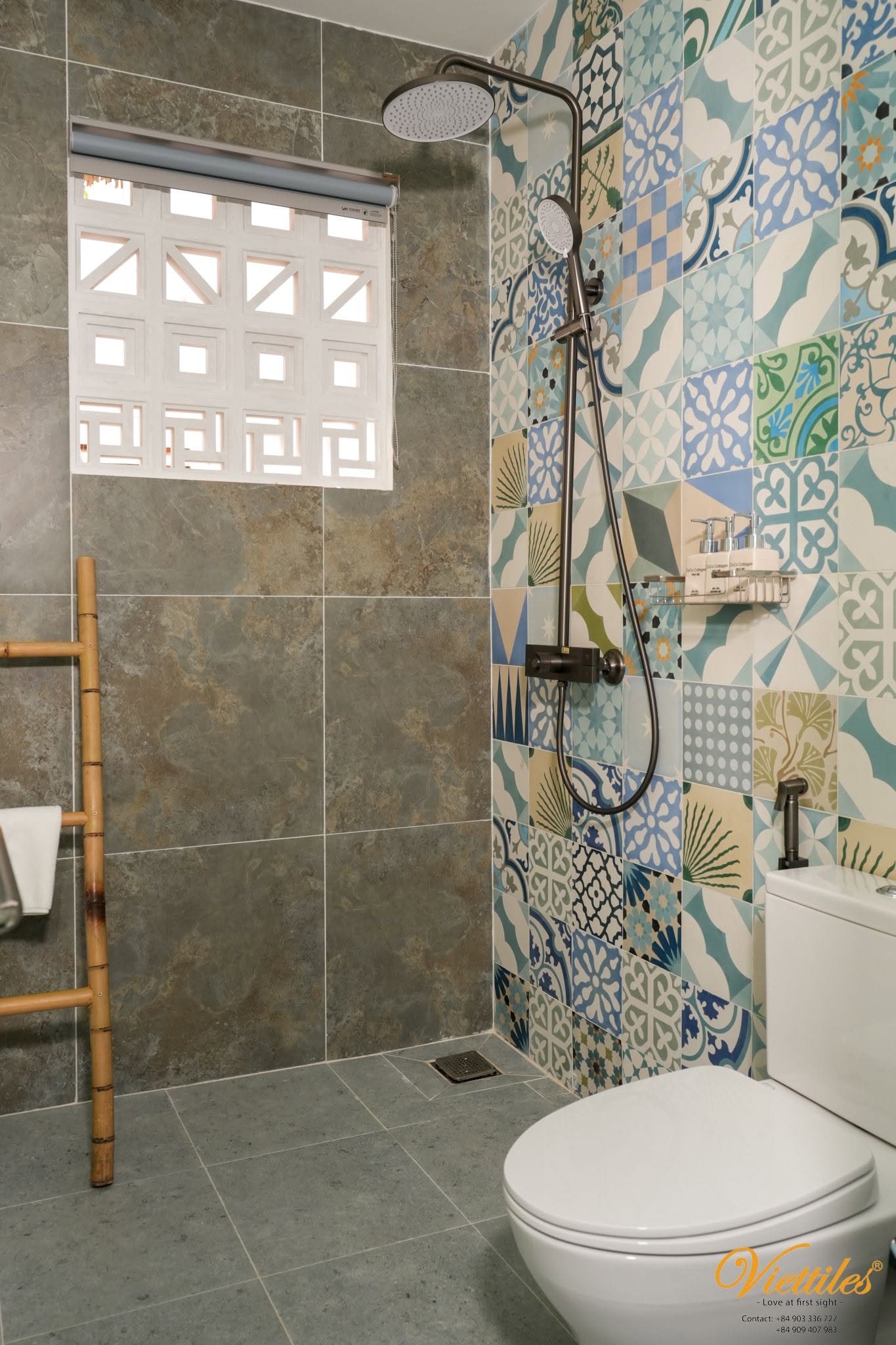
Tone-on-Tone Patchwork: Randomly combine multiple patterns while maintaining a consistent color palette, such as all gray or emerald green tones. Suitable for kitchen walls and pantries.
-
Plain Cement Tiles: Use pattern-free tiles in deep tones such as terracotta red, moss green, or cement gray, with narrow grout lines. Suitable for Rustic and Wabi-sabi styles.
-
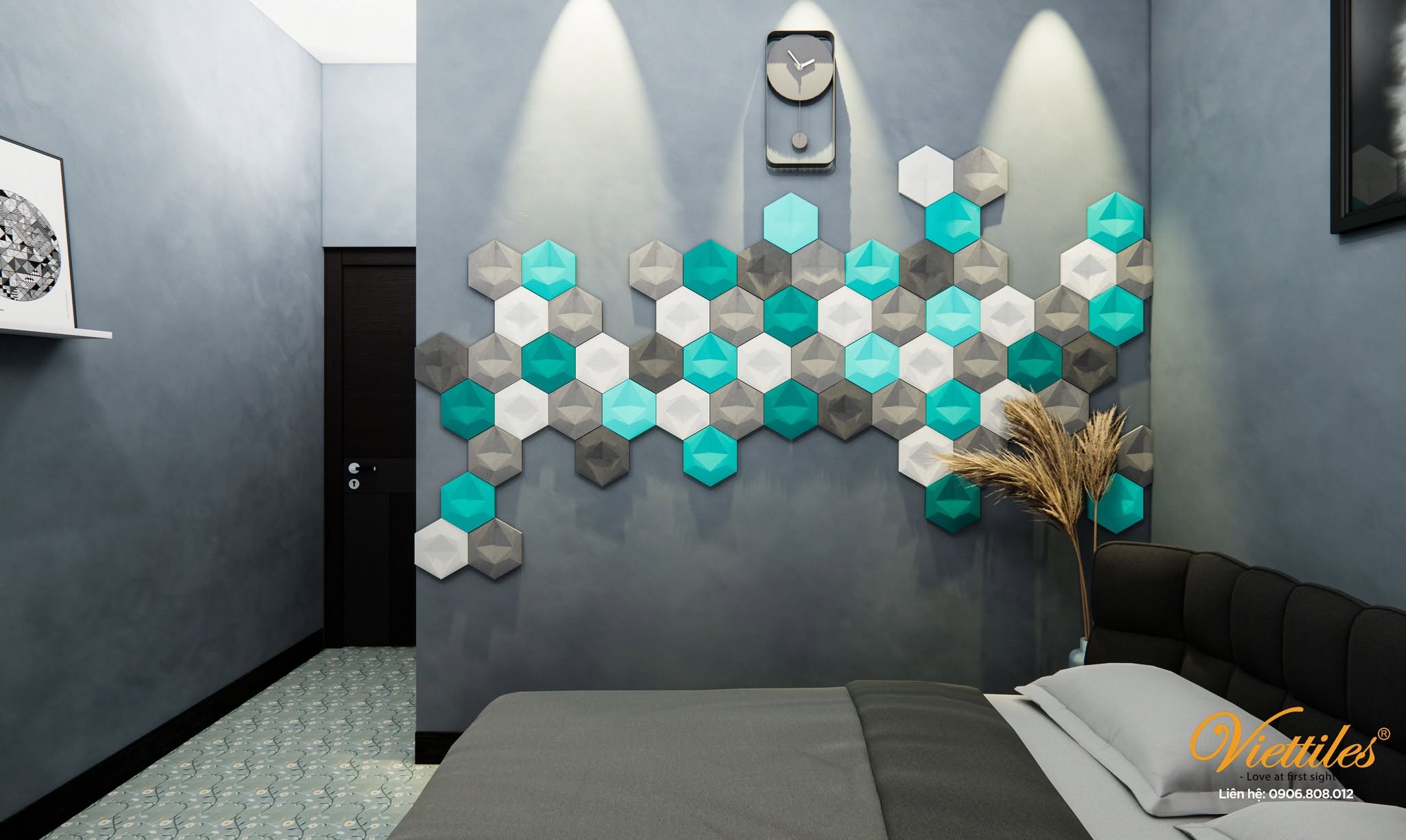
Free-Form Hexagonal Border: Keep the sharp edges of hexagonal tiles and allow the pattern to end freely against the plain wall surface. Suitable for vanity walls and headboard walls.
-
Tiered Border Tile: Install a horizontal patterned strip at a height of 0.9–1.2 m to visually separate the impact-prone lower wall from the upper wall. Suitable for hallways and dining rooms.
-
Cement Tile Mural: Arrange groups of 4–9 tiles to create a framed artwork, finished with brass edging. Suitable for elevator niches and waiting areas.
See the collection: Top 15+ Beautiful Living Room Cement Tile Designs Leading Trends in 2026
Combining Patterned Cement Tiles with Plain Walls for Balance
-
Safe visual ratio: Patterned tiles should account for only 15%–30% of the wall area; the remaining surface should be kept plain and monochromatic.
-
Prioritize Matte Paint: Avoid glossy paint next to cement tiles, as excessive reflection can diminish the raw, natural character of the cement.
-
Managing Thickness Differences: Cement tiles are typically 12–16 mm thick. A finishing trim made of brass or anodized aluminum should be installed along transition edges to conceal cut aggregate edges.
Creating a Striking Wall by Limiting the Tiled Area
-
Recessed Niche: Frame the tiled section within a stepped plasterboard wall system and combine it with spotlights to create visual depth.
-
Wainscoting: Stop the tiles at a height of 1–1.2 m to protect the lower wall while keeping the upper section in a light paint color to maintain an airy feel.
-
Align with Interior Dimensions: Limit the width of the tiled section to match the width of a mirror, kitchen island, or sofa backrest for a more coherent composition.
Matching Tile Patterns with Interior Colors
-
Color Sampling Principle: Select one secondary color from the tile and repeat it in cushions, upholstery, or lampshades.
-
Harmony with Natural Materials: Cement-based tiles pair well with natural wood, rattan and bamboo, powder-coated steel, and leather.
-
Cooling Down Warm Colors: Tiles in terracotta red or mustard yellow should be paired with cool neutral interiors such as gray or light beige, or complemented with greenery.
Which Types of Projects Are Suitable for Patterned Cement Wall Tiles?
| Project Type | Application Area | Result |
|---|---|---|
| Restaurants, Cafés | Bar fronts, check-in walls, sink-area walls | Strengthen brand identity and withstand frequent cleaning |
| Resorts, Boutique Hotels | Reception areas, hallway niches, headboard walls | Introduce a handcrafted local character into hospitality spaces |
| Townhouses & Villas | Kitchen walls, entryways, skylight areas | Create a warm visual focal point while helping limit wall moisture and mold |
How to Choose the Right Tile Pattern for Your Design Concept
-
Actual Viewing Distance: For viewing distances under 1.5 m, such as kitchens and vanity areas, choose fine-line patterns with smaller details. For viewing distances over 4 m, such as grand lobbies, larger block patterns are necessary to prevent the details from appearing blurred.
-
Check Samples Under Project Lighting: Natural mineral pigments can shift in tone depending on the color temperature of the lighting (warm 3000K or neutral 4000K). Test actual samples before confirming the order.
-
Custom Manufacturing Capability: For multi-location projects requiring a dedicated visual identity, work with a manufacturer capable of producing custom molds and matching specified colors.
Manufacturing Capabilities and Core Values of Viet Tiles
To ensure technical standards on vertical wall applications, tiles require precise flatness and stable mechanical adhesion:
-
Sustainable Non-Fired Production: Viet Tiles cement tiles are handcrafted using high-pressure pressing and natural curing through the cement hydration reaction, eliminating firing-related emissions.
-
2–3 mm Mineral Color Layer: High-quality imported mineral pigments are used and integrated into the tile body, providing resistance to fading and blistering.
-
Large-Scale Supply Capacity: A system of 3 factories in Ho Chi Minh City with an average capacity of 60,000 m²/month, exporting to more than 64 countries and appearing in major projects such as Disneyland Hong Kong, Novaland, Vinpearl, The Annam Nha Trang, and Four Seasons.
What Contractors Should Confirm Before Ordering Tiles
-
Wall Load Capacity: A 20×20 cm cement tile weighs an average of 1.2–1.4 kg per tile. When installing on plasterboard or cement board walls, steel box framing with spacing of ≤40 cm is required for reinforcement.
-
Use Specialized Tile Adhesive: Polymer-based tile adhesive must be used, with a notched trowel applied to fully cover the back of the tile to prevent detachment; do not use self-mixed cement slurry.
-
Apply a Penetrating Sealer: Apply one coat of penetrating sealer before grouting to prevent grout powder from staining the patterned surface.
-
Allow for Waste: Waste from corner cuts, service boxes, and wall-edge trims should be estimated at 7%–10%.
-
Keep Production Batches Consistent: Confirm the full quantity within a single order so the tiles can be produced from the same pigment batch, ensuring consistent color tones.
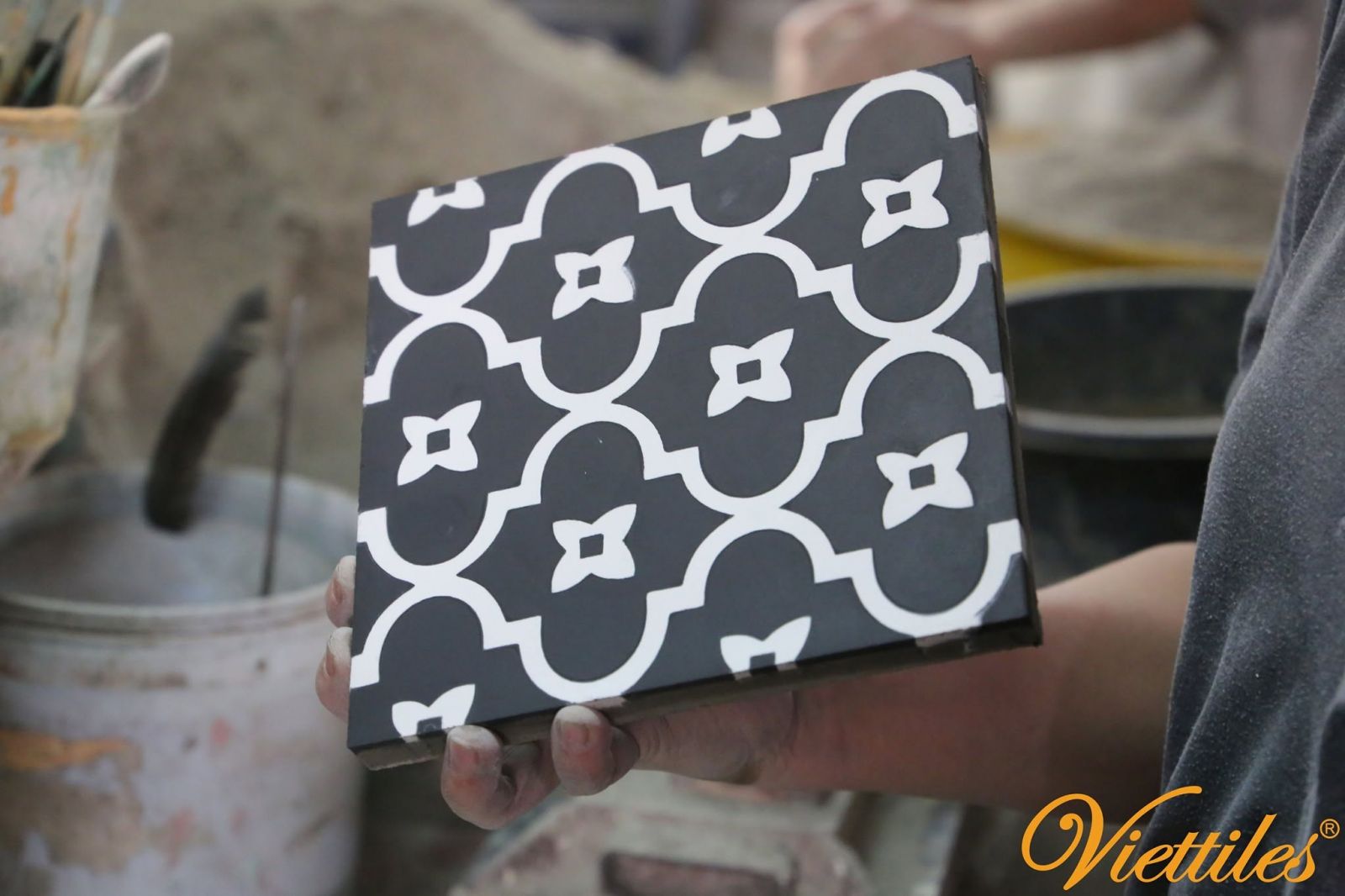 What contractors should confirm before ordering tiles
VIET TILES CONTACT INFORMATION
Address: No. 17, Street 40, An Khanh Ward, Thu Duc City (formerly District 2), Ho Chi Minh City
Phone: +84 906 830 362
Email: info@viettiles.com
Website: www.viettiles.com